Europe stands at a delicate moment in its history. It is a moment of existential significance for the wellbeing and sustainability of our societies. It is emerging from the pandemic caused by the coronavirus disease, only to face a set of major overlapping challenges. These pose profound questions about the political, economic and societal future of the continent. To discuss elements of a human rights vision for the future and to identify opportunities for action, FRA brought together a group of sixty human rights leaders and experts with diverse backgrounds
from across the continent. This report distils the meeting discussions, including analysis and ideas, and concludes with proposals for action. It does not represent the views either of individual participants or of FRA.
This report presents findings from FRA’s 2021 survey on Roma in Croatia, Czechia, Greece, Hungary, Italy, Portugal, Romania and Spain, as well as in North Macedonia and Serbia. The survey includes interviews with more than 8,400 Roma, collecting information on more than 20,000 individuals living in their households. By focusing on Roma, the survey provides unique data and information that are not available from European general population surveys, which do not disaggregate on grounds of ethnic origin. The findings present a bleak but familiar picture of exclusion, deprivation, discrimination and racism.
The Russian invasion of Ukraine triggered solidarity from EU governments, local authorities and society as they welcomed more than 7 million people fleeing the aggression. The European Union’s rapid response, activating the EU Temporary Protection Directive, offered welcome relief and much-needed support to those in need. It allowed displaced persons the opportunity to quickly settle and to work, travel and access services across the EU. But other pressing human rights issues have come to the fore and remain high on the EU’s agenda, such as human trafficking, sexual and gender-based violence, hate crime and hate-fuelled disinformation.
Europe stands at a delicate moment in its history, facing a convergence of major tests. Each of them taken on their own is significant. Together, they pose profound questions about the political, economic, and societal future of the continent. This is a moment for strong commitment to put human rights at the heart of our vision for Europe’s future. It is also time to demonstrate our determination to work together to this end. Against this backdrop, the EU Agency for Fundamental Rights (FRA) brought together around sixty human rights leaders and experts from across the continent to discuss elements of a human rights vision for the future and to identify opportunities for action. A full conference report will be available soon, including the specific ideas and proposals which arose from the meeting. Meanwhile, this is a summary of the conclusions.
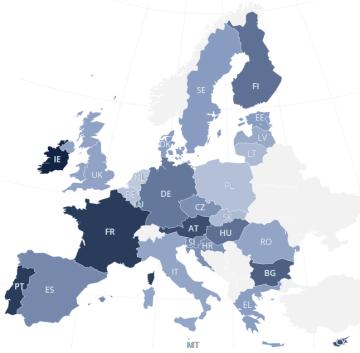
Since 2014, FRA has been publishing an annual update of the forced return monitoring systems EU Member States have set up under Article 8 (6) of the EU’s Return Directive (2008/115/EC). This overview describes different indicators for an effective forced return monitoring system. It includes the organisation responsible for monitoring forced return, the number of operations monitored in 2021, the phases of monitored return operations, the number of staff trained and working as monitors, and whether the monitoring body issued public reports about their monitoring.
Civil society is a key component of Europe’s fundamental rights architecture. From supporting people affected by the pandemic to helping those fleeing the war in Ukraine, civil society plays a crucial role in upholding people’s rights. In so doing, it contributes to a healthy rule of law culture. FRA’s civic space report provides an overview of the many ways in which civil society contributes to the checks and balances that underpin the rule of law.
Since September 2021, two National Human Rights Institutions (NHRIs) had a change in their accreditation status, one applied for accreditation and five have had a change in tasks covered by their mandates. This new 2022 update provides an overview of developments in the accreditation status and mandates of NHRIs from September 2021 to May 2022. It is a follow up of FRA’s 2020 report on ‘Strong and effective national human rights institutions – challenges, promising practices and opportunities’ and the September 2021 update. It covers the 27 EU Member States and three candidate countries (Albania, North Macedonia and Serbia).
Every child has a right to be protected even when they are accused or suspected of committing a crime. The basic principles of justice apply to adults and children alike. But children face specific obstacles during criminal proceedings, such as a lack of understandable information about their rights, limited legal support and poor treatment. The report looks at the practical implementation of Directive (EU) 2016/800 on procedural safeguards for children who are suspects or accused persons in criminal proceedings in nine Member States – Austria, Belgium, Bulgaria, Germany, Estonia, Italy, Malta, Poland and Portugal.
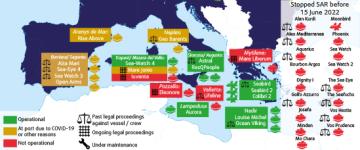
The EU Agency for Fundamental Rights (FRA) regularly collects data on the operations of NGO vessels involved in search and rescue in the Mediterranean. This includes any legal proceedings against them, as well as on any difficulties in disembarking migrants in safe ports. The International Organization for Migration estimates that from January to 15 June 2022 about 842 people died or went missing while crossing the Mediterranean Sea to reach Europe to escape war or persecution, or to pursue a better life. This is an average of five people per day.
FRA’s Fundamental Rights Report 2022 reviews major developments in the field in 2021, identifying both achievements and areas of concern. It also presents FRA’s opinions on these developments, including a synopsis of the evidence supporting these opinions.
This focus looks at the impact of the pandemic on social rights. It examines the measures in national recovery and resilience plans that address the social vulnerabilities among a variety of population groups in the EU, including women, children and young people in situations of vulnerability, people with disabilities, older people, Roma and people in precarious working conditions.
Rok 2021 přinesl v oblasti ochrany základních práv pokrok i nezdary. Zpráva o základních právech 2022 agentury FRA přináší přehled hlavního vývoje v této oblasti a upozorňuje jak na úspěchy, tak na oblasti, které i nadále vzbuzují obavy. Tato publikace představuje stanoviska agentury FRA k hlavnímu vývoji v uvedených tematických oblastech a souhrn důkazů podporujících tato stanoviska. Poskytuje tak hutný, ale informativní přehled hlavních problémů, jimž EU a její členské státy čelí v oblasti základních práv.
The year 2021 brought both progress and setbacks in terms of fundamental rights protection. FRA’s Fundamental Rights Report 2022 reviews major developments in the field, identifying both achievements and remaining areas of concern. This publication presents FRA’s opinions on the main developments in the thematic areas covered, and a synopsis of the evidence supporting these opinions.
En el año 2021 se produjeron tanto avances como retrocesos en materia de protección de derechos fundamentales. El Informe sobre los derechos fundamentales 2022 de la Agencia de los Derechos Fundamentales de la Unión Europea (FRA) analiza los principales acontecimientos en este ámbito, destacando tanto los progresos realizados como las dificultades que todavía persisten. La publicación presenta los dictámenes de la FRA sobre los principales avances realizados en los ámbitos temáticos contemplados, así como un resumen de las pruebas que avalan tales dictámenes. Esto permite disponer de una visión de conjunto, compacta, pero muy ilustrativa, de los principales desafíos en materia de derechos fundamentales a los que se enfrentan la Unión Europea (UE) y sus Estados miembros.
2021. aastal oli põhiõiguste kaitses nii edusamme kui ka tagasilööke. Euroopa Liidu Põhiõiguste Ameti (FRA) 2022. aasta põhiõiguste aruandes antakse ülevaade valdkonna peamistest arengusuundadest, tuues esile saavutused ja endiselt probleemsena püsivad valdkonnad. Väljaandes esitatakse FRA arvamused peamistes teemavaldkondades toimunud arengu kohta ja neid arvamusi toetavate tõendite kokkuvõte. Selles antakse kokkuvõtlik, ent informatiivne ülevaade põhiõiguste valdkonna peamistest probleemidest ELis ja liikmesriikides.
Vuonna 2021 perusoikeuksien suojelussa tapahtui sekä edistystä että takaiskuja. Euroopan unionin perusoikeusviraston (FRA) vuoden 2022 perusoikeusraportissa tarkastellaan perusoikeuksien tilanteen kehitystä pääpiirteissään ja tuodaan esiin sekä saavutuksia että jäljellä olevia huolenaiheita. Julkaisussa on FRA:n lausuntoja pääasiallisesta kehityksestä käsitellyillä aihealueilla sekä yleiskatsaus lausuntojen perustana olevaan näyttöön.
Tógadh céimeanna chun tosaigh agus céimeanna ar gcúl araon i ndáil le cosaint ceart bunúsach sa bhliain 2021. I dTuarascáil um Chearta Bunúsacha 2022 FRA, déantar athbhreithniú ar mhórfhorbairtí sa réimse agus sainaithnítear éachtaí agus ábhair imní nach mór déileáil leo fós. San fhoilseachán seo, cuirtear i láthair tuairimí ó FRA faoi na príomhfhorbairtí sna réimsí téamacha a chumhdaítear agus déantar achoimre ar an bhfianaise a thacaíonn leis na tuairimí sin.
Godina 2021. donijela je i napredak i prepreke u pogledu zaštite temeljnih prava. U FRA-inu Izvješću o temeljnim pravima 2022. daje se pregled važnih promjena i postignuća u tom području te se ističu područja koja još izazivaju zabrinutost. U ovoj publikaciji navode se mišljenja FRA-e o glavnim promjenama u obuhvaćenim tematskim područjima te se ukratko iznose dokazi kojima se potkrjepljuju ta mišljenja. Na taj se način pruža sažet i informativan pregled glavnih pitanja povezanih s temeljnim pravima s kojima se suočavaju EU i njegove države članice.