In 2015 and 2016, the numbers of unaccompanied children arriving in Europe increased dramatically, straining national guardianship systems. This report looks at how EU Member States, as well as North Macedonia and Serbia, have adapted their guardianship systems for unaccompanied children since that time.
This note outlines how to help ensure a dignified stay for third-country nationals who are apprehended or intercepted at external borders. Specifically, FRA identifies twelve points for protection-sensitive and fundamental rights-compliant planning and design of initial-reception facilities at such borders. These are based on the agency’s work at external borders, including data collection and research activities.
The European Convention on Human Rights and European Union law provide an increasingly important framework for the protection of the rights of foreigners. European Union legislation relating to asylum, borders and immigration is developing fast. There is an impressive body of case law by the European Court of Human Rights relating in particular to Articles 3, 5, 8 and 13 of the ECHR. The Court of Justice of the European Union is increasingly asked to pronounce on the interpretation of European Union law provisions in this field. The third edition of this handbook, updated up to July 2020, presents this European Union legislation and the body of case law by the two European courts in an accessible way.
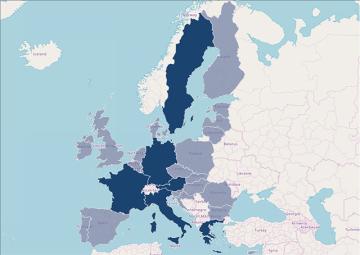
The EU Fundamental Rights Agency published in 2019 its report on the ‘Integration of young refugees in the EU’. The report explored the challenges of young people who fled armed conflict or persecution and arrived in the EU in 2015 and 2016. The report is based on 426 interviews with experts working in the area of asylum and integration, as well as 163 interviews with young people, aged 16 to 24, conducted between October 2017 and June 2018 in 15 regions and cities located in six Member States: Austria, France, Germany, Greece, Italy and Sweden. The links on this page provide a summary of the information collected during this period for each country about unaccompanied children turning 18 and the change in people’s legal status once international protection is granted. These two issues had at the time been identified as moments requiring sufficient, consistent and systematic support, particularly from lawyers, social workers and guardians, to ensure successful integration.
In recent years, thousands of girls and boys have reached Europe without their parents, and sought international protection. Many of them experienced violence, abuse and neglect in their home countries, and while in transit. They have the right to be protected in line with the provisions of the UN Convention on the Rights of the Child, the European Convention on Human Rights, and European Union law. This report explores the challenges and good practices gathered in the implementation of such relocation programmes. Based on information FRA collected in 10 EU Member States, it aims to help national authorities to support the relocation of unaccompanied children by taking measures that are fully rights compliant and practically feasible.
Children in migration are more vulnerable than adults, particularly when they are unaccompanied. Their vulnerability makes them more exposed to violence, exploitation and trafficking in human beings, as well as physical, psychological and sexual abuse. This report looks into challenges to the fundamental rights of children in migration throughout 2019. It pulls together the main issues identified in FRA’s Quarterly Bulletins on migration in selected EU Member States.
Council of Europe (CoE) and European Union (EU) Member States have an undeniable sovereign right to control the entry of non-nationals into their territory. While exercising border control, states have a duty to protect the fundamental rights of all people under their jurisdiction, regardless of their nationality and/or legal status. Under EU law, this includes providing access to asylum procedures.
The EU Agency for Fundamental Rights (FRA) urges Member States to agree on a simple and practical workflow as soon as possible, to avoid lack of clarity and delays in the relocation process. This paper provides practical suggestions on relocation of unaccompanied children from Greece, building on lessons learned from previous mandatory and voluntary relocation schemes. The paper provides FRA input on the initiative of the European Commission and a group of Member States to relocate unaccompanied children.
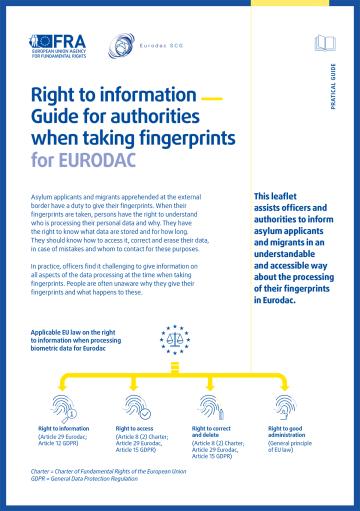
This leaflet assists officers and authorities to inform asylum applicants and migrants in an understandable and accessible way about the processing of their fingerprints in Eurodac.
Over 2.5 million people applied for international protection in the 28 EU Member States in 2015 and 2016. Many of those who were granted some form of protection are young people, who are likely to stay and settle in the EU. The EU Agency for Fundamental Rights interviewed some of them, as well as professionals working with them in 15 locations across six EU Member States: Austria, France, Germany, Greece, Italy and Sweden. This report presents the result of FRA’s fieldwork research, focusing on young people between the
ages of 16 and 24.
Child rights come first. Measures to ensure child protection and participation apply to all children in the EU. This brochure guides you to relevant FRA reports and tools that can support you when promoting and protecting the rights of all children in the EU.
Individuals who are not entitled to stay in the European Union are typically subject to being returned to their home countries. This includes children who are not accompanied by their parents or by another primary caregiver. But returning such children, or finding another durable solution, is a delicate matter, and doing so in full compliance with fundamental rights protections can be difficult. This focus paper therefore aims to help national authorities involved in return-related tasks, including child-protection services, to ensure full rights compliance.
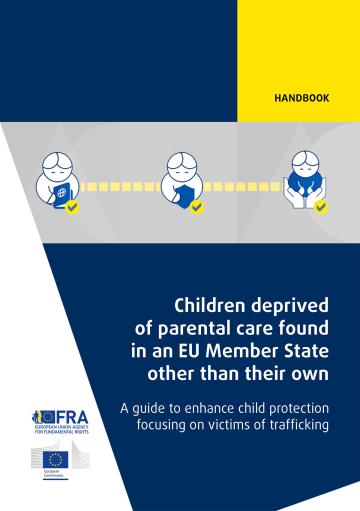
Children deprived of parental care found in another EU Member State other than their own aims to strengthen the response of all relevant actors for child protection. The protection of those girls and boys is paramount and an obligation for EU Member States, derived from the international and European legal framework. The guide includes a focus on child victims of trafficking and children at risk, implementing an action set forth in the 2017 Communication stepping up EU action against trafficking in human beings, and takes into account identified patterns, including with respect to the gender specificity of the crime.
Menores privados del cuidado parental al encontrarse en un Estado miembro de la Unión Europea
distinto del suyo tiene por objeto reforzar la respuesta de todos los agentes pertinentes en la
protección de menores. La protección de esos niños y niñas es fundamental, así como una obligación
para los Estados miembros de la Unión Europea (UE) que emana del marco jurídico internacional
y europeo. La guía se centra en los menores víctimas de la trata y en riesgo, por lo que aplica una
medida expuesta en la Comunicación de 2017 sobre la intensificación de la actuación de la UE contra
la trata de seres humanos, y tiene en cuenta los patrones identificados, como los relativos a la
especificidad del delito respecto del género.
A Szülői felügyelet nélkül maradt gyermekek a sajátjuktól eltérő uniós tagállamban című kézikönyv
célja, hogy megerősítse a gyermekvédelem valamennyi szereplőjének reakcióját. E lányok és fiúk
védelme elengedhetetlen, és az uniós tagállamok kötelezettsége, amely a nemzetközi és európai
jogi keretből származik. Az útmutató az emberkereskedelem gyermek áldozataira, valamint
a veszélynek kitett gyermekekre összpontosít, és végrehajtja Az uniós fellépés fokozása az
emberkereskedelem elleni küzdelem terén c. 2017. évi közleményt, továbbá figyelembe veszi az
azonosított mintákat, beleértve a bűncselekmény nemspecifikus jellegével kapcsolatosakat.
Il manuale Minori privati delle cure genitoriali trovati in uno Stato membro dell’UE diverso dal proprio
mira a rafforzare la risposta di tutti i soggetti coinvolti nella protezione dei minori. La protezione di
questi ragazzi e queste ragazze è di primaria importanza ed è un obbligo per gli Stati membri dell’UE
sancito dal quadro giuridico internazionale e dell’UE. Il manuale dedica un’attenzione particolare
ai minori vittime della tratta e ai minori a rischio, dando applicazione a un’azione definita nella
comunicazione della Commissione europea sull’intensificazione dell’azione dell’UE di lotta alla tratta
degli esseri umani del 2017, e tiene conto dei modelli individuati, anche rispetto alla specificità di
genere che caratterizza il reato.
Kinderen zonder ouderlijke zorg die in een andere dan hun eigen EU-lidstaat worden aangetroffen
is bedoeld om de respons van alle actoren op het gebied van kinderbescherming te versterken. De
bescherming van deze meisjes en jongens is van het grootste belang en is een plicht van de EUlidstaten
die voortvloeit uit het internationale en Europese rechtskader. In de gids staan minderjarige
slachtoffers van mensenhandel en kinderen die risico lopen centraal. Hiermee wordt uitvoering
gegeven aan een van de acties van de mededeling ter intensivering van de inspanningen van de EU
om mensenhandel te voorkomen (2017), rekening houdend met geconstateerde patronen, onder
meer wat betreft het genderspecifieke karakter van het misdrijf.
Podręcznik Dzieci pozbawione opieki rodzicielskiej znajdujące się w innym państwie członkowskim
UE niż ich własne ma na celu wzmocnienie reakcji wszystkich podmiotów zaangażowanych
w ochronę dzieci. Ochrona tych dziewcząt i chłopców ma nadrzędne znaczenie i jest wynikającym
z międzynarodowych i europejskich ram prawnych obowiązkiem państw członkowskich
UE. W podręczniku skoncentrowano się na dzieciach będących ofiarami handlu ludźmi i dzieciach
zagrożonych, wdrażając działanie określone w komunikacie z 2017 r. w sprawie nasilenia działań
UE wymierzonych przeciwko handlowi ludźmi, oraz uwzględniono określone wzorce, w tym
w odniesieniu do aspektu płci przestępstwa.
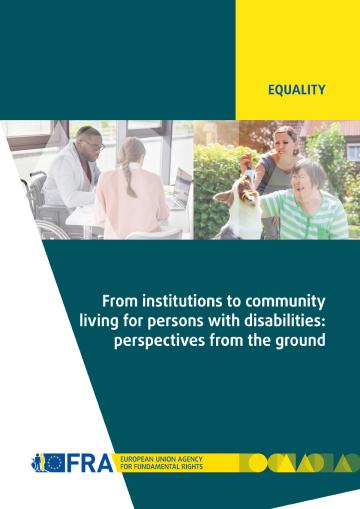
The Convention on the Rights of Persons with Disabilities commits both the EU and all of its Member States to realising the right of persons with disabilities to live independently in the community – which includes achieving deinstitutionalisation for those residing in institutional settings. But much remains to be done to make this a reality in practice. This report presents the main insights gained during fieldwork on the drivers of and barriers to deinstitutionalisation. Focusing on the local level, it gives voice to a diverse set of actors – most importantly, to people with disabilities themselves.
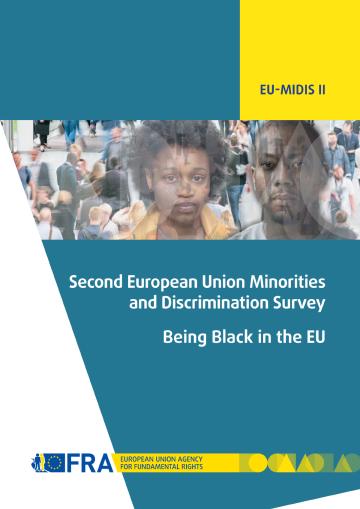
Almost twenty years after adoption of EU laws forbidding discrimination, people of African descent in the EU face widespread and entrenched prejudice and exclusion. This report outlines selected results from FRA's second large-scale EU-wide survey on migrants and minorities (EU-MIDIS II) carried out in 2016. It examines the experiences of almost 6,000 people of African descent in 12 EU Member States.