Highlights

  • Report / Paper / Summary
    11
    Juni
    2024
    Data protection rules protect privacy and prevent personal information from misuse. When the general data protection regulation (GDPR) came into force in 2018, it strengthened the role of data protection authorities. These supervisory bodies are the key enforcers of the fundamental right of protection of personal data. This report analyses the challenges they face in the GDPR implementation. The findings complement the European Commission's forthcoming evaluation of the GDPR.
  • Report / Paper / Summary
    24
    Mai
    2023
    This report provides a partial update on the findings of the 2017 European Union Agency for Fundamental Rights (FRA) report Surveillance by intelligence services: Fundamental rights safeguards and remedies in the EU. It was prepared at the request of the European Parliament, which asked FRA to update its 2017 findings to support the work of its committee of inquiry to investigate the use of Pegasus and equivalent surveillance spyware (PEGA).
  • Report / Paper / Summary
    8
    Dezember
    2022
    Artificial intelligence is everywhere and affects everyone – from deciding what content people see on their social media feeds to determining who will receive state benefits. AI technologies are typically based on algorithms that make predictions to support or even fully automate decision-making.
  • Report / Paper / Summary
    18
    Juni
    2020
    This document presents data from the FRA Fundamental Rights Survey. It includes data on opinions and experiences of people in the European Union (EU) linked to data protection and technology.
    Produkte
    7
    April
    2022
    French and Italian versions now available
    19 December 2023
    Kinder sind eigenständige Inhaberinnen und Inhaber von Menschenrechten. Sie genießen sämtliche Menschen- und Grundrechte, und aufgrund ihrer spezifischen Merkmale gelten für sie auch besondere Bestimmungen. Dieses Handbuch soll veranschaulichen, inwiefern die spezifischen Interessen und Bedürfnisse von Kindern im Europarecht und in der europäischen Rechtsprechung berücksichtigt werden. Es verdeutlicht zudem die wichtige Rolle von Eltern, Vormunden und sonstigen gesetzlichen Vertreterinnen und Vertretern und verweist gegebenenfalls auf Situationen, in denen die Rechte und Pflichten überwiegend den Betreuerinnen und Betreuern von Kindern zugewiesen werden. Dieses Handbuch soll zu einem stärkeren Bewusstsein für die Rechtsnormen zum Schutz und zur Förderung der Kinderrechte in Europa beitragen und die Kenntnisse darüber verbessern. Es dient als Referenzwerk sowohl für das Recht der Europäischen Union (EU) als auch für die Abkommen des Europarates in diesen Bereichen und enthält jeweils Erläuterungen zur Regelung der einzelnen Aspekte im EU-Recht, einschließlich der Charta der Grundrechte der Europäischen Union, sowie der Europäischen Menschenrechtskonvention (EMRK), der Europäischen Sozialcharta (ESC) und sonstiger Instrumente des Europarates.
    The Fundamental Rights Forum 2021 was the space for dialogue on the human rights challenges facing the EU today. In this video, participants talk about the challenges of fundamental rights in the digital age.
    In this vlog, FRA Director Michael O’Flaherty points to the urgent need to tackle disinformation. He provides examples of what can be done to combat disinformation, including what the EU Agency for Fundamental Rights could contribute to this challenge.
    10
    Juni
    2021
    Das Jahr 2020 brachte beim Schutz der Grundrechte
    sowohl Fortschritte als auch Rückschritte. In ihrem
    Grundrechte-Bericht 2021 untersucht die FRA wichtige
    Entwicklungen auf diesem Gebiet und zeigt sowohl
    Erfolge als auch Bereiche auf, in denen es immer
    noch Probleme gibt.
    10
    Juni
    2021
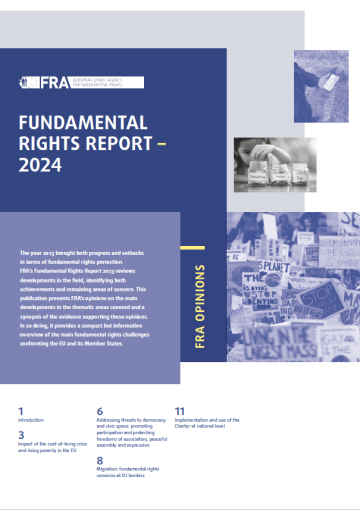
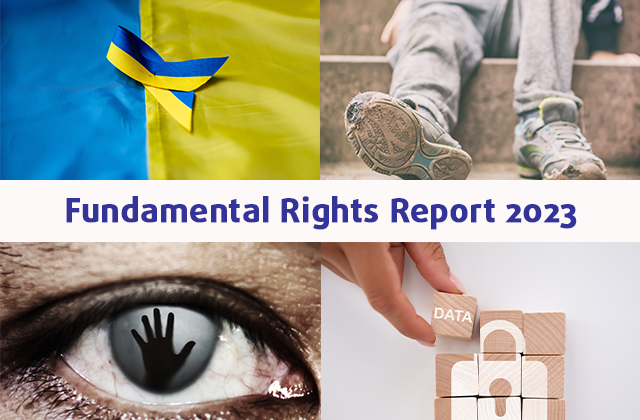
    FRA’s Fundamental Rights Report 2021 reviews major developments in the field in 2020, identifying both achievements and areas of concern. It also presents FRA’s opinions on these developments, including a synopsis of the evidence supporting these opinions. This year’s focus chapter explores the impact of the COVID-19 pandemic on fundamental rights. The remaining chapters cover: the EU Charter of Fundamental Rights; equality and non-discrimination; racism, xenophobia and related intolerance; Roma equality and inclusion; asylum, borders and migration; information society, privacy and data protection; rights of the child; access to justice; and the implementation of the Convention on the Rights of Persons with Disabilities.
    10
    Juni
    2021
    This focus looks at COVID-19’s impact on fundamental rights. It underscores that a human rights-based approach to tackling the pandemic requires balanced measures that are based on law, necessary, temporary and proportional. It also requires addressing the pandemic’s socio-economic impact, protecting the vulnerable and fighting racism.
    The COVID-19 pandemic has an impact on everyone. Governments take urgent measures to curb its spread to safeguard public health and provide medical care to those who need it. They are acting to defend the human rights of health and of life itself. Inevitably, these measures limit our human and fundamental rights to an extent rarely experienced in peacetime. It is important to ensure that such limitations are consistent with our legal safeguards and that their impact on particular groups is adequately taken account of.
    Artificial intelligence (AI) already plays a role in many decisions that affect our daily lives. From deciding what unemployment benefits someone gets to where a burglary is likely to take place. But we need to make sure to fully uphold fundamental rights standards when using AI. Drawing on the ‘Getting the future right – Artificial intelligence and fundamental rights’ report, FRA explores the potential benefits and possible errors that can occur focusing on four core areas – social benefits, predictive policing, health services and targeted advertising.
    29
    Januar
    2021
    Der Bericht der FRA über künstliche Intelligenz und Grundrechte präsentiert konkrete Beispiele dafür, wie Unternehmen und Behörden in der EU künstliche Intelligenz einsetzen oder einzusetzen versuchen. Diese Zusammenfassung stellt die wichtigsten Erkenntnisse aus dem Bericht vor, die sowohl auf Unionsebene als auch auf nationaler Ebene für die Politikgestaltung auf dem Gebiet des menschen- und grundrechtskonformen Einsatzes von KI-Tools genutzt werden können.
    Artificial intelligence (AI) already plays a role in many decisions that affect our daily lives. From deciding what unemployment benefits someone gets to where a burglary is likely to take place. But we need to make sure to fully uphold fundamental rights standards when using AI. Drawing on the ‘Getting the future right – Artificial intelligence and fundamental rights’ report, FRA presents a number of key considerations to help businesses and administrations respect fundamental rights when using AI.
    This is a recording from the morning session of the high-level virtual event "Doing Artificial Intelligence the European way" which took place on 14 December 2020.
    This is a recording from the afternoon session of the high-level virtual event "Doing Artificial Intelligence the European way" which took place on 14 December 2020.
    Artificial intelligence is here. It’s not going away. It can be a force for good, but it needs to be watched so carefully in terms of respect for our human fundamental rights. The EU Fundamental Rights Agency is deeply committed to this work.Our ambition is not just to ensure that AI respects our rights, but also that it protects and promotes them.
    Will AI revolutionise the delivery of our public services? And what's the right balance? How is the private sector using AI to automate decisions — and what implications
    might that have? Are some form of binding rules necessary to monitor and regulate the use of AI technology - and what should these rules look like?
    How do we embrace progress while protecting our fundamental rights? As data-driven decision making increasingly touches our daily lives, what does this mean
    for our fundamental rights? A step into the dark? Or the next giant leap? The time to answer these questions is here and now. Let’s seize the opportunities, but understand the challenges. Let’s make AI work for everyone in Europe…And get the future right.
    14
    Dezember
    2020
    Slovenian version now available
    20 December 2024
    Artificial intelligence (AI) already plays a role in deciding what unemployment benefits someone gets, where a burglary is likely to take place, whether someone is at risk of cancer, or who sees that catchy advertisement for low mortgage rates. Its use keeps growing, presenting seemingly endless possibilities. But we need to make sure to fully uphold fundamental rights standards when using AI. This report presents concrete examples of how companies and public administrations in the EU are using, or trying to use, AI. It focuses on four core areas – social benefits, predictive policing, health services and targeted advertising.
    29
    Juli
    2020
    As we enter the second half of 2020, the constraints on our daily lives brought about by the Coronavirus pandemic have become a firm reality. New local lockdowns and the reintroduction of restrictive measures prompted by fresh outbreaks of the virus are a stark reminder that COVID-19 continues to shape our lives – and our enjoyment of fundamental rights – in profound ways. There is compelling evidence of how the pandemic has exacerbated existing challenges in our societies. This FRA Bulletin outlines some of the measures EU Member States adopted to safely reopen their societies and economies while continuing to mitigate the spread of COVID-19. It highlights the impact these measures may have on civil, political and socioeconomic rights.
    22
    Juli
    2020
    This paper presents people’s concerns and experiences relating to security. It covers worry about crime, including terrorism and online fraud; experience of online fraud; experience of cyberharassment; and concern about illegal access to data.
    What are the next steps in the digitalisation of justice and of access to justice? This impulse video statement by FRA Director Michael O’Flaherty was recorded for the online conference “Access to Justice in the Digital Age”. The conference takes place on 16 July and is organised by the German Federal Ministry for Justice and Consumer Protection during the German Council Presidency.
    18
    Juni
    2020
    This document presents data from the FRA Fundamental Rights Survey. It includes data on opinions and experiences of people in the European Union (EU) linked to data protection and technology.
    Mehr als eine Million Menschen suchten im Jahr 2015 Zuflucht in der EU – fünfmal mehr als im Vorjahr. In ihrem Grundrechte-Bericht 2016 untersucht die Agentur der Europäischen Union für Grundrechte (FRA) den Umfang und die Art dieser Herausforderung und nennt Maßnahmen, die die Achtung der Grundrechte innerhalb der EU gewährleisten sollen.
    Die Agentur der Europäischen Union für Grundrechte (FRA) veröffentlicht heute ihren Bericht zu den geltenden gesetzlichen Regelungen in den EU-Mitgliedstaaten für Nachrichtendienste und ihren Überwachungsverfahren. Der Bericht hebt die Herausforderungen hervor, die sich aus dem Schutz der Bürger bei gleichzeitiger Wahrung der Grundrechte, die den europäischen Gesellschaften zugrunde liegen, ergeben.
    2014 starben so viele MigrantInnen wie nie beim Versuch, das Mittelmeer zu überqueren, um nach Europa zu gelangen. Die EU-Mitgliedstaaten sollten daher erwägen, als Alternative zur riskanten unerlaubten Einreise legale Einreisemöglichkeiten für Menschen zu schaffen, die internationalen Schutz benötigen. Dies ist eine der Schlussfolgerungen des diesjährigen Jahresberichts der Agentur der Europäischen Union für Grundrechte (FRA), der aufzeigt, wie sich zahlreiche Bereiche in der EU im Jahr 2014 entwickelten.
    Im Rahmen der Debatte der EU-Minister zur künftigen EU-Politik im Bereich Freiheit, Sicherheit und Recht präsentiert die EU-Agentur für Grundrechte (FRA) den Jahresbericht 2013. Neben praktischen Vorschlägen, wie die Grundrechte der Menschen in der EU besser geschützt werden können, zeigt der FRA-Jahresbericht vor allem auf, welche grundrechtlichen Herausforderungen und Erfolge es im Jahr 2013 gab.
    Durch die verbreitete Nutzung von Informations- und Kommunikationstechnologien von öffentlichen sowie privaten Stellen fallen Menschen in der EU immer wieder Datenschutzverletzungen zum Opfer. Ein Großteil dieser Verletzungen entfällt auf Aktivitäten im Internet, Direktmarketing und Videoüberwachung.