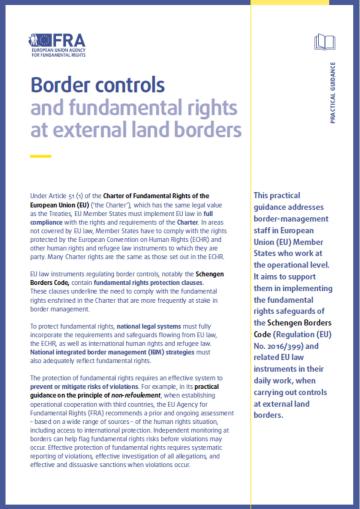
Nämä ohjeet on tarkoitettu EU:n jäsenvaltioiden operatiivisella tasolla työskentelevälle rajavalvontahenkilöstölle. Niiden tarkoituksena on auttaa sitä toteuttamaan päivittäisessä työssään Schengenin rajasäännöstön (asetus (EU) 2016/399) ja siihen liittyvän EU:n lainsäädännön perusoikeuksia koskevia takeita.
Ovaj je priručnik namijenjen službenicima za upravljanje državnim granicama u državama članicama EU-a koji djeluju na operativnoj razini. Svrha mu je pomoći im u njihovu svakodnevnom radu primijeniti mjere za zaštitu temeljnih prava iz Zakonika o schengenskim granicama (Uredba (EU) 2016/399) i povezanog prava EU-a.
Ez az útmutató az EU tagállamaiban műveleti szinten határigazgatást végző személyzetnek készült. Célja, hogy segítséget nyújtson napi munkájuk során abban, hogy az alapjogoknak a Schengeni határ-ellenőrzési kódexben (2016/399/EU rendelet) és a kapcsolódó uniós jogban előírt védelmét biztosítani tudják.
I presenti orientamenti sono destinati al personale addetto alla gestione delle frontiere negli Stati membri dell’Unione europea (UE) che lavora a livello operativo e mirano ad assisterli nell’attuare nel loro lavoro quotidiano, le tutele in materia di diritti fondamentali previste dal codice frontiere Schengen [regolamento (UE) 2016/399] e dal relativo diritto dell’UE.
Šios gairės skirtos ES valstybių narių sienų valdymo pareigūnams, dirbantiems operatyviniu lygmeniu. Jomis siekiama padėti jiems kasdieniame darbe įgyvendinti Šengeno sienų kodekse (Reglamentas (ES) 2016/399) ir susijusiuose ES teisės aktuose nustatytas pagrindinių teisių apsaugos priemones.
Šie norādījumi ir paredzēti robežu pārvaldības darbiniekiem ES dalībvalstīs, kuri strādā operatīvajā līmenī. Norādījumu mērķis ir palīdzēt viņiem ikdienas darbā īstenot Šengenas Robežu kodeksā (Regula (ES) 2016/399) un saistītajos ES tiesību aktos paredzētos pamattiesību aizsardzības pasākumus.
Deze richtsnoeren zijn bestemd voor grensbeheerpersoneel in de lidstaten van de Europese Unie (EU) dat op operationeel niveau werkt. Ze zijn bedoeld om deze medewerkers
te helpen bij hun dagelijkse werkzaamheden om de waarborgen op het gebied van de grondrechten van de Schengengrenscode (Verordening (EU) 2016/399) en de daarmee verband houdende EU-wetgeving uit te voeren.
This paper presents people’s concerns and experiences relating to security. It covers worry about crime, including terrorism and online fraud; experience of online fraud; experience of cyberharassment; and concern about illegal access to data.
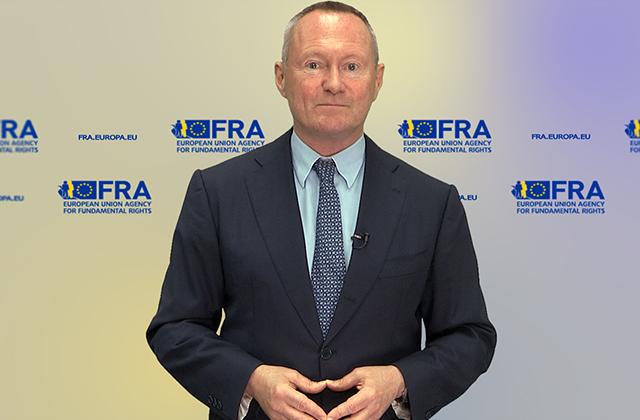
What are the next steps in the digitalisation of justice and of access to justice? This impulse video statement by FRA Director Michael O’Flaherty was recorded for the online conference “Access to Justice in the Digital Age”. The conference takes place on 16 July and is organised by the German Federal Ministry for Justice and Consumer Protection during the German Council Presidency.
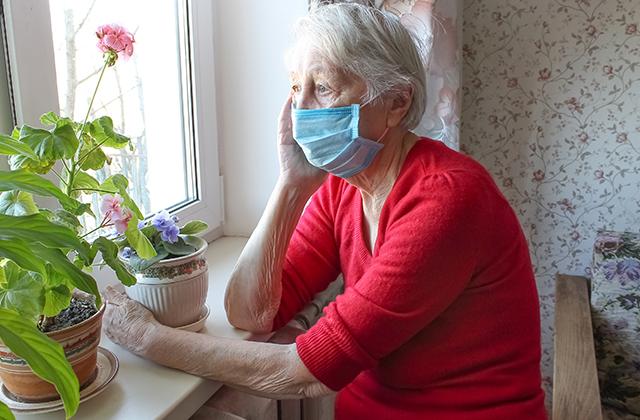
The Coronavirus pandemic continues to interrupt everyday life in the EU in unprecedented ways. But the way it affects our societies is shifting. As governments gradually lift some of the measures put in place to contain the spread of COVID-19, new fundamental rights concerns arise: how to ensure that the rights to life and health are upheld as daily life transitions to a ‘new normal’. This Bulletin looks at declarations of states of emergency, or equivalent, and how they came under scrutiny. It considers
the impact on fundamental rights in important areas of daily life, and includes a thematic focus on the pandemic's impact on older people.
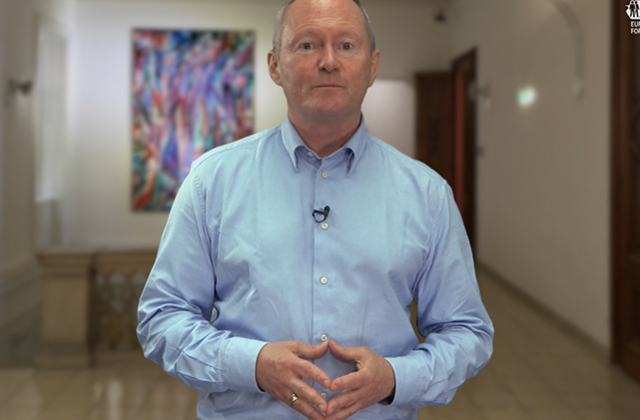
In this video message to the Equality2020 conference on 29 June, FRA Director Michael O'Flaherty speaks about our shared struggle for a Europe that honours everybody in their diversity, in their equality and in their dignity.
In this video message FRA Director Michael O'Flaherty speaks about LGBTI equality on the occasion of the Global Pride 2020:
https://www.globalpride2020.org/
FRA’s Fundamental Rights Survey collected data from 35,000 people about their experiences, perceptions and opinions on a range of issues that are variously encompassed by human rights. This report presents a small selection of the survey results. It focuses on findings with respect to respondents’ opinions about human – or fundamental rights; their views and perceptions on the functioning of democratic societies – as a pillar on which human rights can flourish; and on their thoughts on and engagement with public services that have a duty to enforce human rights law and to protect people’s rights.
This document presents data from the FRA Fundamental Rights Survey. It includes data on opinions and experiences of people in the European Union (EU) linked to data protection and technology.
This focus takes a closer look at the application of the Charter of Fundamental Rights of the European Union, which has been legally binding for 10 years. At EU level, it has gained visibility and sparked a new fundamental rights culture. At national level, awareness and use of the Charter are limited. Courts increasingly use the Charter, showing the impact of this modern instrument. But its use by governments and parliaments remains low. For instance, there is little indication of anyone regularly scrutinising national legislation that transposes EU law for compatibility with the Charter.
W niniejszym dokumencie zwraca się szczególną uwagę
na stosowanie Karty praw podstawowych Unii Europejskiej,
która jest prawnie wiążąca od 10 lat. Na szczeblu unijnym
stała się ona bardziej widoczna i zapoczątkowała nową
kulturę praw podstawowych. Na szczeblu krajowym
świadomość i stosowanie Karty są ograniczone. Sądy w coraz
większym stopniu stosują Kartę, co pokazuje znaczenie tego
nowoczesnego instrumentu. Niemniej jednak jego stosowanie
przez rządy i parlamenty pozostaje na niskim poziomie.
Przykładowo niewiele wskazuje na to, by ktokolwiek
regularnie kontrolował przepisy krajowe dokonujące
transpozycji prawa Unii pod kątem ich zgodności z Kartą.
O presente Destaque aborda mais de perto a aplicação da
Carta dos Direitos Fundamentais da União Europeia, que se
tornou juridicamente vinculativa há 10 anos. Ao nível da UE,
a Carta ganhou visibilidade e deu origem a uma nova cultura
de direitos fundamentais. No plano nacional, a sensibilização
para a Carta e a sua utilização têm sido limitadas. Os tribunais
utilizam cada vez mais a Carta, evidenciando o impacto deste
moderno instrumento. Mas a sua utilização pelos governos
e parlamentos continua a ser modesta. Por exemplo, há
poucas indicações sobre a existência ou não de pessoas
que se dedicam a examinar regularmente se as legislações
nacionais que transpõem a legislação da UE são compatíveis
com a Carta.
Ta osrednja tema podrobneje obravnava uporabo Listine
Evropske unije o temeljnih pravicah, ki je pravno zavezujoča
že 10 let. Na ravni EU je postala prepoznavnejša, spodbudila
pa je tudi novo kulturo spoštovanja temeljnih pravic. Na
nacionalni ravni sta uporaba Listine in ozaveščenost o njej
omejeni. Na sodiščih se uporaba tega sodobnega instrumenta
povečuje, kar kaže, da ima vpliv, vlade in parlamenti pa ga
še naprej uporabljajo le redko. Tako na primer skoraj nič ne
kaže na to, da kdo redno podrobno preverja, ali je nacionalna
zakonodaja za prenos prava EU skladna z Listino.
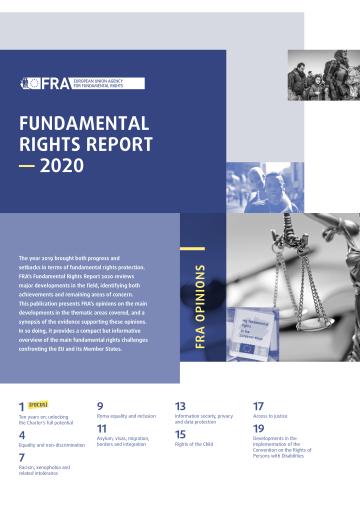
The year 2019 brought both progress and setbacks in terms of fundamental rights protection. FRA’s Fundamental Rights Report 2020 reviews major developments in the field, identifying both achievements and remaining areas of concern. This publication presents FRA’s opinions on the main developments in the thematic areas covered, and a synopsis of the evidence supporting these opinions. In so doing, it provides a compact but informative overview of the main fundamental rights challenges confronting the EU and its Member States.
FRA’s Fundamental Rights Report 2020 reviews major developments in the field in 2019, identifying both achievements and areas of concern. It also presents FRA’s opinions on these developments, including a synopsis of the evidence supporting these opinions. This year’s focus chapter explores how to unlock the full potential of the EU Charter of Fundamental Rights.