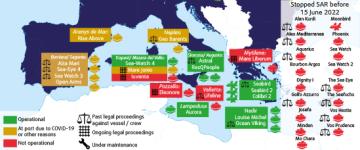
The EU Agency for Fundamental Rights (FRA) regularly collects data on the operations of NGO vessels involved in search and rescue in the Mediterranean. This includes any legal proceedings against them, as well as on any difficulties in disembarking migrants in safe ports. The International Organization for Migration estimates that from January to 15 June 2022 about 842 people died or went missing while crossing the Mediterranean Sea to reach Europe to escape war or persecution, or to pursue a better life. This is an average of five people per day.
This report contains a comprehensive and thorough account of the activities carried out by FRA in the implementation of its mandate and programme of work during 2021. It provides a detailed account of the results achieved in relation to the objectives set out in the annual work programme for 2021 and the five strategic areas defined in FRA’s strategic plan 2018–2022, of the financial and management information, and of the risks related to the organisational activities and measures.
FRA’s Fundamental Rights Report 2022 reviews major developments in the field in 2021, identifying both achievements and areas of concern. It also presents FRA’s opinions on these developments, including a synopsis of the evidence supporting these opinions.
This focus looks at the impact of the pandemic on social rights. It examines the measures in national recovery and resilience plans that address the social vulnerabilities among a variety of population groups in the EU, including women, children and young people in situations of vulnerability, people with disabilities, older people, Roma and people in precarious working conditions.
The year 2021 brought both progress and setbacks in terms of fundamental rights protection. FRA’s Fundamental Rights Report 2022 reviews major developments in the field, identifying both achievements and remaining areas of concern. This publication presents FRA’s opinions on the main developments in the thematic areas covered, and a synopsis of the evidence supporting these opinions.
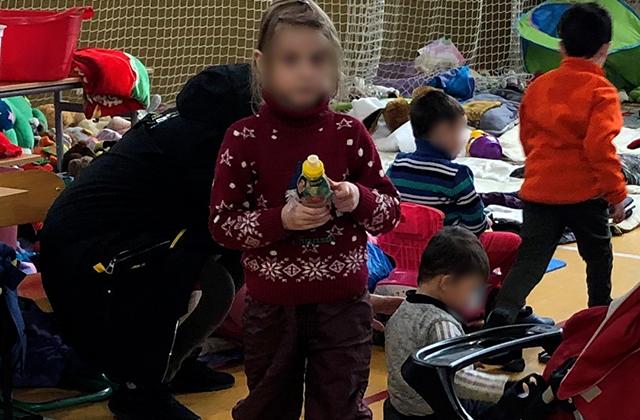
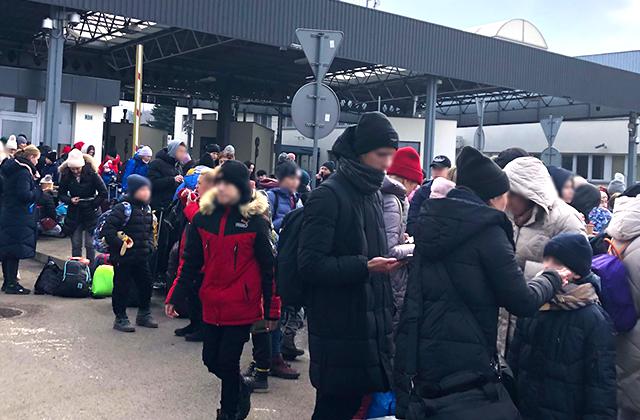
While many volunteers, organisations and EU countries provide help to the many children fleeing Ukraine, challenges and concerns need to be addressed: such as registration and interpretation, guardianship for unaccompanied children, access to education and childcare.
In this vlog, FRA Director Michael O'Flaherty talks about the importance of celebrating diversity in our societies. He calls on everyone to build bridges and listen to each other, so we can create a society where everyone is equal in dignity and in rights.
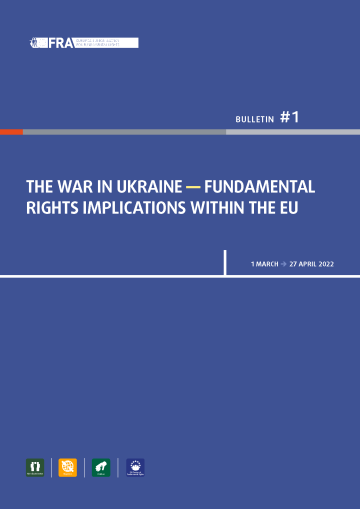
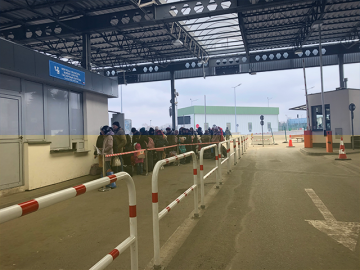
This bulletin looks at the fundamental rights situation of all persons fleeing the Russian war in Ukraine to the four EU Member States neighbouring Ukraine. This is primarily in terms of the application of the EU Temporary Protection Directive. It is based on findings of FRA’s field mission to Hungary, Poland, Romania and Slovakia at the beginning of March 2022. It is also based on weekly country reports prepared by Franet, the contracted research network of FRA between 1 March and 27 April 2022.
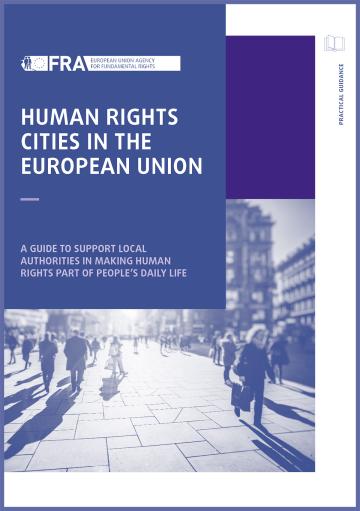
This guide can help cities wishing to improve their efforts to respect human rights. It aims to encourage local authorities to adopt higher human rights standards. The idea is to encourage and foster mutual learning on human and fundamental rights. The European Union Agency for Fundamental Rights (FRA), a group of human rights cities and various practitioners in the EU worked together to produce this guide. The guide draws on the promising practices and experiences of cities, regions, experts, international organisations and networks that can be found in the FRA report Human rights cities in the EU: A framework for reinforcing rights locally.
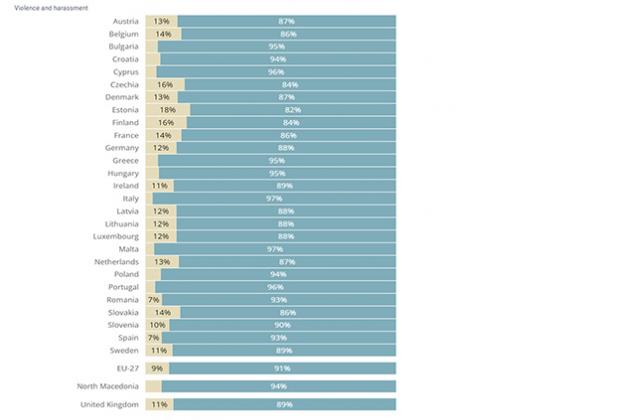
The Fundamental Rights Survey is the first survey to collect comprehensive and comparable data on people’s experiences and views of their rights in the EU-27. The survey included questions related to rights in a number of different areas, including crime victimisation and safety, data protection and privacy, functioning of the democracy, views on human rights and experiences with public services.
Children are full-fledged holders of rights. They are beneficiaries of all human and fundamental rights and subjects of special regulations, given their specific characteristics. This handbook aims to illustrate how European law and case law accommodate the specific interests and needs of children. It also considers the importance of parents and guardians or other legal representatives and makes reference, where appropriate, to situations in which rights and responsibilities are most prominently vested in children’s carers. It is a point of reference on both European Union (EU) and Council of Europe (CoE) law related to these subjects, explaining how each issue is regulated under EU law, including the Charter of Fundamental Rights of the European Union, as well as under the European Convention on Human Rights, the European Social Charter and other CoE instruments.
Overwhelming support for the many people fleeing Ukraine. Volunteers, organisations and EU countries provide support and help at the EU borders.
FRA looked at the challenging situation and identified fundamental rights risks, such as discrimination.
The EU is facing a large-scale humanitarian crisis. Over 10 days at the beginning of March, the EU Agency for Fundamental Rights (FRA) visited all EU countries bordering Ukraine and Moldova – Hungary, Poland, Romania and Slovakia.
The EU Agency for Fundamental Rights has been regularly collecting data on asylum and migration since September 2015. This report focuses on the fundamental rights situation of people arriving in Member States and EU candidate countries particularly affected by migration. It addresses fundamental rights concerns between 1 October and 31 December 2021.
In the internet age, information travels faster and further than ever before. But so does disinformation, feeding off rumours, prejudices and stereotypes. How can we tackle it? Watch FRA’s practical guide on how to go about tackling disinformation using +INPUT – be positive, identify, narrate, pioneer, unite and track.
The Fundamental Rights Forum 2021 was the space for dialogue on the human rights challenges facing the EU today. In this video, participants talk about the challenges of fundamental rights in the digital age.
In 2015 and 2016, the numbers of unaccompanied children arriving in Europe increased dramatically, straining national guardianship systems. This report looks at how EU Member States, as well as North Macedonia and Serbia, have adapted their guardianship systems for unaccompanied children since that time.
FRA’s 2019 survey on Roma and Travellers in Belgium, France, Ireland, the Netherlands, Sweden and the United Kingdom interviewed almost 4 700 Roma and Travellers, collecting information on more than 8 200 individuals living in their households.