Cieľom príručky Deti bez rodičovskej starostlivosti nachádzajúce sa v inom členskom štáte EÚ, ako
je ich vlastný, je posilniť schopnosť reagovať všetkých príslušných subjektov v oblasti ochrany detí.
Ochrana týchto dievčat a chlapcov je prvoradou povinnosťou členských štátov EÚ, ktorá vyplýva
z medzinárodného a európskeho právneho rámca. Táto príručka sa zameriava na detské obete
obchodovania s ľuďmi a ohrozené deti, čím sa realizuje opatrenie stanovené v Oznámení o posilnení
opatrení EÚ zameraných na boj proti obchodovaniu s ľuďmi z roku 2017, a zohľadňuje určené
charakteristiky, a to aj s ohľadom na rodovú špecifickosť tejto trestnej činnosti.
Namen priročnika Otroci brez starševske oskrbe, odkriti v državi članici EU, ki ni njihova matična
država je krepiti odziv vseh ustreznih akterjev za zaščito otrok. Zaščita teh deklic in dečkov je
ključna in obvezna za vse države članice EU ter izhaja iz mednarodnega in evropskega pravnega
okvira. Priročnik se osredotoča na otroke, ki so žrtve trgovine z ljudmi, in ogrožene otroke, izvaja
ukrepe, določene v sporočilu iz leta 2017 o krepitvi ukrepov EU proti trgovini z ljudmi, ter upošteva
opredeljene vzorce, vključno s specifiko spola v zvezi s kaznivim dejanjem.
Syftet med handboken Barn utan föräldraomsorg som påträffas i ett annat EU-land än det egna är
att stärka alla relevanta aktörers insatser när det gäller skyddet av barn. Att skydda dessa flickor
och pojkar är av största vikt och något som EU-länderna är skyldiga att göra enligt rättsakter
på både internationell och europeisk nivå. Handboken fokuserar bland annat på barn som fallit
offer för människohandel eller är i riskzonen och förverkligar därmed en av åtgärderna i 2017 års
meddelande om ökade insatser på EU-nivå mot människohandel, samt tar hänsyn till konstaterade
mönster, bl.a. brottens könsspecifika karaktär.
Деца, лишени от родителски грижи, открити в друга държава — членка на ЕС, различна
от тяхната собствена има за цел да засили реакцията на всички съответни участници за
закрила на детето. Закрилата на тези момичета и момчета е от първостепенно значение и е
задължение за държавите — членки на ЕС, произтичащо от международната и европейската
правна рамка. Ръководството включва акцент върху децата — жертви на трафик, и децата
в риск, в изпълнение на заложеното в съобщението от 2017 г. „Засилване на действията
на ЕС срещу трафика на хора“ действие и като са взети предвид установените модели,
включително по отношение на свързаната с пола специфика на престъплението.
Cílem příručky Děti bez rodičovské péče, které se nacházejí v jiném členském státě EU než ve
svém vlastním, je zlepšit schopnost všech příslušných subjektů reagovat v zájmu ochrany dětí.
Ochrana těchto dívek a chlapců je prvořadou povinností členských států EU, která vyplývá
z mezinárodního a evropského právního rámce. Příručka se zaměřuje na dětské oběti obchodování
s lidmi a ohrožené děti, a provádí tak opatření uvedená ve sdělení z roku 2017 o posílení opatření
EU v oblasti boje proti obchodování s lidmi, přičemž zohledňuje identifikované vzorce, mimo jiné
s ohledem na genderovou specifičnost této trestné činnosti.
Der Leitfaden Kinder ohne elterliche Fürsorge, die in einem anderen EU-Mitgliedstaat als ihrem
eigenen angetroffen werden hat das Ziel, die Handlungsfähigkeit aller im Bereich Kinderschutz
tätigen Akteure zu stärken. Der Schutz dieser Mädchen und Jungen ist von höchster Bedeutung und
stellt für die EU-Mitgliedstaaten eine Verpflichtung dar, die sich aus dem internationalen und dem
europäischen Rechtsrahmen ableitet. Der vorliegende Leitfaden legt den Schwerpunkt auf Kinder,
die Opfer von Menschenhandel geworden sind oder Gefahr laufen, dies zu werden, indem auf die
Umsetzung der Ziele eingegangen wird, die in der Mitteilung der Kommission zur Berichterstattung
über die Folgemaßnahmen zur Strategie der EU zur Beseitigung des Menschenhandels von
2017 beschrieben wurden. Dabei werden ermittelte Muster beleuchtet, auch im Hinblick auf die
geschlechtsspezifischen Besonderheiten von Straftaten.
The General Data Protection Regulation (GDPR) has applied across the European Union (EU) since 25 May 2018. One year on, this paper looks at how the new regulation has affected the daily work of civil society organisations (CSOs).
Algorithms used in machine learning systems and artificial intelligence (AI) can only be as good as the data used for their development. High quality data are essential for high quality algorithms. Yet, the call for high quality data in discussions around AI often remains without any further specifications and guidance as to what this actually means.
How much progress can we expect in a decade? Various rights-related instruments had been in place for 10 years in 2018, prompting both sobering and encouraging reflection on this question.
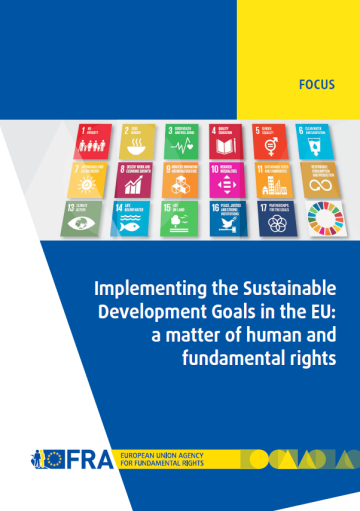
This year’s focus explores the interrelationship between the human and fundamental rights framework and the Sustainable
Development Goals (SDGs) of the global Agenda 2030 in the context of Member States’ and the EU’s internal policies.
It takes a closer look at the SDGs related to reducing inequality (SDG 10) and promoting peace, justice and strong
institutions (SDG 16).
Sa bhliain 2018, tógadh céimeanna chun tosaigh agus céimeanna siar araon i ndáil le cearta bunúsacha a chosaint. Déantar athbhreithniú sa Tuarascáil um Chearta Bunúsacha, 2019 ó FRA (Gníomhaireacht um Chearta Bunúsacha) ar na mórfhorbairtí san earnáil, agus sainaithnítear inti freisin na héachtaí a baineadh amach agus na rudaí ar ábhair imní iad go fóill. San fhoilseachán seo, cuirtear i láthair tuairimí ó FRA faoi na príomhfhorbairtí sna réimsí téamacha a chumhdaítear agus déantar achoimre ar an bhfianaise a thacaíonn leis na tuairimí sin.
The year 2018 brought both progress and setbacks in terms of fundamental rights protection. FRA’s Fundamental Rights Report 2019 reviews major developments in the field, identifying both achievements and remaining areas of concern. This publication presents FRA’s opinions on the main developments in the thematic areas covered, and a synopsis of the evidence supporting these
opinions.
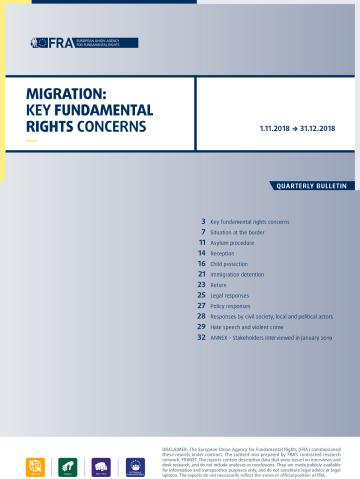
The EU Agency for Fundamental Rights has been regularly collecting data on migration since
September 2015. This report focuses on the fundamental rights situation of people arriving in
Member States and EU candidate countries particularly affected by migration movements.
It addresses fundamental rights concerns between 1 January and 31 March 2019.
Victims of violent crime have various rights, including to protection and to access justice. But how are these rights playing out in practice? Are victims of violent crime properly seen, informed, empowered and heard? Do they tend to feel that justice has been done? Our four-part report series takes a closer look at these questions, based on interviews with victims, people working for victim support organisations, police officers, attorneys, prosecutors and judges.
Victims of violent crime have various rights, including to protection and to access justice. But how are these rights playing out in practice? Are victims of violent crime properly seen, informed, empowered and heard? Do they tend to feel that justice has been done? Our four-part report series takes a closer look at these questions, based on interviews with victims, people working for victim support organisations, police officers, attorneys, prosecutors and judges.
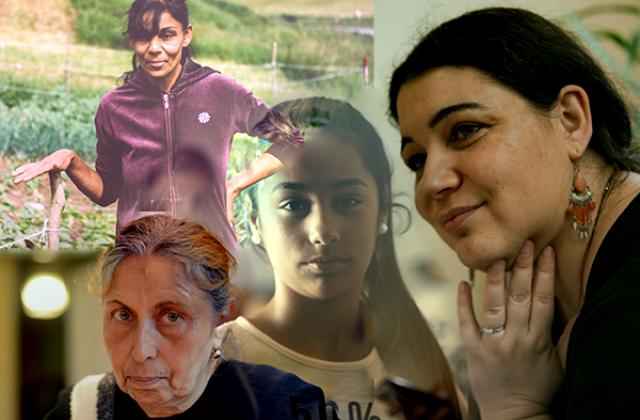
Despite efforts by the European Union (EU) and its Member States to reduce gender inequalities among citizens of Roma origin, important gender differences persist. Drawing on FRA’s own EU-MIDIS II survey research in nine EU Member States this report highlights the position of Roma women in education, employment and health, as well as the extent to which they experience hate-motivated discrimination, harassment and physical violence.
This report looks into the fundamental rights situation of asylum applicants and beneficiaries of international protection in the EU throughout 2018. It pulls together the main issues identified in FRA’s regular updates on fundamental rights related to asylum, migration and borders in selected EU Member States, which the agency has been publishing since September 2015.
Member States have an explicit duty to promote the Charter’s application. These country-sheets support that effort by giving examples of the Charter’s use and highlighting how it adds value.
In November 2016, FRA formulated 21 individual opinions to address the fundamental rights shortcomings identified in the implementation of the hotspot approach in Greece and Italy. Despite genuine efforts to improve the situation since November 2016, many of the suggestions contained in the 21 opinions FRA formulated at the time remain valid.
The EU Agency for Fundamental Rights has been regularly collecting data on migration since
September 2015. This report focuses on the fundamental rights situation of people arriving in
Member States and EU candidate countries particularly affected by large migration movements.