Het Europees Verdrag tot bescherming van de rechten van de mens en het EU-recht vormen een steeds belangrijker kader voor de bescherming van de rechten van buitenlanders. Wetgeving van de Europese Unie met betrekking tot asiel, grenzen en immigratie ontwikkelt zich snel. Er is een aanzienlijke hoeveelheid jurisprudentie van het Europees Hof voor de rechten van de mens, met name met betrekking tot de artikelen 3, 5, 8 en 13 van het EVRM. Het Hof van Justitie van de Europese Unie wordt steeds vaker gevraagd zich uit te spreken over de uitlegging van wettelijke bepalingen van de Europese Unie op dit gebied. In de derde editie van dit handboek, geactualiseerd op grond van de ontwikkelingen tot juli 2020, wordt deze wetgeving van de Europese Unie en de jurisprudentie van de twee Europese hoven op toegankelijke wijze gepresenteerd. Het is bestemd voor juristen, rechters, openbaar aanklagers, immigratiebeambten en niet-gouvernementele organisaties in lidstaten van de EU en van de Raad van Europa.
Europejska konwencja praw człowieka i prawo UE stanowią coraz ważniejsze ramy ochrony praw cudzoziemców. Prawodawstwo Unii Europejskiej w dziedzinie azylu, granic i imigracji szybko się rozwija. Europejski Trybunał Praw Człowieka posiada imponujący dorobek orzeczniczy odnoszący się w szczególności do art. 3, 5, 8 i 13 EKPC. Trybunał Sprawiedliwości Unii Europejskiej coraz częściej otrzymuje wnioski o wypowiedzenie się w sprawie wykładni przepisów prawa Unii Europejskiej w tej dziedzinie. Trzecie wydanie niniejszego podręcznika, uaktualnione do lipca 2020 r., w przystępny sposób przedstawia prawodawstwo Unii Europejskiej oraz dorobek orzeczniczy obu trybunałów europejskich. Jest on przeznaczony dla prawników praktyków, sędziów, prokuratorów, urzędników imigracyjnych i organizacji pozarządowych w państwach członkowskich UE i Rady Europy.
A Convenção Europeia dos Direitos Humanos e o direito da União Europeia proporcionam um enquadramento cada vez mais importante para a proteção dos direitos dos estrangeiros. A legislação da União Europeia em matéria de asilo, fronteiras e imigração está a evoluir rapidamente. O Tribunal Europeu dos Direitos Humanos já possui uma jurisprudência abundante relativa, designadamente, aos artigos 3.º, 5.º, 8.º e 13.º da CEDH. O Tribunal de Justiça da União Europeia é crescentemente solicitado a pronunciar-se sobre a interpretação das disposições do direito da União Europeia neste domínio. Esta terceira edição do manual, que foi atualizada até ao final de julho de 2020, apresenta de forma acessível a legislação da União Europeia e a jurisprudência dos dois tribunais europeus. Tem como destinatários os profissionais da justiça, juízes, procuradores, funcionários dos serviços de imigração e organizações não governamentais dos Estados-Membros da União Europeia e do Conselho da Europa.
Convenția Europeană a Drepturilor Omului și dreptul Uniunii Europene oferă un cadru din ce în ce mai important pentru protecția drepturilor străinilor. Legislația Uniunii Europene în materie de azil, frontiere și imigrație se dezvoltă rapid. Există o jurisprudență
impresionantă a Curții Europene a Drepturilor Omului referitoare în special la articolele 3, 5, 8 și 13 din Convenție. Curtea de Justiție a Uniunii Europene este din ce în ce mai solicitată să se pronunțe cu privire la interpretarea dispozițiilor dreptului
Uniunii Europene în acest domeniu. Cea de a treia ediție a acestui manual, actualizată până în iulie 2020, prezintă într-un mod accesibil această legislație a Uniunii Europene și corpusul de jurisprudență a celor două instanțe europene.
Z Evropsko konvencijo o človekovih pravicah in pravom Evropske unije se zagotavlja vse pomembnejši okvir za varstvo pravic tujcev. Zakonodaja Evropske unije v zvezi z azilom, mejami in priseljevanjem se hitro razvija. Obsežna sodna praksa Evropskega sodišča za človekove pravice se nanaša zlasti na člene 3, 5, 8 in 13 EKČP. Sodišče Evropske unije je vse pogosteje pozvano, naj se izreče o razlagi določb prava EU na tem področju. V tretji izdaji tega priročnika, ki je bila posodobljena do konca julija 2020, sta zakonodaja Evropske unije in sodna praksa obeh evropskih sodišč predstavljeni na dostopen način. Priročnik je namenjen delavcem v pravni stroki, sodnikom, tožilcem, uradnikom za priseljevanje in nevladnim organizacijam v državah članicah EU in Sveta Evrope.
Den europeiska konventionen om skydd för de mänskliga rättigheterna och de grundläggande friheterna och EU-rätten utgör en allt viktigare ram för skyddet av utlänningars rättigheter. EU-lagstiftningen om asyl, gränser och invandring utvecklas snabbt. Det finns en imponerande rättspraxis från Europeiska domstolen för de mänskliga rättigheterna, särskilt när det gäller artiklarna 3, 5, 8 och 13 i Europakonventionen. Europeiska unionens domstol ombeds i allt högre grad att uttala sig om tolkningen av unionsrättsliga bestämmelser på detta område. I den tredje utgåvan av denna handbok, som uppdaterats fram till juli 2020,
presenteras denna EU-lagstiftning och rättspraxis från de två europeiska domstolarna på ett lättillgängligt sätt. Den är avsedd för rättstillämpare, domare, åklagare, immigrationstjänstemän och icke-statliga organisationer i EU och Europarådets medlemsstater.
The EU is founded on the values of democracy, rule of law and respect for human rights. Yet these values, and discussions on fundamental rights at the EU and Member State level, can seem remote in people’s daily lives. With this in mind, FRA explored what people understand, know and experience with respect to their fundamental rights in practice. The resulting data provide comprehensive and comparable evidence on these aspects.
This report looks at fundamental rights compliance at the European Union (EU)’s external land borders, including rivers and lakes. On 30 January 2020, the European Parliament requested the EU Agency for Fundamental Rights (FRA) to prepare a report on these borders. It noted that the report should focus on the correct application of the safeguards in the European asylum acquis and the provisions of the Schengen Borders Code (Regulation (EU) 2016/399).
This report outlines some of the measures EU Member States have put in place to protect public health as Europe faces the ‘second wave’ of the Coronavirus pandemic. It highlights how these may affect fundamental rights, especially social rights.
The EU Fundamental Rights Agency published in 2019 its report on the ‘Integration of young refugees in the EU’. The report explored the challenges of young people who fled armed conflict or persecution and arrived in the EU in 2015 and 2016. The report is based on 426 interviews with experts working in the area of asylum and integration, as well as 163 interviews with young people, aged 16 to 24, conducted between October 2017 and June 2018 in 15 regions and cities located in six Member States: Austria, France, Germany, Greece, Italy and Sweden. The links on this page provide a summary of the information collected during this period for each country about unaccompanied children turning 18 and the change in people’s legal status once international protection is granted. These two issues had at the time been identified as moments requiring sufficient, consistent and systematic support, particularly from lawyers, social workers and guardians, to ensure successful integration.
Business activity affects not just customers, employees, and contractors along supply chains, but often entire communities and the environment. This makes it vital that every business complies with human rights. This comparative report looks at the realities victims face when they seek redress for business-related human rights abuses. It presents the findings of fieldwork research on the views of professionals regarding the different ways people can pursue complaints. The findings highlight that obstacles to achieving justice are often multi-layered.
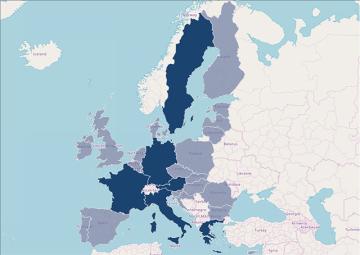
National Human Rights Institutions (NHRIs) are a vital part of the country-level human rights protection system. This report, published 10 years after FRA’s first in-depth study on NHRIs, looks at such bodies in the EU, as well as the Republic of North Macedonia, the Republic of Serbia, and the United Kingdom of Great Britain and Northern Ireland. It explores relevant developments, challenges to their effectiveness and ways to maximise their impact.
FRA’s second survey on LGBTI people in the EU, North Macedonia and Serbia surveyed almost 140,000 participants. This technical report presents a detailed overview of the survey methodology used by FRA when collecting the survey data.
As we enter the second half of 2020, the constraints on our daily lives brought about by the Coronavirus pandemic have become a firm reality. New local lockdowns and the reintroduction of restrictive measures prompted by fresh outbreaks of the virus are a stark reminder that COVID-19 continues to shape our lives – and our enjoyment of fundamental rights – in profound ways. There is compelling evidence of how the pandemic has exacerbated existing challenges in our societies. This FRA Bulletin outlines some of the measures EU Member States adopted to safely reopen their societies and economies while continuing to mitigate the spread of COVID-19. It highlights the impact these measures may have on civil, political and socioeconomic rights.
This practical guidance addresses border-management staff in European Union (EU) Member States who work at the operational level. It aims to support them in implementing the fundamental rights safeguards of the Schengen Borders Code (Regulation (EU) No. 2016/399) and related EU law instruments in their daily work, when carrying out controls at external land borders.
The EU Return Directive (2008/115/EC) in Article 8 (6) introduced an important fundamental rights safeguard for third-country nationals ordered to leave the EU because they do not or no longer fulfil the conditions for entry and/or stay. According to the directive, Member States must provide for an effective forced-return monitoring system.
The Coronavirus pandemic continues to interrupt everyday life in the EU in unprecedented ways. But the way it affects our societies is shifting. As governments gradually lift some of the measures put in place to contain the spread of COVID-19, new fundamental rights concerns arise: how to ensure that the rights to life and health are upheld as daily life transitions to a ‘new normal’. This Bulletin looks at declarations of states of emergency, or equivalent, and how they came under scrutiny. It considers
the impact on fundamental rights in important areas of daily life, and includes a thematic focus on the pandemic's impact on older people.
In 2019, the International Organization for Migration estimated that 1,866 people have died or gone missing while crossing the Mediterranean Sea to reach Europe to escape war or persecution or to pursue a better life. This is an average of five people per day. In recent years, a significant proportion of migrants in distress at sea have been rescued by civil society vessels deployed with a humanitarian mandate to reduce fatalities and bring rescued migrants to safety. Since 2018, however, authorities in some EU Member States started viewing civil society-deployed rescue vessels with hostility. As a reaction, national authorities initiated about 40 administrative and criminal proceedings against crew members or vessels, including seizing the latter. In some cases, rescue vessels were blocked in harbours due to flag issues or the inability to meet technical requirements.
This document presents data from the FRA Fundamental Rights Survey. It includes data on opinions and experiences of people in the European Union (EU) linked to data protection and technology.
This focus takes a closer look at the application of the Charter of Fundamental Rights of the European Union, which has been legally binding for 10 years. At EU level, it has gained visibility and sparked a new fundamental rights culture. At national level, awareness and use of the Charter are limited. Courts increasingly use the Charter, showing the impact of this modern instrument. But its use by governments and parliaments remains low. For instance, there is little indication of anyone regularly scrutinising national legislation that transposes EU law for compatibility with the Charter.