As crianças são juridicamente titulares de direitos. São beneficiárias de todos os direitos humanos e fundamentais, além de serem objeto de regulamentações especiais devido às suas características específicas. O objetivo do presente manual é mostrar a forma como o direito e a jurisprudência europeus atendem aos interesses e necessidades específicos das crianças. Ilustra igualmente a importância dos progenitores e tutores ou outros representantes legais e faz referência, quando necessário, aos principais direitos e responsabilidades conferidos às pessoas que têm a guarda das crianças
Copiii sunt îndreptățiți să se bucure de drepturi depline. Ei beneficiază de toate drepturile omului și de toate drepturile fundamentale și fac obiectul unor reglementări speciale, date fiind caracteristicile lor specifice. Manualul de față își propune să ilustreze modul în care legislația și jurisprudența europeană răspund intereselor și nevoilor specifice ale copiilor. De asemenea, ilustrează importanța rolului jucat de părinți și tutori sau alți reprezentanți legali și face referire, unde este cazul, la situațiile în care drepturile și responsabilitățile le revin în cea mai mare măsură persoanelor în grija cărora se află copiii. El constituie un punct de referință în ceea ce privește dreptul Uniunii Europene (UE) și al Consiliului Europei (CoE) cu privire la aceste domenii, deoarece explică modul în care este reglementat fiecare aspect în dreptul UE, inclusiv în Cartă, precum și în Convenția europeană a drepturilor omului (Convenția), în Carta socială europeană și în alte instrumente juridice ale CoE.
Deti plnohodnotne požívajú práva. Sú držitelia všetkých ľudských a základných práv, ako aj subjekty osobitných predpisov vzhľadom na ich osobitné charakteristiky. Cieľom tejto príručky je ilustrovať, ako sa prostredníctvom európskych zákonov a judikatúry uspokojujú osobitné záujmy a potreby detí. Takisto ilustruje význam rodičov a poručníkov alebo iných zákonných zástupcov a v prípade potreby odkazuje na to, kde sú práva a povinnosti v najväčšej miere zverené opatrovateľom detí.
Otroci so polnopravni imetniki pravic. Zagotovljene so jim vse človekove in temeljne pravice ter so zaradi svojih posebnih lastnosti subjekti posebnih ureditev. Namen tega priročnika je ponazoriti, kako se v evropskem pravu in sodni praksi upoštevajo posebni interesi in potrebe otrok. V njem je poudarjen tudi pomen staršev in skrbnikov ali drugih zakonitih zastopnikov, poleg tega pa, kjer je
ustrezno, vključuje primere, v katerih se pravice in odgovornosti podelijo predvsem skrbnikom otrok.
Barn har alldeles egna rättigheter. De är berättigade till alla mänskliga och grundläggande rättigheter och omfattas av ett särskilt regelverk med tanke på deras särskilda egenskaper. Syftet med denna handbok är att visa hur europeisk lagstiftning och rättspraxis tar till vara barns särskilda intressen och behov. Den beskriver också föräldrars, vårdnadshavares eller andra juridiska företrädares betydelse och anger i tillämpliga fall var rättigheter och ansvar i första hand innehas av barnens vårdnadshavare. Den är en första referenspunkt för både unionsrätten och Europarådets regelverk avseende dessa ämnesområden och förklarar hur varje fråga regleras enligt unionsrätten och enligt EU-stadgan om de grundläggande rättigheterna, Europakonventionen, den europeiska sociala stadgan och Europarådets övriga instrument.
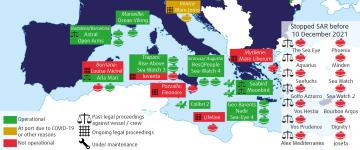
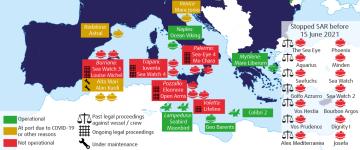
The EU Agency for Fundamental Rights (FRA) regularly collects data on NGO vessels involved in search and rescue in the Mediterranean. This includes any legal proceedings against them, as well as any difficulties disembarking migrants in safe ports. The International Organization for Migration estimates that from January to 10 December 2021 about 1,654 people have died or gone missing while crossing the Mediterranean Sea to reach Europe to escape war or persecution or to pursue a better life. This is an average of more than four people per day. Deadly incidents have also occurred recently in the Channel (La Manche).
This report examines the EU’s main criminal law instrument in the field of counter-terrorism, Directive (EU) 2017/541. Specifically, it considers how the directive engages issues of fundamental rights, affecting individuals, groups and society as a whole.
This report outlines to what extent legal aid is available to those held in pre-removal detention in the 27 EU Member States, and in North Macedonia and Serbia, during procedures related to their return. These involve decisions on return, on detention pending removal, the removal itself and on bans on entry. The report also examines when people are entitled to free legal aid and how this aid is funded, as well as who provides representation and various factors that limit the scope of legal aid.
Civil society organisations play a vital role in promoting fundamental rights, but they face diverse challenges across the European Union. This report presents FRA’s findings on a range of such challenges. The findings are based on research, and on two online consultations with civil society organisations, carried out in 2020.
This note sets out human rights standards stemming from both the European Convention on Human Rights and European Union (EU) law that apply to effective remedies for human rights violations at borders, together with those on complaints mechanisms and investigations into complaints of rights violations at borders.
The International Organization for Migration estimates that about 813 people died or went missing crossing the Mediterranean Sea to reach Europe to escape war, persecution or to pursue a better life in 2021, up to 15 June. This is an average of almost five people per day. The EU Agency for Fundamental Rights (FRA) collects data on NGO ships involved in search and rescue in the Mediterranean, legal proceedings against them, as well as difficulties in disembarking migrants in safe ports.
FRA’s Fundamental Rights Report 2021 reviews major developments in the field in 2020, identifying both achievements and areas of concern. It also presents FRA’s opinions on these developments, including a synopsis of the evidence supporting these opinions. This year’s focus chapter explores the impact of the COVID-19 pandemic on fundamental rights. The remaining chapters cover: the EU Charter of Fundamental Rights; equality and non-discrimination; racism, xenophobia and related intolerance; Roma equality and inclusion; asylum, borders and migration; information society, privacy and data protection; rights of the child; access to justice; and the implementation of the Convention on the Rights of Persons with Disabilities.
This paper presents statistical survey data for the EU on how often people are stopped by the police, in what kind of situations they are stopped, the action taken by the police during stops, and views on whether or not the police acted respectfully.
This report looks at the practical implementation of the presumption of innocence in criminal proceedings, and related rights, in 9 EU Member States (Austria, Belgium, Bulgaria, Cyprus, Germany, Italy, Lithuania, Poland and Portugal). Article 48 of the EU Charter of Fundamental Rights guarantees the presumption of innocence – but, as FRA’s research underscores, it can be undermined in many ways.
В настоящото резюме се представят основните
изводи от втория основен доклад на FRA, които
се базират на проучването ѝ за основните
права. В проучването са събрани данни от около
35 000 лица относно техния опит, възприятия
и мнения по редица въпроси, които са
обхванати по различен начин от правата на
човека.
Toto shrnutí představuje hlavní poznatky z druhé
hlavní zprávy agentury FRA, která vychází
z průzkumu o základních právech. Průzkum
shromáždil od přibližně 35 000 osob údaje o jejich
zkušenostech, vnímání a názorech na celou řadu
otázek, které různým způsobem zasahují do oblasti
lidských práv.
Dette sammendrag fremlægger den vigtigste
information fra FRA’s anden hovedrapport, der er
baseret på agenturets undersøgelse om
grundlæggende rettigheder. I undersøgelsen blev
der indsamlet data fra ca. 35 000 personer om
deres oplevelser, opfattelse og holdninger
vedrørende en række problemstillinger, der på
forskellig vis er omfattet af
menneskerettighederne.
Η παρούσα περίληψη παρουσιάζει τα κυριότερα
στοιχεία της δεύτερης κύριας έκθεσης του Οργανισμού
Θεμελιωδών Δικαιωμάτων της Ευρωπαϊκής Ένωσης
(FRA) η οποία βασίζεται στην έρευνά του για τα
θεμελιώδη δικαιώματα. Για τις ανάγκες της έρευνας
συλλέχθηκαν δεδομένα από περίπου 35 000 πολίτες
σχετικά με τις εμπειρίες, τις αντιλήψεις και τη γνώμη
τους για μια σειρά θεμάτων που άπτονται με ποικίλους
τρόπους των ανθρωπίνων δικαιωμάτων.
This summary presents the main insights from FRA’s second main report based on its Fundamental Rights Survey. The survey collected data from around 35,000 people about their experiences, perceptions and opinions on a range of issues that are variously encompassed by human rights.
Este resumen presenta las principales percepciones
del segundo informe de la FRA basado en su
Encuesta sobre los derechos fundamentales. La
encuesta recabó datos de unas 35 000 personas
sobre sus experiencias, percepciones y opiniones
en relación con una serie de cuestiones
relacionadas, de diversas maneras, con los
derechos humanos.