This guide explains what profiling is, the legal frameworks that regulate it, and why conducting profiling lawfully is both necessary to comply with fundamental rights and crucial for effective policing and border management. The guide also provides practical guidance on how to avoid unlawful profiling in police and border management operations.
La presente guida spiega che cos’è la profilazione, illustra i quadri giuridici che la disciplinano ed espone i motivi per cui l’applicazione della profilazione entro i limiti stabiliti dalla legge è necessaria per rispettare i diritti fondamentali ed essenziale per un’efficace attività di polizia e gestione delle frontiere. La guida fornisce inoltre indicazioni pratiche su come evitare la profilazione illecita nelle operazioni di polizia e di gestione delle frontiere.
The Convention on the Rights of Persons with Disabilities commits both the EU and all of its Member States to realising the right of persons with disabilities to live independently in the community – which includes achieving deinstitutionalisation for those residing in institutional settings. But much remains to be done to make this a reality in practice. This report presents the main insights gained during fieldwork on the drivers of and barriers to deinstitutionalisation. Focusing on the local level, it gives voice to a diverse set of actors – most importantly, to people with disabilities themselves.
Almost twenty years after adoption of EU laws forbidding discrimination, people of African descent in the EU face widespread and entrenched prejudice and exclusion. This report outlines selected results from FRA's second large-scale EU-wide survey on migrants and minorities (EU-MIDIS II) carried out in 2016. It examines the experiences of almost 6,000 people of African descent in 12 EU Member States.
Civil society organisations play a critical role in democracies, and the importance of their work is widely recognised in international legal and policy documents. However, they face many obstacles when it comes to their day-to-day work. Based on the results of an online consultation with FRA's civil society network, the Fundamental Rights Platform (FRP), in September 2018, this paper complements the January 2018 report.
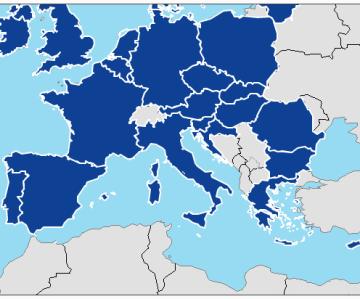
The EU Agency for Fundamental Rights has been collecting relevant data since September 2015, in light of the increasing numbers of refugees, asylum seekers and migrants entering the EU. This report focuses on the fundamental rights situation of people arriving in Member States particularly affected by large migration movements. The countries covered are: Austria, Bulgaria, Croatia, Denmark, Finland, France, Germany, Greece, Hungary, Italy, the Netherlands, Poland, Spain and Sweden.
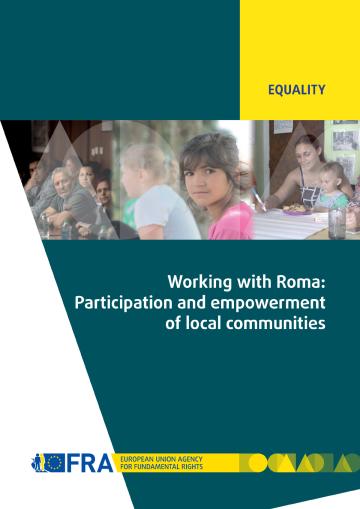
This report presents the main insights gained during the EU Fundamental Rights Agency’s project on local engagement for Roma inclusion, which explores how to best involve Roma in integration efforts at the local level. Bringing together local authorities and residents, especially Roma, it investigated what aspects work, which ones do not, and why this is the case.
Antisemitism can be expressed in the form of verbal and physical attacks, threats,
harassment, discrimination and unequal treatment, property damage and graffiti or other
forms of speech or text, including on the internet. The present report provides an overview of data on antisemitism as recorded by
international organisations and by official and unofficial sources in the 28 European
Union (EU) Member States, based on their own definitions and categorisations.
The EU Agency for Fundamental Rights’ 2018 Fundamental Rights Forum
brought together more than 700 human rights champions at a time of
widening social divisions and increasingly polarised politics across
Europe.
As a very modern human rights catalogue containing many rights not found in established bills of rights, the Charter indeed looks good on paper. Those familiar with the main principles of EU law can usually quickly recite that the Charter is always binding on the EU, and binding on Member States only when they are "implementing EU law". But what does this often-quoted language from Article 51 of the Charter actually mean?
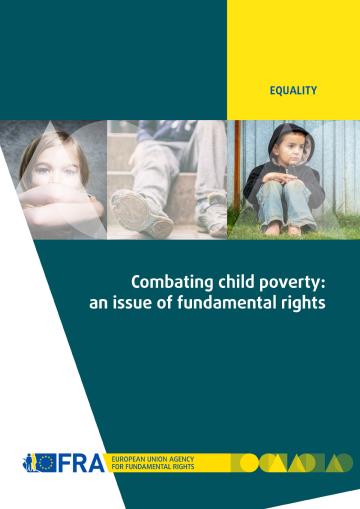
Almost 25 million children under 18 are at risk of poverty or social exclusion in the EU. Poverty deprives children of educational
opportunities, childcare, access to health care, adequate food and housing, family support and even protection from violence.
This report outlines data and survey findings that highlight the magnitude of child poverty in the EU, but also presents tools
available to counter this phenomenon and keep track of progress made.
This note draws attention to the recent trend of criminalising search and rescue operations (SAR) in the Mediterranean Sea carried out by non-governmental organisations (NGOs) or other private entities. This includes seizing rescue vessels, as well as arrests for crew members, in some EU Member States. Most of such incidents concerned NGOs operating in the Central Mediterranean Sea.
With this Opinion, FRA aims to contribute to the European Parliament's own-initiative report on the “Implementation of the Charter of Fundamental Rights of the European Union in the EU institutional framework”, being prepared in the Parliament’s Committee for Constitutional Affairs (AFCO). The request aims at understanding the interaction between the Charter’s implementation at national and EU level, and whether there are “instruments, mechanisms and practices” available at EU level to assist Member States to better implement the Charter.
The EU Agency for Fundamental Rights has been collecting relevant data since September 2015, in light of the increasing numbers of refugees, asylum seekers and migrants entering the EU. This report focuses on the fundamental rights situation of people arriving in Member States particularly affected by large migration movements. The countries covered are: Austria, Bulgaria, Croatia, Denmark, Finland, France, Germany, Greece, Hungary, Italy, the Netherlands, Poland, Spain and Sweden.
The EU Agency for Fundamental Rights has been collecting relevant data since September 2015, in light of the increasing numbers of refugees, asylum seekers and migrants entering the EU. This report focuses on the fundamental rights situation of people arriving in Member States particularly affected by large migration movements. The countries covered are: Austria, Bulgaria, Croatia, Denmark, Finland, France, Germany, Greece, Hungary, Italy, the Netherlands, Poland, Spain and Sweden.
The EU Return Directive (2008/115/EC) in Article 8 (6) introduced an important fundamental rights safeguard for third-country nationals ordered to leave the EU because they do not or no longer fulfil the conditions for entry and/or stay. According to the Directive, Member States must provide for an effective forced-return monitoring system.
Across the European Union, people face hatred because of their skin colour, ethnicity, religion, gender or sexuality. In response, the EU and its Member States have introduced laws against hate crime and support services for victims. But these will only fulfil their potential if victims report hate-motivated harassment and violence to the police, and if police officers record such incidents as hate crimes. This report provides rich and detailed information on hate crime recording and data collection systems across the EU, including any systemic cooperation with civil society.
European societies are not getting any younger! It is a simple truth we must face both about ourselves and Europe as a whole. In two generations, by 2080, those aged 65 or above will account for almost 30% of the European Union’s population.
The year 2017 brought both progress and setbacks in terms of rights protection. The European Pillar of Social Rights marked an important move towards a more ‘social Europe’. But, as experiences with the EU Charter of Fundamental Rights underscore, agreement on a text is merely a first step. Even in its eighth year as the EU's binding bill of rights, the Charter's potential was not fully exploited, highlighting the need to more actively promote its use.
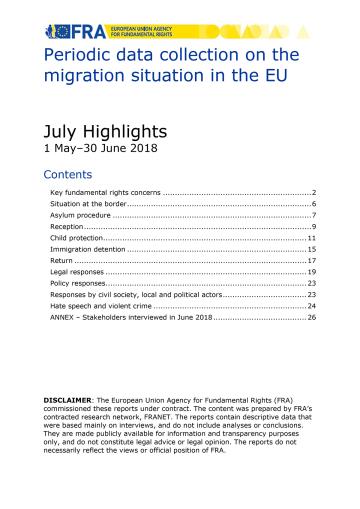
In view of the increasing numbers of refugees, asylum seekers and migrants entering the EU, the EU Agency for Fundamental Rights has been collecting relevant data since September 2015. This report focuses on the fundamental rights situation of people arriving in Member States particularly affected by large migration movements. This report addresses fundamental rights concerns between 1 March-30 April 2018.