This annual overview provides an update of the most recent figures on antisemitic incidents, covering the period 1 January 2008 – 31 December 2018, across the EU Member States, where data are available. It includes a section that presents evidence from international organisations. In addition, for the first time, it provides an overview of how Member States that have adopted or endorsed the non-legally binding working definition of antisemitism adopted by the International Holocaust Remembrance Alliance (IHRA) (2016) use or intend to use it.
Based on FRA’s second large-scale survey on experiences and perceptions of antisemitism, this report focuses on the perspectives of young Jewish Europeans (aged 16-34) living in twelve EU Member States. It first describes this particular group and takes a look at defining antisemitism and understanding the place of Israel in it.
Šajā ziņojumā ir izklāstīti galvenie konstatējumi, kas sniegti FRA otrajā pētījumā par ebreju
izcelsmes cilvēku pieredzi attiecībā uz naida noziegumiem, diskrimināciju un antisemītismu
Eiropas Savienībā — lielākajā no pasaulē jebkad veiktajiem pētījumiem par ebreju
izcelsmes cilvēkiem.
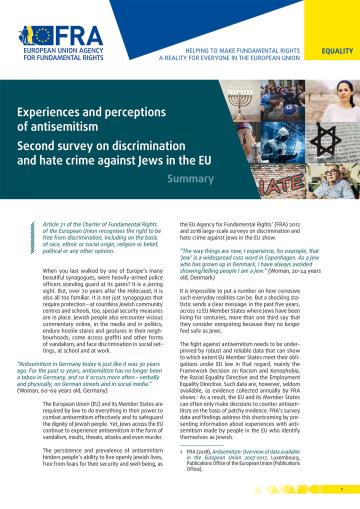
This report outlines the main findings of FRA’s second survey on Jewish people’s experiences with hate crime, discrimination and antisemitism in the European Union – the biggest survey of Jewish people ever conducted worldwide. Covering 12 EU Member States, the survey reached almost 16,500 individuals who identify as being Jewish. It follows up on the agency’s first survey, conducted in seven countries in 2012.
Eiropas diskriminācijas novēršanas tiesību akti, jo īpaši ES diskriminācijas novēršanas direktīvas, un Eiropas Cilvēktiesību konvencijas 14. pants un Protokols Nr. 12 aizliedz diskrimināciju dažādos kontekstos un dažādu pamatu dēļ. Šajā rokasgrāmatā Eiropas diskriminācijas novēršanas tiesības, kas izriet no šiem abiem avotiem, ir aplūkotas kā savstarpēji papildinošas sistēmas, tās izmantojot kā savstarpēji aizstājamas, ciktāl tās pārklājas, vienlaikus uzsverot atšķirības, ja tādas pastāv.
This meeting report distils the discussions held during a high-level expert meeting organised by FRA, which explored the shared space between religion and human rights.
Seventeen years after adoption of EU laws that forbid discrimination, immigrants, descendants of immigrants, and minority ethnic groups continue to face widespread discrimination across the EU and in all areas of life – most often when seeking employment. For many, discrimination is a recurring experience. This is just one of the findings of FRA’s second European Union Minorities and Discrimination Survey (EU-MIDIS II), which collected information from over 25,500 respondents with different ethnic minority and immigrant backgrounds across all 28 EU Member States.


 Report / Paper / Summary27January2026