Equality

Religion et convictions

Highlights

  • Report / Paper / Summary
    27
    janvier
    2026
    This report looks at antisemitism in the EU, focusing on what can be done to address gaps in recording and inconsistencies in data collection. It highlights existing tools and guidance for Member States to improve their recording systems. The analysis is based on official administrative data and information from publicly available sources across EU Member States, as well as Albania, North Macedonia, and Serbia. Detailed country overviews are available for all countries covered. Antisemitism has been monitored by FRA since 2004. This report builds on the 2024 publication, ‘Jewish People’s Experiences and Perceptions of Antisemitism’.
  • Page
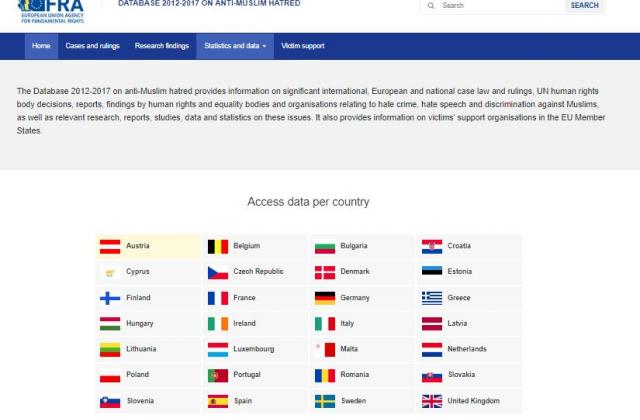
    The database provides up-to-date information on hate crime, incitement to violence and hatred, harassment, hate speech and discrimination against Muslims in the EU, Albania, North Macedonia and Serbia. Data for the United Kingdom exists up to 2019.
  • Report / Paper / Summary
    25
    octobre
    2024
    Racism towards Muslims is increasing in countries across the EU. Muslims face racial discrimination and racist harassment because of their religion, skin colour or ethnic background. This report shows a sharp rise since the last survey in 2016.
  • Report / Paper / Summary
    11
    juillet
    2024
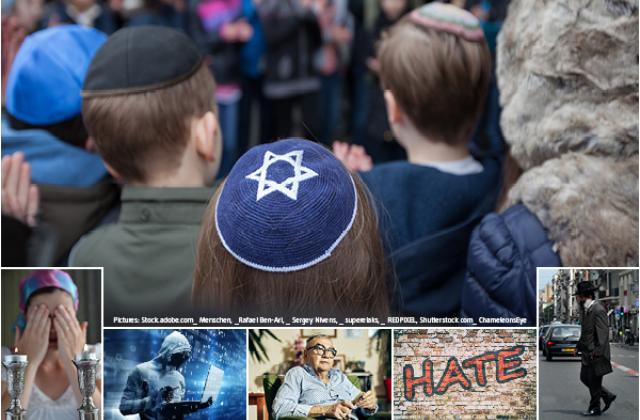
    Antisemitism is still a reality for many Jewish people in the EU today. Faced with prejudice and hostility, most feel unable to live openly Jewish lives. This report presents the results of FRA’s third EU survey of Jewish people’s experiences and perceptions of antisemitism. The survey took place before the Hamas attacks in October 2023 and the war in Gaza; however, it includes evidence from a consultation with national and European Jewish umbrella organisations since. It covers 13 EU Member States that together account for around 96 % of the EU’s Jewish population.
    Produits
    15
    décembre
    2017
    This meeting report distils the discussions held during a high-level expert meeting organised by FRA, which explored the shared space between religion and human rights.
    6
    décembre
    2017
    Seventeen years after adoption of EU laws that forbid discrimination, immigrants, descendants of immigrants, and minority ethnic groups continue to face widespread discrimination across the EU and in all areas of life – most often when seeking employment. For many, discrimination is a recurring experience. This is just one of the findings of FRA’s second European Union Minorities and Discrimination Survey (EU-MIDIS II), which collected information from over 25,500 respondents with different ethnic minority and immigrant backgrounds across all 28 EU Member States.

    The EU Agency for Fundamental Rights (FRA) launches its second EU Minorities and Discrimination Survey (EU-MIDIS II).
    This survey involved interviews with 25,515 people with different ethnic minority and immigrant backgrounds across 28 EU countries. It explores issues concerning discrimination as well as experiences of harassment, hate-motivated violence and discriminatory profiling.
    This infographic illustrates the main experiences immigrants and ethnic minorities across the EU have when it comes to discrimination. It draws from the findings from FRA's EU-MIDIS II survey.
    This infographic illustrates the main experiences immigrants and ethnic minorities across the EU have when it comes to victimisation. It draws from the findings from FRA's EU-MIDIS II survey.
    21
    septembre
    2017
    Les musulmans qui vivent dans l’Union européenne sont confrontés à la discrimination dans de nombreuses circonstances, en particulier lorsqu’ils cherchent un emploi, qu’ils travaillent ou qu’ils essaient d’accéder à des services publics ou privés. Ce rapport examine la manière dont des caractéristiques telles que le prénom et le nom d’une personne, la couleur de la peau et le fait de porter des symboles religieux visibles (le foulard par exemple) peuvent déclencher un comportement discriminatoire ou de harcèlement.
    17
    novembre
    2016
    Media content and political discourse in EU Member States, whether online or
    offline, show incitement to discrimination, hatred or violence on different
    grounds, as evidence collected by FRA reveals. The growing reliance on the internet as the main source of
    information for many enables the fast spread of often unverified statements
    that could also incite to hatred.
    This 2012 survey provides comparable data from eight countries (Belgium, France, Germany, Hungary, Italy, Latvia, Sweden and the UK) on Jewish people’s experiences and perceptions of discrimination, hate-motivated crime and antisemitism. The data explorer also allows the filtering of responses by age, gender and strength of Jewish identity of respondents.
    1
    octobre
    2013
    S'appuyant sur les éléments de preuve recueillis et analysés par la FRA, l’agence présente un ensemble d'avis visant à améliorer la protection contre la discrimination. Ceux-ci pourraient être pris en compte dans la mise en œuvre et l'éventuelle réforme du cadre juridique de l'UE sur la protection contre la discrimination.
    26
    janvier
    2010
    L’Holocauste est à juste titre devenu une partie intégrante de la mémoire collective culturelle de l’Europe et du monde. Ce rapport présente les résultats de la première enquête à l’échelle de l’UE consacrée au rôle des sites et des expositions liés à l’Holocauste dans l’éducation des jeunes Européens relative à l’Holocauste et aux droits de l’homme.
    11
    mars
    2013
    Certain people are seen as particularly vulnerable to unequal treatment, because they share a combination of characteristics that may trigger discrimination. A Roma woman sterilised without her informed consent, for example, has suffered discrimination not just because of her sex, as all women do not face this treatment, nor just because she is Roma, as Roma men may not face this treatment. The discriminatory treatment is based specifically on the intersection of her sex and ethnic origin.
    11
    mars
    2013
    The FRA report 'Inequalities and multiple discrimination in access to and quality of healthcare' examines experiences of unequal treatment on more than one ground in healthcare, providing evidence of discrimination or unfair treatment.
    27
    novembre
    2012
    Les recherches de la FRA indiquent que la discrimination et l’intolérance persistent dans l’Union européenne (UE), malgré les meilleurs efforts déployés par des États membres pour les éradiquer. La violence verbale, les agressions physiques et les meurtres motivés par les préjugés atteignent la société européenne dans toute sa diversité, des minorités visibles aux personnes handicapées. Le présent rapport de la FRA est destiné à appuyer l’UE et ses États membres dans leur lutte contre ces violations des droits fondamentaux en les rendant plus visibles et en veillant à ce que leurs auteurs répondent de leurs actes.

    27
    novembre
    2012
    Ce 6e EU-MIDIS "Données en bref" rend compte des données portant sur les expériences des personnes interrogées en matière de victimisation concernant cinq types de crimes : vol de véhicule ou d’objets à l’intérieur d’un véhicule ; vol avec eff raction ou tentative d’eff raction ; vol d’eff ets personnels sans recours à la force ou à la menace ; agression et menace ; harcèlement grave. L’Enquête de l’Union européenne sur les minorités et la discrimination (EU-MIDIS) est la première enquête à l’échelle de l’Union européenne (UE) interrogeant 23 500 personnes sur leurs expériences en matière de discrimination et de victimisation criminelle au quotidien.

    mai
    2009
    Le présent rapport, consacré aux répondants qui se sont identifiés comme musulmans, est le second d’une série de rapports «Données en bref» présentant les résultats spécifiques issus de l’enquête.
    2
    Février
    2011
    The Fundamental Rights Agency publishes its first report on multiple discrimination: EU-MIDIS Data in Focus 5: ‘Multiple Discrimination' which focuses on perceptions of multiple discrimination experiences by respondents of ethnic or immigrant origin, compared with the general population.
    9
    novembre
    2010
    Ce manuel expose une série d’exemples, de conseils et d’informations contextuelles historiques en vue d’aider les enseignants et les étudiants à faire de leurs visites de sites et expositions relatifs à l’Holocauste une expérience utile et enrichissante.
    7
    mai
    2010
    Le présent rapport porte sur la sensibilisation des personnes interrogées à leurs droits en matière de non-discrimination, notamment sur leur connaissance des organismes de promotion de l’égalité et organisations associées dans les États membres.