This opinion illustrates the extent and nature of lived experiences of inequality and discrimination across the EU. It does so with reference to the grounds of discrimination and areas of life covered by the racial and employment equality directives, as well as in relation to the grounds and areas covered by the proposed Equal Treatment Directive.
This report looks at the practical implementation of the presumption of innocence in criminal proceedings, and related rights, in 9 EU Member States (Austria, Belgium, Bulgaria, Cyprus, Germany, Italy, Lithuania, Poland and Portugal). Article 48 of the EU Charter of Fundamental Rights guarantees the presumption of innocence – but, as FRA’s research underscores, it can be undermined in many ways.
FRA’s 2019 survey on Roma and Travellers in Belgium, France, Ireland, the Netherlands, Sweden and the United Kingdom interviewed almost 4 700 Roma and Travellers, collecting information on more than 8 200 individuals living in their households.
This note outlines how to help ensure a dignified stay for third-country nationals who are apprehended or intercepted at external borders. Specifically, FRA identifies twelve points for protection-sensitive and fundamental rights-compliant planning and design of initial-reception facilities at such borders. These are based on the agency’s work at external borders, including data collection and research activities.
This video statement by FRA Director Michael O’Flaherty was recorded for the online event '2021 Mayors Summit Against Anti-Semitism' which took place on 16 March 2021. The event was hosted by the city of Frankfurt am Main in partnership with the Combat Anti-Semitism Movement (CAM).
This summary presents the main insights from FRA’s second main report based on its Fundamental Rights Survey. The survey collected data from around 35,000 people about their experiences, perceptions and opinions on a range of issues that are variously encompassed by human rights.
It’s said you have the right to have fundamental human rights. FRA’s Gabriel Toggenburg explains his firm belief in the EU justice system to protect those basic freedoms. For Gabriel, a person’s identity does not necessarily come from their nationality. He tells how being born in Germany with family roots and connections in Italy, France, the UK, Switzerland and Russia shaped those views.
The EU Agency for Fundamental Rights has been regularly collecting data on asylum and migration since September 2015. This report focuses on the fundamental rights situation of people arriving in Member States and EU candidate countries particularly affected by migration. It addresses fundamental rights concerns between 1 October and 31 December 2020.
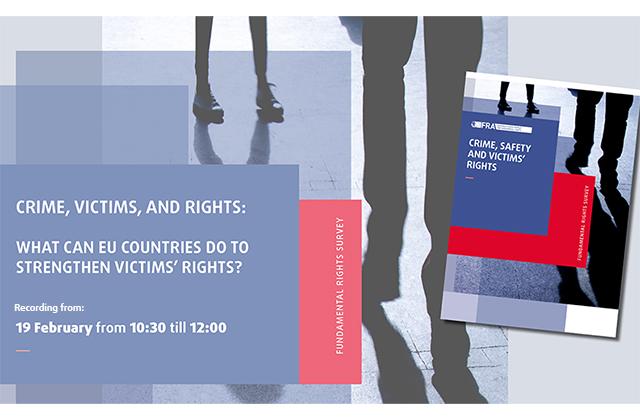
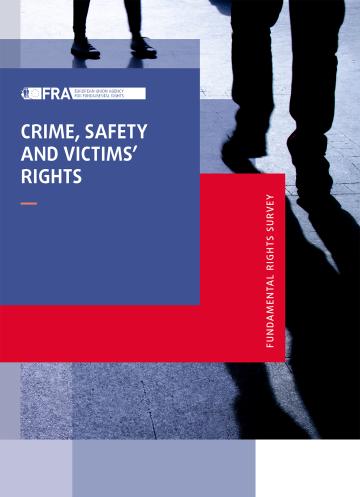
Crime can touch any of us – as witnesses or as victims. But no matter who you are, we all have rights when it comes to justice. It is for this reason that the European Union Agency for Fundamental Rights asked 35,000 people across Europe about their experiences of crime in its Fundamental Rights Survey, and the results are in.
This is the second main report from FRA’s Fundamental Rights Survey, which collected data from 35,000 people on a range of issues. This report focuses on respondents’ experiences as victims of selected types of crime, including violence, harassment, and property crime. The report also examines how often these crimes are reported to the police, and presents further details relating to harassment and violence, such as the perpetrators and where the incidents took place.
Lots of small, positive acts can lead to great things. FRA’s Friso Roscam Abbing explains how you can defend human rights by something as simple as voting. Friso shares all he learned from the fall of the Iron Curtain. And how you too can affect such world-changing events by exercising your rights at home. By using your right to vote, you too can make a difference.
An equal society is a better society for everyone. FRA’s Ursula Till-Tentschert warns against sidelining women — once empowered, there is nothing they cannot do. Ursula remembers the injustice of having to sew at school while her brothers carved models from wood. It is only a short step from classroom discrimination to outright prejudice. She celebrates the EU laws that protect us. But she says they will only truly work if we also smash the invisible social barriers to empowerment.
Never take today’s freedoms for granted. FRA’s Jana Gajdošová remembers authoritarian rule in her native Czechoslovakia. Then, shortages, secret police and petty corruption were the norm. The State Security even posted spies to watch churchgoers at mass. Jana tells how the repression she experienced in her childhood inspired her to fight for the rights we all enjoy now in Europe. If you care for freedom, this is a must-listen.
As a parent, you realise children are the future. FRA’s Nicole Romain shares the anxiety she has felt as the mother of a mixed race family living in predominantly white countries. She explains how the Fundamental Rights Charter delivers hope for an inclusive Europe where we all respect and celebrate our differences.
National Human Rights Institutions (NHRIs) are a vital part of the country-level human rights protection system. By raising awareness, providing advice, monitoring and holding authorities to account, they have a central role in navigating the great human rights challenges of our day – tackling both persistent concerns like discrimination and inequality, and novel issues such as the rights implications of artificial intelligence and of the COVID-19 pandemic.
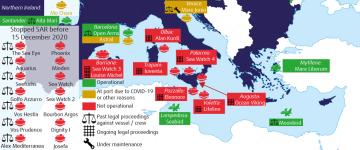
In 2020 (until 15 December), the International Organization for Migration estimated that about 1,054 people have died or gone missing while crossing the Mediterranean Sea to reach Europe to escape war or persecution or to pursue a better life. This is an average of almost three people per day. In the past years, a significant number of migrants in distress at sea have been rescued by civil society vessels deployed with a humanitarian mandate to reduce fatalities and bring rescued migrants to safety. Since 2018, however, national authorities initiated some 50 administrative and criminal proceedings against crew members or vessels, also seizing the latter. In some cases, rescue vessels were blocked in harbours due to flag issues or the inability to meet maritime safety-related and other technical requirements.
The European Convention on Human Rights and European Union law provide an increasingly important framework for the protection of the rights of foreigners. European Union legislation relating to asylum, borders and immigration is developing fast. There is an impressive body of case law by the European Court of Human Rights relating in particular to Articles 3, 5, 8 and 13 of the ECHR. The Court of Justice of the European Union is increasingly asked to pronounce on the interpretation of European Union law provisions in this field. The third edition of this handbook, updated up to July 2020, presents this European Union legislation and the body of case law by the two European courts in an accessible way.
This report looks at fundamental rights compliance at the European Union (EU)’s external land borders, including rivers and lakes. On 30 January 2020, the European Parliament requested the EU Agency for Fundamental Rights (FRA) to prepare a report on these borders. It noted that the report should focus on the correct application of the safeguards in the European asylum acquis and the provisions of the Schengen Borders Code (Regulation (EU) 2016/399).
This report outlines some of the measures EU Member States have put in place to protect public health as Europe faces the ‘second wave’ of the Coronavirus pandemic. It highlights how these may affect fundamental rights, especially social rights.