This Coronavirus Bulletin focuses on equitable access to vaccines. It outlines the situation in the 27 EU Member States from 1 March to 30 April 2021. The bulletin looks at two main areas: planning and prioritisation in deploying Covid-19 vaccinations and their rollout in the countries. It covers information and communication campaigns, as well as (pre)registration channels for and the administration of vaccinations.
The year 2020 brought both progress and setbacks in terms of fundamental rights protection. FRA’s Fundamental Rights Report 2021 reviews major developments in the field, identifying both achievements and remaining areas of concern. This publication presents FRA’s opinions on the main developments in the thematic areas covered, and a synopsis of the evidence supporting these opinions.
L’année 2020 a été marquée à la fois par des
avancées et des reculs en termes de protection
des droits fondamentaux. Le Rapport sur les
droits fondamentaux 2021 de l’Agence des droits
fondamentaux de l’Union européenne examine les
principales évolutions dans ce domaine, en recensant
les progrès accomplis et les sujets de préoccupation
persistants.
Bhí idir dhul chun cinn agus dul ar gcúl le tabhairt faoi
deara i ndáil le cosaint na gceart bunúsach in 2020. Sa
Tuarascáil um Chearta Bunúsacha 2021 ó FRA, féachtar
siar ar na mórfhorbairtí sa réimse agus sainaithnítear
na héachtaí a bhí ann agus réimsí ar ábhair imní
iad go fóill.
FRA’s Fundamental Rights Report 2021 reviews major developments in the field in 2020, identifying both achievements and areas of concern. It also presents FRA’s opinions on these developments, including a synopsis of the evidence supporting these opinions. This year’s focus chapter explores the impact of the COVID-19 pandemic on fundamental rights. The remaining chapters cover: the EU Charter of Fundamental Rights; equality and non-discrimination; racism, xenophobia and related intolerance; Roma equality and inclusion; asylum, borders and migration; information society, privacy and data protection; rights of the child; access to justice; and the implementation of the Convention on the Rights of Persons with Disabilities.
This focus looks at COVID-19’s impact on fundamental rights. It underscores that a human rights-based approach to tackling the pandemic requires balanced measures that are based on law, necessary, temporary and proportional. It also requires addressing the pandemic’s socio-economic impact, protecting the vulnerable and fighting racism.
Ce «Focus» porte sur l’impact de la COVID 19 sur les droits fondamentaux. Il souligne qu’une approche de la lutte contre la pandémie fondée sur les droits de l’homme nécessite des mesures équilibrées fondées sur le droit, nécessaires, temporaires et proportionnées. Elle nécessite également de lutter contre les conséquences socio-économiques de la pandémie, de protéger les personnes vulnérables et de combattre le racisme.
This paper presents statistical survey data for the EU on how often people are stopped by the police, in what kind of situations they are stopped, the action taken by the police during stops, and views on whether or not the police acted respectfully.
This opinion illustrates the extent and nature of lived experiences of inequality and discrimination across the EU. It does so with reference to the grounds of discrimination and areas of life covered by the racial and employment equality directives, as well as in relation to the grounds and areas covered by the proposed Equal Treatment Directive.
FRA’s 2019 survey on Roma and Travellers in Belgium, France, Ireland, the Netherlands, Sweden and the United Kingdom interviewed almost 4 700 Roma and Travellers, collecting information on more than 8 200 individuals living in their households.
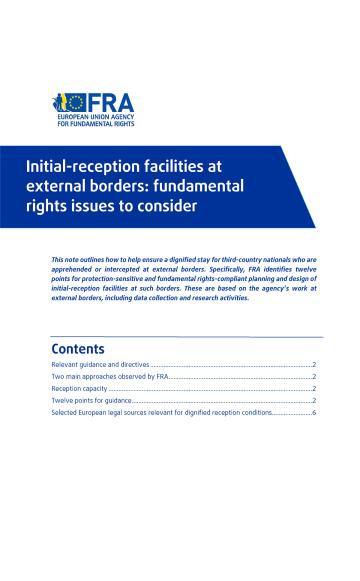
This note outlines how to help ensure a dignified stay for third-country nationals who are apprehended or intercepted at external borders. Specifically, FRA identifies twelve points for protection-sensitive and fundamental rights-compliant planning and design of initial-reception facilities at such borders. These are based on the agency’s work at external borders, including data collection and research activities.
This summary presents the main insights from FRA’s second main report based on its Fundamental Rights Survey. The survey collected data from around 35,000 people about their experiences, perceptions and opinions on a range of issues that are variously encompassed by human rights.
Le présent résumé présente les principaux
enseignements tirés du second rapport principal de
la FRA inspiré de son enquête sur les droits
fondamentaux. L’enquête a recueilli des données
auprès de quelque 35 000 personnes sur leurs
expériences, leurs perceptions et leurs opinions au
sujet d’un ensemble de questions relevant, à des
degrés divers, des droits de l’homme.
This is the second main report from FRA’s Fundamental Rights Survey, which collected data from 35,000 people on a range of issues. This report focuses on respondents’ experiences as victims of selected types of crime, including violence, harassment, and property crime. The report also examines how often these crimes are reported to the police, and presents further details relating to harassment and violence, such as the perpetrators and where the incidents took place.
Never take today’s freedoms for granted. FRA’s Jana Gajdošová remembers authoritarian rule in her native Czechoslovakia. Then, shortages, secret police and petty corruption were the norm. The State Security even posted spies to watch churchgoers at mass. Jana tells how the repression she experienced in her childhood inspired her to fight for the rights we all enjoy now in Europe. If you care for freedom, this is a must-listen.
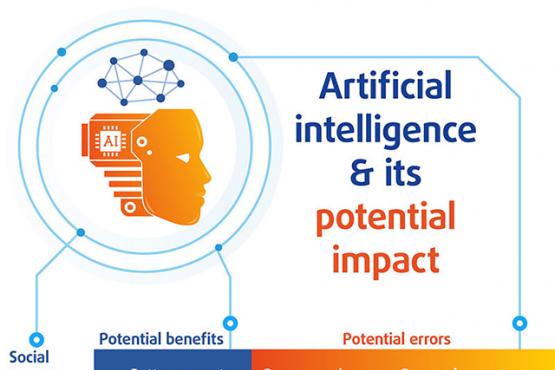
Artificial intelligence (AI) already plays a role in many decisions that affect our daily lives. From deciding what unemployment benefits someone gets to where a burglary is likely to take place. But we need to make sure to fully uphold fundamental rights standards when using AI. Drawing on the ‘Getting the future right – Artificial intelligence and fundamental rights’ report, FRA explores the potential benefits and possible errors that can occur focusing on four core areas – social benefits, predictive policing, health services and targeted advertising.
Le rapport de la FRA consacré à l’intelligence artificielle et aux droits fondamentaux présente des exemples concrets de la manière dont les entreprises et les administrations publiques de l’UE utilisent ou tentent d’utiliser l’IA.
FRA’s report on artificial intelligence and fundamental rights presents concrete examples of how companies and public administrations in the EU are using, or trying to use, AI. This summary presents the main insights from the report. These can inform EU and national policymaking efforts to regulate the use of AI tools in compliance with human and fundamental rights.
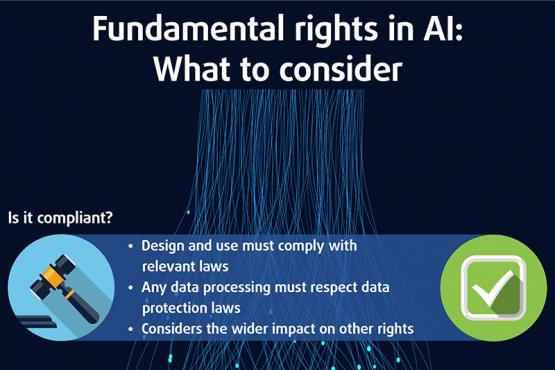
Artificial intelligence (AI) already plays a role in many decisions that affect our daily lives. From deciding what unemployment benefits someone gets to where a burglary is likely to take place. But we need to make sure to fully uphold fundamental rights standards when using AI. Drawing on the ‘Getting the future right – Artificial intelligence and fundamental rights’ report, FRA presents a number of key considerations to help businesses and administrations respect fundamental rights when using AI.
This is a recording from the morning session of the high-level virtual event "Doing Artificial Intelligence the European way" which took place on 14 December 2020.