Equality

Tfal, żgħażagħ u anzjani

Highlights

  • Report / Paper / Summary
    27
    March
    2026
    This publication presents findings from an EU-wide survey on public attitudes to children’s use of social media. It presents people’s key concerns and their views on the minimum age limits for accessing social media platforms. The survey draws on the views of both teenagers and adults – those most directly affected. The findings offer a useful evidence base for policy discussions on social media age restrictions in the EU.

  • Report / Paper / Summary
    13
    September
    2023
    Europe’s ageing population is ever-increasing, and our societies are becoming more digitalised. Many public services are now available online, with many more services in the process of being digitalised. But the digitalisation of public services poses a risk of exclusion for older persons. In this new report, FRA explores the impact of digitalisation on the fundamental rights of older persons. The report maps the current legislation, policies and practices fostering digital inclusion. It provides an overview of the laws at the national level that provide for equal access to public services, both online and offline. The findings show how Member States safeguard older person’s rights to access services undergoing digitalisation. It outlines how Member States can support digital skills and ensure older people can fully participate in public life.

  • Handbook / Guide / Manual
    7
    April
    2022
    It-tfal huma detenturi ta’ drittijiet b’mod sħiħ. Huma benefiċċjarji tad-drittijiet tal-bniedem u d-drittijiet fundamentali kollha u soġġetti ta’ regolamenti speċjali, minħabba l-karatteristiċi speċjali tagħhom. Dan il-manwal għandu l-għan li juri kif id-dritt Ewropew u l-każistika jakkomodaw l-interessi u l-bżonnijiet speċifiċi tat-tfal. Juri wkoll l-importanza ta’ ġenituri u tuturi jew rappreżentanti legali oħrajn u jagħmel referenza, fejn xieraq, għal fejn id-drittijiet u r-responsabbiltajiet huma vestiti blaktar
    prominenti fil-persuni li jieħdu ħsieb it-tfal.

  • Leaflet / Flyer
    20
    November
    2019
    Child rights come first. Measures to ensure child protection and participation apply to all children in the EU. This brochure guides you to relevant FRA reports and tools that can support you when promoting and protecting the rights of all children in the EU.
    Prodotti
    EU Member States continued their efforts to improve Roma integration by implementing their national Roma integration strategies following the Council Recommendation of December 2013 on effective Roma integration measures. FRA supports these efforts by regularly collecting data and working with the Member States to develop monitoring methods that allow for efficient reporting on the situation of Roma in the Member States over time.
    To strengthen the European Union’s evidence base on fundamental rights helps to identify how these rights are respected and promoted, not only ‘on paper’ but ‘on the ground’. Fundamental rights are part of the founding values of the European Union (EU) that are minimum standards to which the EU’s institutions and Member States are held accountable and which they should respect and promote. Mainstreaming fundamental rights can help turning words into action, especially if linked to relevant indicators.
    5
    May
    2015
    Making justice systems more child‑friendly improves
    the protection of children, enhances their meaningful
    participation and at the same time improves
    the operation of justice. The findings in this summary
    can provide Member States with useful tools
    to identify barriers, gaps or weaknesses in their
    judicial proceedings, especially in the process of
    transposing and implementing relevant EU directives. Also available in BG - CS - DA - DE - EL - ES - ET - FI - FR - HR - HU - IT - LV - LT - MT - PL - PT - RO - SK - SK - SV
    5
    May
    2015
    Each year thousands of children take part in criminal and civil judicial proceedings, affected by parental divorce
    or as victims or witnesses to crime. Such proceedings can be stressful for anyone. The European Union Agency
    for Fundamental Rights (FRA) investigated whether children’s rights are respected in these proceedings.
    Children need to be heard and be involved in all issues that concern them. This includes the justice system.
    27
    November
    2014
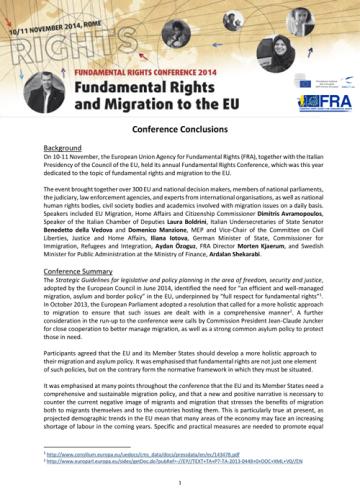
    The Conclusions contain suggestions and concerns voiced by participants at the conference, from plenary speakers and panellists through to members of the thematic working groups.
    6
    November
    2014
    Children and young people are increasingly involved in research and decision making on different aspects of rights which relate to them. EU Member States have different rules, regulations and guidelines regarding the participation of children in research, in particular concerning ethics approval and informed consent.
    28
    October
    2014
    In light of a lack of comparable data on the respect, protection and fulfilment of the fundamental rights of lesbian, gay, bisexual and transgender (LGBT) persons, FRA launched in 2012 its European Union (EU) online survey of LGBT persons’ experiences of discrimination, violence and harassment.
    29
    September
    2014
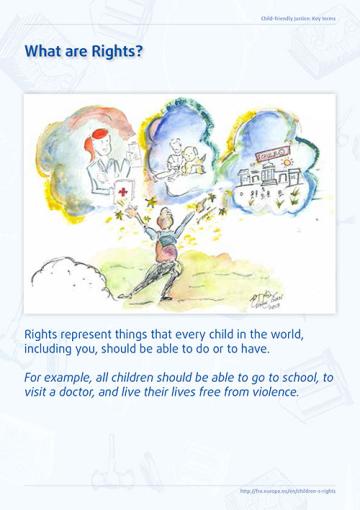
    This document provides clear explanations for children of the key terms used in the child-friendly justice project. It explains what rights are and how these rights should be protected during legal proceedings.
    9
    July
    2014
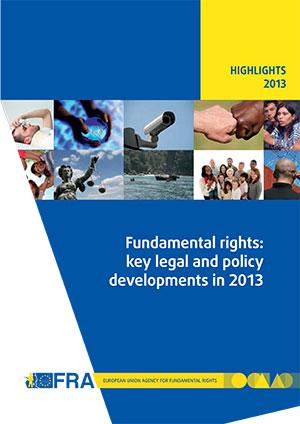
    The EU and its Member States took a variety of important steps in 2013 to protect and promote fundamental rights by
    assuming
    new international commitments, revamping legislation and pursuing innovative policies on the ground. Yet, fundamental
    rights violations seized the spotlight with distressing frequency: would‑be migrants drowning off the EU’s coast,
    unprecedented mass surveillance, racist and extremist‑motivated murders, child poverty and Roma deprivation.
    30
    June
    2014
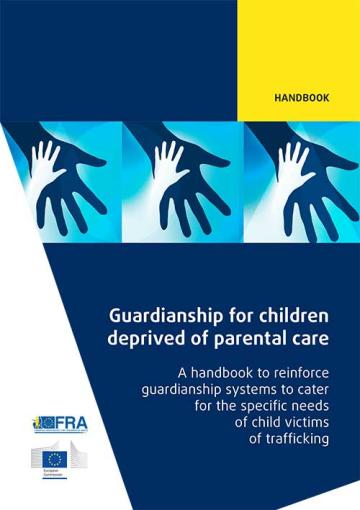
    This handbook aims to strengthen the protection of children, specifically addressing the particular needs of child victims of trafficking.
    6
    June
    2014
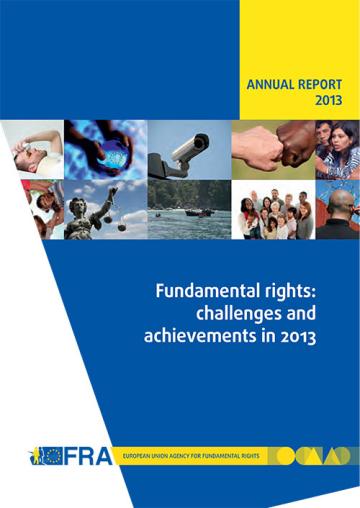
    This year’s FRA annual report looks at fundamental rights-related developments in asylum, immigration and integration; border control and visa policy; information society, respect for private life and data protection; the rights of the child and the protection of children; equality and non-discrimination; racism, xenophobia and related intolerance; access to justice and judicial cooperation; rights of crime victims; EU Member States and international obligations.
    This is an introduction of a research project which will look at hostility, including violence, towards children with disabilities across the EU.
    5
    March
    2014
    This FRA survey is the first of its kind on violence against women across the 28 Member States of the European Union (EU). It is based on interviews with 42,000 women across the EU, who were asked about their experiences of physical, sexual and psychological violence, including incidents of intimate partner violence (‘domestic violence’).
    FRA helps EU institutions and countries in the European Union (EU), so-called EU Member States, to ensure that the rights of all people including children are respected. It collects information about rights across the EU and gives advice on how to improve the conditions of vulnerable people such as migrants, asylum seekers, victims of violence, racism and hate crime.
    1
    October
    2013
    Drawing on evidence gathered in its surveys and reports, FRA submits a set of opinions aimed at improving the protection against discrimination. These could be taken into account in the implementation and the eventual reform of the EU legal framework on the protection against discrimination.
    1
    November
    2010
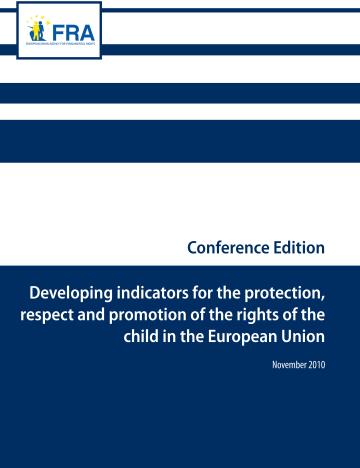
    The development of indicators for the protection, respect and promotion of the rights of the child in the European Union by the FRA aims at assessing the impact of Union law and policies that have been adopted so far, identifying their achievements and revealing their gaps on EU provisions for children.

    18
    June
    2013
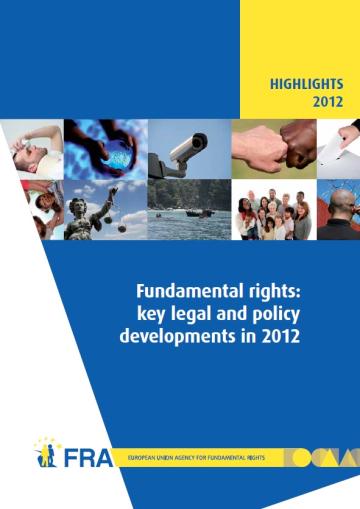
    This year’s summary of the FRA Annual report – Highlights 2012 – puts the spotlight on key legal and policy developments in the field of fundamental rights in 2012.
    18
    June
    2013
    Against a backdrop of rising unemployment and increased deprivation, this FRA Annual report closely examines the situation of those, such as children, who are vulnerable to budget cuts, impacting important fields such as education, healthcare and social services. It looks at the discrimination that Roma continue to face and the mainstreaming of elements of extremist ideology in political and public discourse. It considers the impact the crises have had on the basic principle of the rule of law, as well as stepped up EU Member State efforts to ensure trust in justice systems.