The Russian invasion of Ukraine triggered solidarity from EU governments, local authorities and society as they welcomed more than 7 million people fleeing the aggression. The European Union’s rapid response, activating the EU Temporary Protection Directive, offered welcome relief and much-needed support to those in need. It allowed displaced persons the opportunity to quickly settle and to work, travel and access services across the EU. But other pressing human rights issues have come to the fore and remain high on the EU’s agenda, such as human trafficking, sexual and gender-based violence, hate crime and hate-fuelled disinformation.
In this video, several human rights leaders, experts and activists share their views on the impact the climate change has on human rights and the ways to address the climate crisis.
Europe stands at a delicate moment in its history, facing a convergence of major tests. Each of them taken on their own is significant. Together, they pose profound questions about the political, economic, and societal future of the continent. This is a moment for strong commitment to put human rights at the heart of our vision for Europe’s future. It is also time to demonstrate our determination to work together to this end. Against this backdrop, the EU Agency for Fundamental Rights (FRA) brought together around sixty human rights leaders and experts from across the continent to discuss elements of a human rights vision for the future and to identify opportunities for action. A full conference report will be available soon, including the specific ideas and proposals which arose from the meeting. Meanwhile, this is a summary of the conclusions.
Civil society organisations face diverse challenges across the European Union. FRA’s report on Protecting civic space in the EU presents the agency’s findings on these challenges. It was issued in September of 2021. This summary presents the Key findings and FRA opinions outlined in the report.
Civil society is a key component of Europe’s fundamental rights architecture. From supporting people affected by the pandemic to helping those fleeing the war in Ukraine, civil society plays a crucial role in upholding people’s rights. In so doing, it contributes to a healthy rule of law culture. FRA’s civic space report provides an overview of the many ways in which civil society contributes to the checks and balances that underpin the rule of law.
Since September 2021, two National Human Rights Institutions (NHRIs) had a change in their accreditation status, one applied for accreditation and five have had a change in tasks covered by their mandates. This new 2022 update provides an overview of developments in the accreditation status and mandates of NHRIs from September 2021 to May 2022. It is a follow up of FRA’s 2020 report on ‘Strong and effective national human rights institutions – challenges, promising practices and opportunities’ and the September 2021 update. It covers the 27 EU Member States and three candidate countries (Albania, North Macedonia and Serbia).
Every child has a right to be protected even when they are accused or suspected of committing a crime. The basic principles of justice apply to adults and children alike. But children face specific obstacles during criminal proceedings, such as a lack of understandable information about their rights, limited legal support and poor treatment. The report looks at the practical implementation of Directive (EU) 2016/800 on procedural safeguards for children who are suspects or accused persons in criminal proceedings in nine Member States – Austria, Belgium, Bulgaria, Germany, Estonia, Italy, Malta, Poland and Portugal.
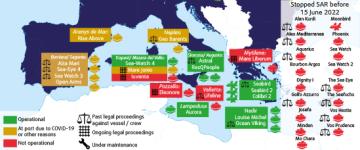
The EU Agency for Fundamental Rights (FRA) regularly collects data on the operations of NGO vessels involved in search and rescue in the Mediterranean. This includes any legal proceedings against them, as well as on any difficulties in disembarking migrants in safe ports. The International Organization for Migration estimates that from January to 15 June 2022 about 842 people died or went missing while crossing the Mediterranean Sea to reach Europe to escape war or persecution, or to pursue a better life. This is an average of five people per day.
FRA’s Fundamental Rights Report 2022 reviews major developments in the field in 2021, identifying both achievements and areas of concern. It also presents FRA’s opinions on these developments, including a synopsis of the evidence supporting these opinions.
This focus looks at the impact of the pandemic on social rights. It examines the measures in national recovery and resilience plans that address the social vulnerabilities among a variety of population groups in the EU, including women, children and young people in situations of vulnerability, people with disabilities, older people, Roma and people in precarious working conditions.
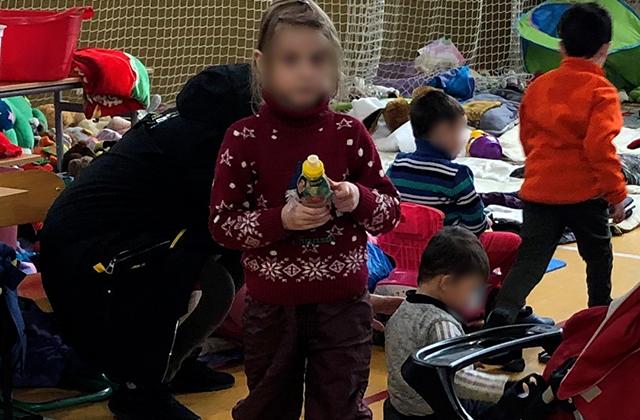
While many volunteers, organisations and EU countries provide help to the many children fleeing Ukraine, challenges and concerns need to be addressed: such as registration and interpretation, guardianship for unaccompanied children, access to education and childcare.
This bulletin looks at the fundamental rights situation of all persons fleeing the Russian war in Ukraine to the four EU Member States neighbouring Ukraine. This is primarily in terms of the application of the EU Temporary Protection Directive. It is based on findings of FRA’s field mission to Hungary, Poland, Romania and Slovakia at the beginning of March 2022. It is also based on weekly country reports prepared by Franet, the contracted research network of FRA between 1 March and 27 April 2022.
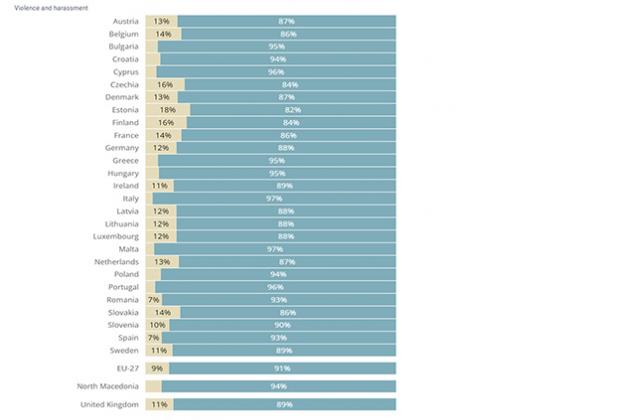
The Fundamental Rights Survey is the first survey to collect comprehensive and comparable data on people’s experiences and views of their rights in the EU-27. The survey included questions related to rights in a number of different areas, including crime victimisation and safety, data protection and privacy, functioning of the democracy, views on human rights and experiences with public services.
Children are full-fledged holders of rights. They are beneficiaries of all human and fundamental rights and subjects of special regulations, given their specific characteristics. This handbook aims to illustrate how European law and case law accommodate the specific interests and needs of children. It also considers the importance of parents and guardians or other legal representatives and makes reference, where appropriate, to situations in which rights and responsibilities are most prominently vested in children’s carers. It is a point of reference on both European Union (EU) and Council of Europe (CoE) law related to these subjects, explaining how each issue is regulated under EU law, including the Charter of Fundamental Rights of the European Union, as well as under the European Convention on Human Rights, the European Social Charter and other CoE instruments.
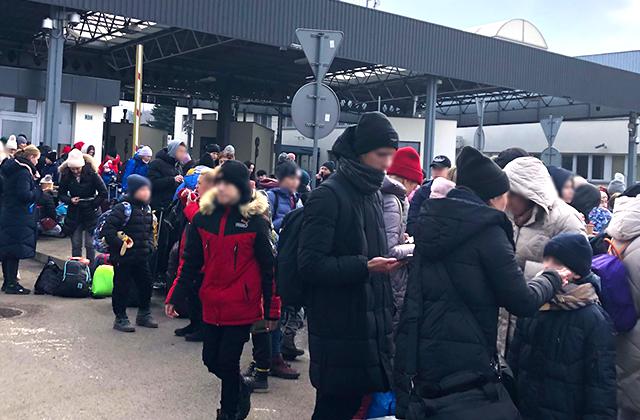
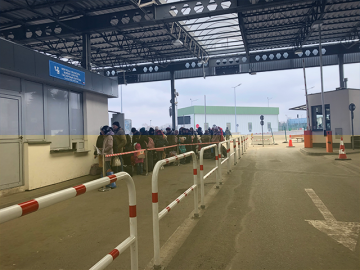
Overwhelming support for the many people fleeing Ukraine. Volunteers, organisations and EU countries provide support and help at the EU borders.
FRA looked at the challenging situation and identified fundamental rights risks, such as discrimination.
The EU is facing a large-scale humanitarian crisis. Over 10 days at the beginning of March, the EU Agency for Fundamental Rights (FRA) visited all EU countries bordering Ukraine and Moldova – Hungary, Poland, Romania and Slovakia.
The EU Agency for Fundamental Rights has been regularly collecting data on asylum and migration since September 2015. This report focuses on the fundamental rights situation of people arriving in Member States and EU candidate countries particularly affected by migration. It addresses fundamental rights concerns between 1 October and 31 December 2021.
In 2015 and 2016, the numbers of unaccompanied children arriving in Europe increased dramatically, straining national guardianship systems. This report looks at how EU Member States, as well as North Macedonia and Serbia, have adapted their guardianship systems for unaccompanied children since that time.
FRA’s 2019 survey on Roma and Travellers in Belgium, France, Ireland, the Netherlands, Sweden and the United Kingdom interviewed almost 4 700 Roma and Travellers, collecting information on more than 8 200 individuals living in their households.