Šiame vadove paaiškinama, kas yra profiliavimas, kokios teisinės sistemos jį reglamentuoja ir kodėl teisėtai vykdyti profiliavimą yra būtina siekiant užtikrinti pagrindines teises ir ypač veiksmingą viešąją tvarką bei sienų valdymą. Vadove pateikiama ir praktinių patarimų, kaip išvengti neteisėto profiliavimo vykdant policijos ir sienų valdymo operacijas.
Šajā ceļvedī ir paskaidrots, kas ir profilēšana, kāds ir tās tiesiskais regulējums un kāpēc profilēšana ir gan nepieciešama, lai ievērotu pamattiesības, gan būtiska efektīvai policijas darbībai un robežu pārvaldībai. Ceļvedī ir sniegti arī praktiski norādījumi par to, kā novērst nelikumīgu profilēšanu policijas un robežu pārvaldības operācijās.
In deze gids wordt uitgelegd wat profilering is, welke wettelijke kaders van toepassing zijn en waarom een rechtmatige toepassing van profilering niet alleen nodig is om aan de grondrechten te voldoen, maar ook van cruciaal belang is voor een doeltreffende ordehandhaving en grensbeheer.
W niniejszym przewodniku wyjaśniono, czym jest profilowanie, które ramy prawne je regulują oraz dlaczego prowadzenie profilowania w sposób zgodny z prawem jest zarówno konieczne, aby przestrzegać praw podstawowych, jak i kluczowe do prowadzenia skutecznych działań policji i skutecznego zarządzania granicami. W przewodniku zawarto również praktyczne wytyczne dotyczące sposobu unikania niezgodnego z prawem profilowania podczas operacji policyjnych i zarządzania granicami.
O presente guia explica o que é a definição de perfis, os quadros jurídicos que a regulam e a razão pela qual a definição lícita de perfis é necessária para fazer respeitar os direitos fundamentais e indispensável para a eficácia da ação policial e da gestão das fronteiras. O guia fornece igualmente orientações práticas sobre como evitar a definição ilícita de perfis nas operações policiais e de gestão das fronteiras.
Prezentul ghid explică ce este crearea de profiluri, cadrele juridice care o reglementează și motivele pentru care utilizarea profilurilor în mod legal este necesară pentru respectarea drepturilor fundamentale și, totodată, esențială pentru eficiența activității polițienești și de gestionare a frontierelor. De asemenea, ghidul oferă îndrumări practice care să ajute la evitarea situațiilor în care utilizarea profilurilor în cadrul operațiunilor poliției și ale autorităților de gestionare a frontierelor este ilegală.
V tejto príručke sa vysvetľuje, čo je profilovanie, akými právnymi rámcami sa riadi, a prečo vykonávanie profilovania v súlade so zákonom je nutné na dodržiavanie základných práv, ako aj na účely efektívnej policajnej práce a riadenia hraníc. V príručke sa uvádzajú tiež praktické usmernenia týkajúce sa toho, ako zabrániť nezákonnému profilovaniu v policajných operáciách a operáciách riadenia hraníc.
V tem priročniku je pojasnjeno, kaj je profiliranje, kateri pravni okviri ga urejajo ter zakaj je zakonitost profiliranja potrebna zaradi spoštovanja temeljnih pravic ter ključna za učinkovito policijsko delo in upravljanje meja. Priročnik vsebuje tudi praktične smernice o tem, kako se izogniti nezakonitemu profiliranju pri policijskih operacijah in operacijah upravljanja meja.
I denna vägledning förklaras vad profilering innebär, vilken rättslig ram som utgör dess grund och varför en laglig profilering både är nödvändig för att uppfylla de grundläggande rättigheterna och helt avgörande för att effektivisera polisarbetet och gränsförvaltningen. Vägledningen innehåller även praktiska riktlinjer om hur olaglig profilering kan undvikas vid insatser inom polisverksamheten och gränsförvaltningen.
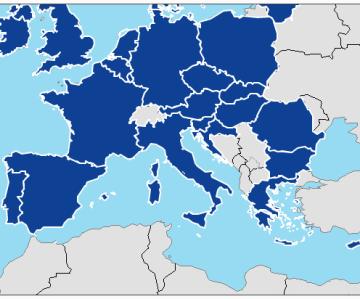
Almost twenty years after adoption of EU laws forbidding discrimination, people of African descent in the EU face widespread and entrenched prejudice and exclusion. This report outlines selected results from FRA's second large-scale EU-wide survey on migrants and minorities (EU-MIDIS II) carried out in 2016. It examines the experiences of almost 6,000 people of African descent in 12 EU Member States.
This note draws attention to the recent trend of criminalising search and rescue operations (SAR) in the Mediterranean Sea carried out by non-governmental organisations (NGOs) or other private entities. This includes seizing rescue vessels, as well as arrests for crew members, in some EU Member States. Most of such incidents concerned NGOs operating in the Central Mediterranean Sea.
The EU Return Directive (2008/115/EC) in Article 8 (6) introduced an important fundamental rights safeguard for third-country nationals ordered to leave the EU because they do not or no longer fulfil the conditions for entry and/or stay. According to the Directive, Member States must provide for an effective forced-return monitoring system.
Across the European Union, people face hatred because of their skin colour, ethnicity, religion, gender or sexuality. In response, the EU and its Member States have introduced laws against hate crime and support services for victims. But these will only fulfil their potential if victims report hate-motivated harassment and violence to the police, and if police officers record such incidents as hate crimes. This report provides rich and detailed information on hate crime recording and data collection systems across the EU, including any systemic cooperation with civil society.
The year 2017 brought both progress and setbacks in terms of rights protection. The European Pillar of Social Rights marked an important move towards a more ‘social Europe’. But, as experiences with the EU Charter of Fundamental Rights underscore, agreement on a text is merely a first step. Even in its eighth year as the EU's binding bill of rights, the Charter's potential was not fully exploited, highlighting the need to more actively promote its use.
We live in a world of big data, where technological developments in the area of machine learning and artificial intelligence have changed the way we live. Decisions and processes concerning everyday life are increasingly automated, based on data. This affects fundamental rights in various ways. This focus paper specifically deals with discrimination, a fundamental rights area particularly affected by technological developments.
The rapid development of information technology has exacerbated the need for robust personal data protection, the right to which is safeguarded by both European Union (EU) and Council of Europe (CoE) instruments. Safeguarding this important right entails new and significant challenges as technological advances expand the frontiers of areas such as surveillance, communication interception and data storage. This handbook is designed to familiarise legal practitioners not specialised in data protection with this emerging area of the law.
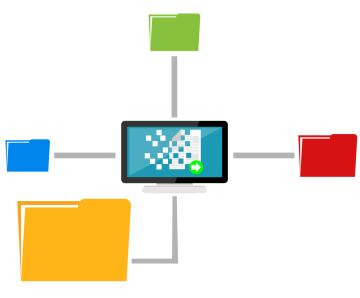
This Opinion by the European Union Agency for Fundamental Rights (FRA) aims to inform the European Parliament position concerning legislative proposals on interoperability between EU information technology systems (IT systems) presented on 12 December 2017 and currently discussed by the EU legislators.
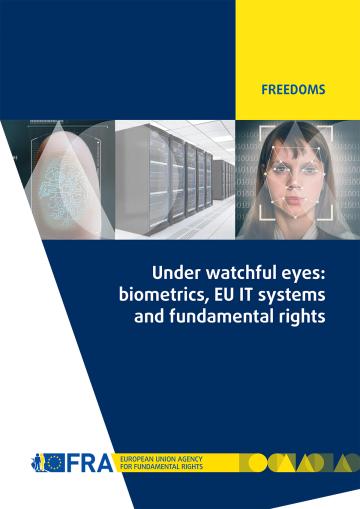
This report outlines the fundamental rights implications of collecting, storing and using
biometric and other data in EU IT systems in the area of asylum and migration.
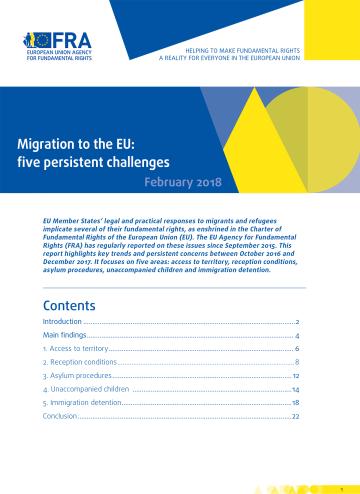
EU Member States’ legal and practical responses to migrants and refugees implicate several of their fundamental rights, as enshrined in the Charter of Fundamental Rights of the European Union (EU). The EU Agency for Fundamental Rights (FRA) has regularly reported on these issues since September 2015. This report highlights key trends and persistent concerns between October 2016 and December 2017. It focuses on five areas: access to territory, reception conditions, asylum procedures, unaccompanied children and immigration detention.