Európske antidiskriminačné právo ustanovené antidiskriminačnými smernicami EÚ, ako aj článkom
14 Európskeho dohovoru Rady Európy o ochrane ľudských práv a základných slobôd a jeho protokolu
č. 12 zakazuje diskrimináciu v celom rade súvislostí a na základe rozmanitých dôvodov. V tejto
príručke sa skúma európske antidiskriminačné právo prameniace z týchto dvoch zdrojov ako
komplementárnych systémov, pričom sa z nich striedavo vychádza v rozsahu, v akom sa prekrývajú,
a zdôrazňujú sa prípadné rozdiely.
Evropsko protidiskriminacijsko pravo, kot ga določajo zlasti protidiskriminacijske direktive Evropske
unije, člen 14 Evropske konvencije o človekovih pravicah in 12. Protokol k tej konvenciji, prepoveduje
diskriminacijo na različnih področjih in zaradi različnih razlogov. Ta priročnik pojasnjuje evropsko
protidiskriminacijsko pravo, kot izhaja iz navedenih dveh komplementarnih sistemov. Izmenjuje
navaja področja, kjer se ureditvi vsebinsko prekrivata, in izpostavlja razlike med njima.
Den europeiska icke-diskrimineringslagstiftningen, som i huvudsak består av EU:s ickediskrimineringsdirektiv och artikel 14 i och protokoll nr 12 till Europakonventionen om de mänskliga rättigheterna, förbjuder diskriminering på en rad olika grunder och i olika sammanhang. Den här handboken innehåller en genomgång av den europeiska icke-diskrimineringslagstiftning som härrör från dessa två källor. De ses som två kompletterande system som delvis överlappar varandra. I de fall de skiljer sig åt påpekas detta.
Европейското право в областта на недискриминацията, както е предвидено в директивите
на ЕС относно недискриминацията, в член 14 и в Протокол 12 към Европейската конвенция
за правата на човека, забранява дискриминацията в рамките на широк набор от видове
контекст и основания. В настоящия наръчник се разглежда европейско право в областта на
недискриминацията, което произхожда от тези два източника като допълващи се системи.
Те му служат взаимозаменяемо дотолкова, че се припокриват, като същевременно се
подчертават съществуващите разлики.
Evropské antidiskriminační právo, které tvoří směrnice EU o zákazu diskriminace a článek 14 a protokol č. 12 Evropské úmluvy o ochraně lidských práv a základních svobod, zakazuje diskriminaci v celé řadě situací a z celé řady důvodů. Tato příručka zkoumá evropské antidiskriminační právo vycházející z uvedených dvou zdrojů jako vzájemně se doplňující systémy, využívá jejich vzájemné zaměnitelnosti v míře, v jaké se tyto systémy překrývají, a upozorňuje na jejich rozdíly, pokud existují.
Den europæiske lovgivning om ikke-forskelsbehandling, som består af EU’s direktiver om ikkeforskelsbehandling og artikel 14 i den europæiske menneskerettighedskonvention (EMRK) samt protokol nr. 12 hertil, forbyder forskelsbehandling i en række sammenhænge og af en række årsager. I denne håndbog ser vi på EU-lovgivningen om ikke-forskelsbehandling i henhold til disse to kilder som komplementære systemer, idet de vil blive brugt i flæng, hvis de overlapper hinanden, mens evt. forskelle vil blive fremhævet.
In view of the increasing numbers of refugees, asylum seekers and migrants entering the EU, the EU Agency for Fundamental Rights has been collecting relevant data since September 2015. These focus on the fundamental rights situation of people arriving in Member States particularly affected by large migration movements. The countries covered are: Austria, Bulgaria, Croatia, Denmark, Finland, France, Germany, Greece, Hungary, Italy, the Netherlands, Poland, Spain and Sweden.
FRA’s Second European Union Minorities and Discrimination Survey surveys around 26,000 individuals from different ethnic minority and immigrant backgrounds across all 28 EU Member States. This technical report presents a detailed overview of the research methods used by FRA when collecting the survey data.
Seventeen years after adoption of EU laws that forbid discrimination, immigrants, descendants of immigrants, and minority ethnic groups continue to face widespread discrimination across the EU and in all areas of life – most often when seeking employment. For many, discrimination is a recurring experience. This is just one of the findings of FRA’s second European Union Minorities and Discrimination Survey (EU-MIDIS II), which collected information from over 25,500 respondents with different ethnic minority and immigrant backgrounds across all 28 EU Member States.
This survey involved interviews with 25,515 people with different ethnic minority and immigrant backgrounds across 28 EU countries. It explores issues concerning discrimination as well as experiences of harassment, hate-motivated violence and discriminatory profiling.
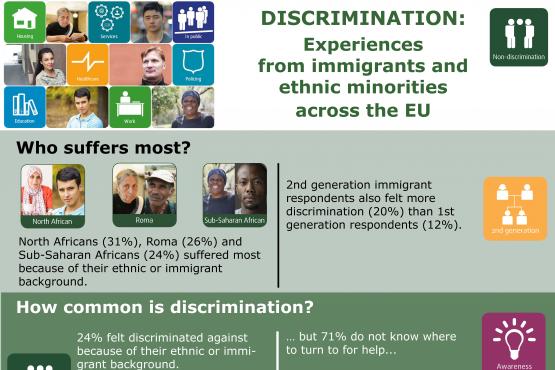
This infographic illustrates the main experiences immigrants and ethnic minorities across the EU have when it comes to discrimination. It draws from the findings from FRA's EU-MIDIS II survey.
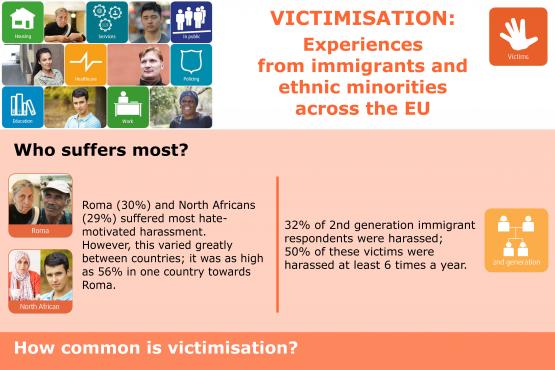
This infographic illustrates the main experiences immigrants and ethnic minorities across the EU have when it comes to victimisation. It draws from the findings from FRA's EU-MIDIS II survey.
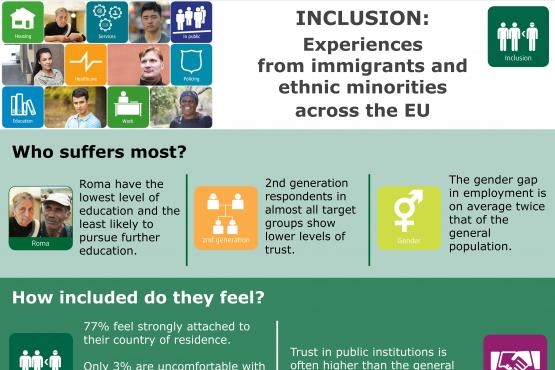
This infographic illustrates the main experiences immigrants and ethnic minorities across the EU have when it comes to inclusion. It draws from the findings from FRA's EU-MIDIS II survey.
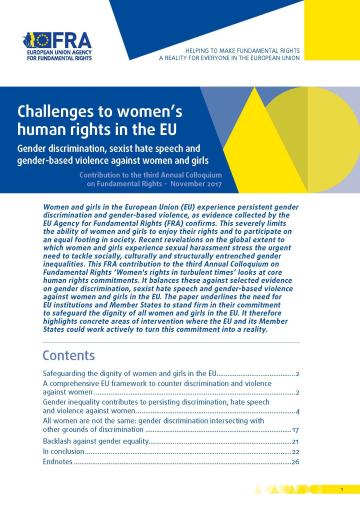
Women and girls in the European Union (EU) experience persistent gender discrimination and gender-based violence, as evidence collected by FRA confirms. This severely limits the ability of women and girls to enjoy their rights and to participate on an equal footing in society. This FRA contribution to the third Annual Colloquium on Fundamental Rights ‘Women's rights in turbulent times’ looks at core human rights commitments. It balances these against selected evidence on gender discrimination, sexist hate speech and gender-based violence against women and girls in the EU.
This report provides an overview of data on antisemitism as recorded by
international organisations and by official and unofficial sources in the 28 European
Union (EU) Member States, based on their own definitions and categorisations.
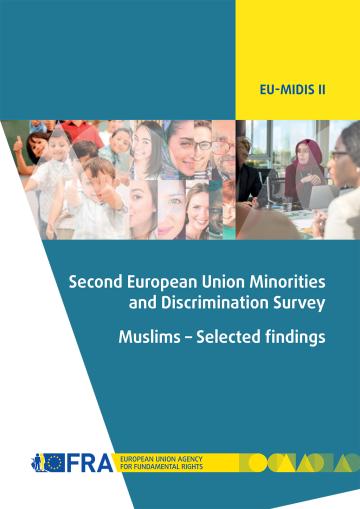
Muslims living in the EU face discrimination in a broad range of settings – and particularly when looking for work, on the job, and when trying to access public or private services. The report examines how characteristics – such as an individual's first and last name, skin colour and the wearing of visible religious symbols like a headscarf, for example – may trigger discriminatory treatment and harassment.
This report outlines examples of community policing measures in select EU Member State regions and localities with recently arrived asylum seekers and migrants. It focuses on four main issues: 1) community policing, 2) related police training, 3) community involvement (for example: consultations; giving voice to the concerns of local communities; police involvement in local responses to concerns), and 4) crime prevention activities.
This Consolidated Annual Activity Report (CAAR) provides
an overview of the activities and achievements
of the European Union Agency for Fundamental Rights
(FRA) in 2016.
Diverse efforts at both EU and national levels sought to bolster fundamental rights protection in 2016, while some measures threatened to undermine such protection.