Rok 2020 przyniósł zarówno postęp, jak i regres
pod względem ochrony praw podstawowych.
Sprawozdanie FRA na temat praw podstawowych
z 2021 r. zawiera przegląd najważniejszych zmian,
jakie miały miejsce w tym obszarze, wskazując
zarówno na osiągnięcia, jak i kwestie, które nadal
wymagają stosownych działań.
O ano de 2020 trouxe avanços e retrocessos no âmbito
da proteção dos direitos fundamentais. O Relatório
sobre os Direitos Fundamentais 2021 da FRA analisa
os principais desenvolvimentos neste domínio,
identificando tanto as realizações quanto os problemas
que persistem.
Anul 2020 a adus atât progrese, cât și pași înapoi în
ceea ce privește protecția drepturilor fundamentale.
Documentul FRA Fundamental Rights Report 2021
(Raportul privind drepturile fundamentale 2021)
analizează evoluțiile majore din domeniu, reliefând
atât realizările, cât și problemele îngrijorătoare rămase
nesoluționate.
Z hľadiska ochrany základných práv rok 2020 priniesol
pokrok i určité nezdary. V publikácii agentúry FRA
Správa o základných právach 2021 je uvedený
prehľad hlavného vývoja v tejto oblasti, poukazuje
sa na úspechy, ale aj na oblasti, ktoré ešte stále
vyvolávajú obavy.
Leta 2020 je bil na področju varstva temeljnih pravic
sicer dosežen napredek, a je bilo hkrati opazno
tudi nazadovanje. Poročilo o temeljnih pravicah
za leto 2021, ki ga je pripravila Agencija Evropske
unije za temeljne pravice, povzema razvoj glavnih
dogodkov na tem področju ter izpostavlja dosežke
in področja, ki so še vedno zaskrbljujoča.
År 2020 innebar både framgångar och motgångar för
skyddet av de grundläggande rättigheterna. FRA:s
Rapport om grundläggande rättigheter 2021 innehåller
en granskning av de viktigaste händelserna på
området och pekar ut både framsteg och återstående
problemområden.
FRA’s Fundamental Rights Report 2021 reviews major developments in the field in 2020, identifying both achievements and areas of concern. It also presents FRA’s opinions on these developments, including a synopsis of the evidence supporting these opinions. This year’s focus chapter explores the impact of the COVID-19 pandemic on fundamental rights. The remaining chapters cover: the EU Charter of Fundamental Rights; equality and non-discrimination; racism, xenophobia and related intolerance; Roma equality and inclusion; asylum, borders and migration; information society, privacy and data protection; rights of the child; access to justice; and the implementation of the Convention on the Rights of Persons with Disabilities.
This opinion illustrates the extent and nature of lived experiences of inequality and discrimination across the EU. It does so with reference to the grounds of discrimination and areas of life covered by the racial and employment equality directives, as well as in relation to the grounds and areas covered by the proposed Equal Treatment Directive.
This report looks at the practical implementation of the presumption of innocence in criminal proceedings, and related rights, in 9 EU Member States (Austria, Belgium, Bulgaria, Cyprus, Germany, Italy, Lithuania, Poland and Portugal). Article 48 of the EU Charter of Fundamental Rights guarantees the presumption of innocence – but, as FRA’s research underscores, it can be undermined in many ways.
FRA’s 2019 survey on Roma and Travellers in Belgium, France, Ireland, the Netherlands, Sweden and the United Kingdom interviewed almost 4 700 Roma and Travellers, collecting information on more than 8 200 individuals living in their households.
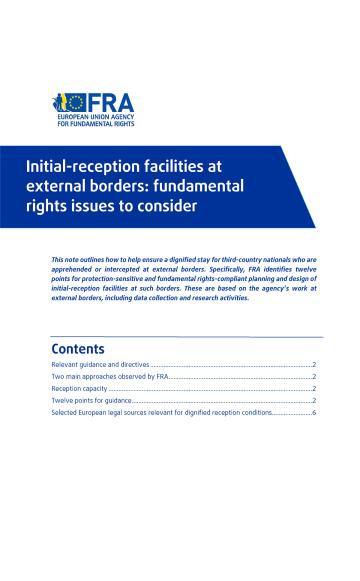
This note outlines how to help ensure a dignified stay for third-country nationals who are apprehended or intercepted at external borders. Specifically, FRA identifies twelve points for protection-sensitive and fundamental rights-compliant planning and design of initial-reception facilities at such borders. These are based on the agency’s work at external borders, including data collection and research activities.
It’s said you have the right to have fundamental human rights. FRA’s Gabriel Toggenburg explains his firm belief in the EU justice system to protect those basic freedoms. For Gabriel, a person’s identity does not necessarily come from their nationality. He tells how being born in Germany with family roots and connections in Italy, France, the UK, Switzerland and Russia shaped those views.
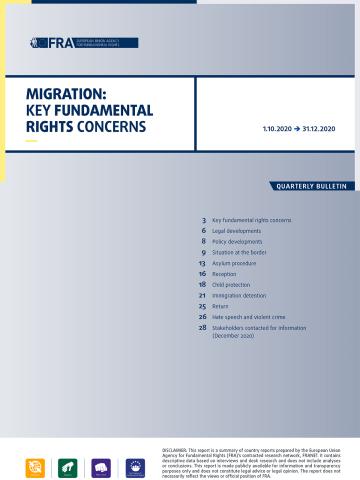
The EU Agency for Fundamental Rights has been regularly collecting data on asylum and migration since September 2015. This report focuses on the fundamental rights situation of people arriving in Member States and EU candidate countries particularly affected by migration. It addresses fundamental rights concerns between 1 October and 31 December 2020.
This is the second main report from FRA’s Fundamental Rights Survey, which collected data from 35,000 people on a range of issues. This report focuses on respondents’ experiences as victims of selected types of crime, including violence, harassment, and property crime. The report also examines how often these crimes are reported to the police, and presents further details relating to harassment and violence, such as the perpetrators and where the incidents took place.
An equal society is a better society for everyone. FRA’s Ursula Till-Tentschert warns against sidelining women — once empowered, there is nothing they cannot do. Ursula remembers the injustice of having to sew at school while her brothers carved models from wood. It is only a short step from classroom discrimination to outright prejudice. She celebrates the EU laws that protect us. But she says they will only truly work if we also smash the invisible social barriers to empowerment.
Never take today’s freedoms for granted. FRA’s Jana Gajdošová remembers authoritarian rule in her native Czechoslovakia. Then, shortages, secret police and petty corruption were the norm. The State Security even posted spies to watch churchgoers at mass. Jana tells how the repression she experienced in her childhood inspired her to fight for the rights we all enjoy now in Europe. If you care for freedom, this is a must-listen.
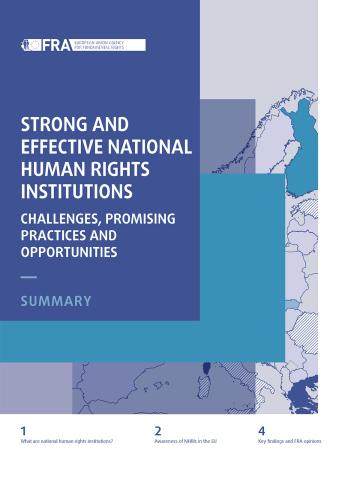
National Human Rights Institutions (NHRIs) are a vital part of the country-level human rights protection system. By raising awareness, providing advice, monitoring and holding authorities to account, they have a central role in navigating the great human rights challenges of our day – tackling both persistent concerns like discrimination and inequality, and novel issues such as the rights implications of artificial intelligence and of the COVID-19 pandemic.
Minorities across Europe routinely experience discrimination. As a child, FRA Director Michael O’Flaherty saw first-hand how prejudice led to violence and hatred in his native Ireland. Michael shares some early experiences of violence against Irish Travellers. He also speaks about what motivates him to fight to protect human rights for people everywhere.
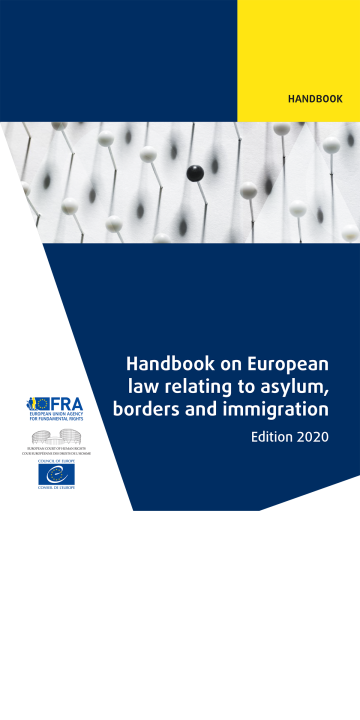
Европейската конвенция за защита на правата на човека (ЕКПЧ) и правото на Евро- пейския съюз (ЕС) предоставят рамка за защита на правата на чужденците, чието значение непрестанно се повишава. Законодателството на Европейския съюз относно убежището, границите и имиграцията се развива бързо. Съществува вну- шителна по обем съдебна практика на Европейския съд по правата на човека във връзка по-специално с членове 3, 5, 8 и 13 от ЕКПЧ. Към Съда на Европейския съюз биват отправяни все повече искания да се произнесе по отношение на тълкуването на разпоредбите на правото на Европейския съюз в тази област. Третото издание на този наръчник, актуализирано до юли 2020 г., предоставя по достъпен начин това законодателство на Европейския съюз и съвкупността от съдебната практика на европейските съдилища. Наръчникът е предназначен за практикуващи юристи, съдии, прокурори, служители на имиграционните служби и неправителствени орга- низации в държавите — членки на ЕС, и на Съвета на Европа.
Evropská úmluva o lidských právech a právo Evropské unie poskytují stále důležitější rámec pro ochranu práv cizinců. Právní předpisy Evropské unie týkající se azylu, hranic a přistěhovalectví se rychle vyvíjejí. Existuje rozsáhlá judikatura Evropského soudu pro lidská práva týkající se zejména článků 3, 5, 8 a 13 EÚLP. Soudní dvůr Evropské unie je stále častěji žádán, aby se vyjádřil k výkladu ustanovení práva Evropské unie v této oblasti. Třetí vydání této příručky, aktualizované k červenci 2020, představuje tyto právní předpisy Evropské unie a judikaturu obou evropských soudů přístupným způsobem. Příručka je určena právníkům, soudcům, státním zástupcům, imigračním úředníkům a nevládním organizacím v členských státech EU a Rady Evropy.