Jednakost, nediskriminacija i rasizam

EU Charter of Fundamental Rights
Highlights
 Report / Paper / Summary3March2026Violence against women remains widespread in the European Union (EU). This joint report by the EU Agency for Fundamental Rights (FRA) and the European Institute for Gender Equality (EIGE) presents detailed findings from the EU gender-based violence survey. It offers in-depth analysis of the scale, nature and drivers of violence and exposes the structural gender inequality. Building on the 2024 publication, EU gender-based violence survey - Key results, and following up on FRA’s 2014 report, Violence against women: an EU-wide survey, this report tracks trends over the last decade across the EU. Eurostat, FRA, and EIGE jointly conducted the survey. It is based on over 100,000 interviews covering all 27 EU Member States.
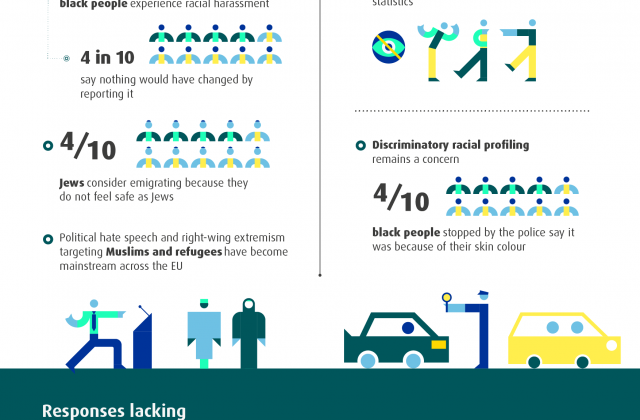
 Report / Paper / Summary27January2026This report looks at antisemitism in the EU, focusing on what can be done to address gaps in recording and inconsistencies in data collection. It highlights existing tools and guidance for Member States to improve their recording systems. The analysis is based on official administrative data and information from publicly available sources across EU Member States, as well as Albania, North Macedonia, and Serbia. Detailed country overviews are available for all countries covered. Antisemitism has been monitored by FRA since 2004. This report builds on the 2024 publication, ‘Jewish People’s Experiences and Perceptions of Antisemitism’.
 Report / Paper / Summary27November2025This report looks at the breadth and depth of violence and neglect faced by people with disabilities living in institutions. It highlights the shortcomings by EU Member States in preventing violence and protecting those who are at a higher risk of experiencing it, in line with the UN Convention on the Rights of Persons with Disabilities. Based on research across all EU Member States and FRA observer candidate countries, the report calls for better protection, stronger prevention of violence, and clear accountability. It urges the EU and its Member States to implement their obligations around equality and fundamental rights.
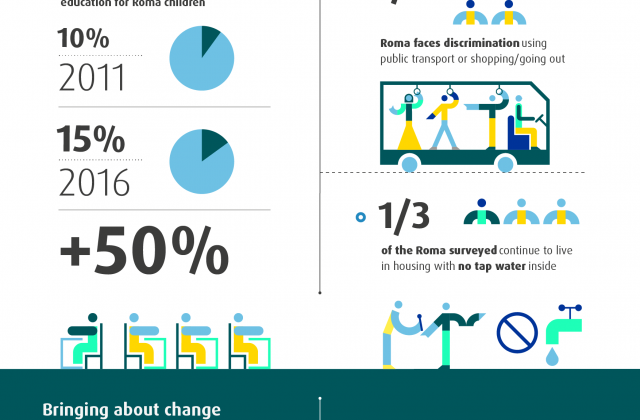
 Data explorer24 September 2025FRA’s 2024 survey on Roma and Travellers in Albania, Bulgaria, Czechia, France, Greece, Hungary, Ireland, Italy, North Macedonia, Portugal, Romania, Serbia and Spain collected information from 10,126 respondents living in private households who self-identify as Roma or Traveller, are 16 or older and have lived in the survey countries for at least the 12 months before the survey.