eu-charter

Carta dos Direitos Fundamentais da UE

Artigo 10.o - Liberdade de pensamento, de consciência e de religião

Artigo 10.o - Liberdade de pensamento, de consciência e de religião

1. Todas as pessoas têm direito à liberdade de pensamento, de consciência e de religião. Este direito implica a liberdade de mudar de religião ou de convicção, bem como a liberdade de manifestar a sua religião ou a sua convicção, individual ou colectivamente, em público ou em privado, através do culto, do ensino, de práticas e da celebração de ritos.

2. O direito à objecção de consciência é reconhecido pelas legislações nacionais que regem o respectivo exercício.

Anotações

  • Text:

    O direito consignado no n.o 1 corresponde ao direito garantido no artigo 9.o da CEDH e tem, nos termos do n.o 3 do artigo 52.o da Carta, o mesmo sentido e o mesmo âmbito. As restrições devem, assim, respeitar o disposto no n.o 2 do artigo 9.o da Convenção, que tem a seguinte redacção: `A liberdade de manifestar a sua religião ou convicções, individual ou colectivamente, não pode ser objecto de outras restrições senão as que, previstas na lei, constituírem disposições necessárias, numa sociedade democrática, à segurança pública, à protecção da ordem, da saúde e moral públicas, ou à protecção dos direitos e liberdades de outrem.`
    O direito garantido no n.o 2 corresponde às tradições constitucionais e à evolução das legislações nacionais nesta matéria.

    Source:
    Jornal Oficial da União Europeia C 303/17 - 14.12.2007
    Preamble - Explanations relating to the Charter of Fundamental Rights:
    As presentes anotações, inicialmente elaboradas sob a responsabilidade do Praesidium da Convenção que redigiu a Carta dos Direitos Fundamentais da União Europeia, foram actualizadas sob a responsabilidade do Praesidium da Convenção Europeia, à luz das adaptações ao texto (nomeadamente aos artigos 51.o e 52.o) da Carta introduzidas pela Convenção Europeia e da evolução do direito da União. Embora não tenham em si força de lei, constituem um valioso instrumento de interpretação destinado a clarificar as disposições da Carta.

Jurisprudência

Direitos constitucionais nacionais

30 results found

  • Magyarország Alaptörvénye
    País:
    Hungary

    VII. cikk (SZABADSÁG ÉS FELELŐSSÉG) (1) Mindenkinek joga van a gondolat, a lelkiismeret és a vallás szabadságához. Ez a jog magában foglalja a vallás vagy más meggyőződés szabad megválasztását vagy megváltoztatását és azt a szabadságot, hogy vallását vagy más meggyőződését mindenki vallásos cselekmények, szertartások végzése útján vagy egyéb módon, akár egyénileg, akár másokkal együttesen, nyilvánosan vagy a magánéletben kinyilvánítsa vagy kinyilvánítását mellőzze, gyakorolja vagy tanítsa.
    (2) Az azonos hitelveket követők vallásuk gyakorlása céljából sarkalatos törvényben meghatározott szervezeti formában működő vallási közösséget hozhatnak létre.
    (3) Az állam és a vallási közösségek különváltan működnek. A vallási közösségek önállóak.
    (4) Az állam és a vallási közösségek a közösségi célok elérése érdekében együttműködhetnek. Az együttműködésről a vallási közösség kérelme alapján az Országgyűlés dönt. Az együttműködésben részt vevő vallási közösségek bevett egyházként működnek. A bevett egyházaknak a közösségi célok elérését szolgáló feladatokban való részvételükre tekintettel az állam sajátos jogosultságokat biztosít.
    (5) A vallási közösségekre vonatkozó közös szabályokat, valamint az együttműködés feltételeit, a bevett egyházakat és a rájuk vonatkozó részletes szabályokat sarkalatos törvény határozza meg.

  • Netherlands / Constitution of the Kingdom of the Netherlands
    País:
    Netherlands

    Article 6 1. Everyone shall have the right to profess freely his religion or belief, either individually or in community with others, without prejudice to his responsibility under the law. 2. Rules concerning the exercise of this right other than in buildings and enclosed places may be laid down by Act of Parliament for the protection of health, in the interest of traffic and to combat or prevent disorders.

  • Portugal / Constituição da República Portuguesa
    País:
    Portugal

    Artigo 41.º (Liberdade de consciência, de religião e de culto) 1. A liberdade de consciência, de religião e de culto é inviolável. 2. Ninguém pode ser perseguido, privado de direitos ou isento de obrigações ou deveres cívicos por causa das suas convicções ou prática religiosa. 3. Ninguém pode ser perguntado por qualquer autoridade acerca das suas convicções ou prática religiosa, salvo para recolha de dados estatísticos não individualmente identificáveis, nem ser prejudicado por se recusar a responder. 4. As igrejas e outras comunidades religiosas estão separadas do Estado e são livres na sua organização e no exercício das suas funções e do culto. 5. É garantida a liberdade de ensino de qualquer religião praticado no âmbito da respectiva confissão, bem como a utilização de meios de comunicação social próprios para o prosseguimento das suas actividades. 6. É garantido o direito à objecção de consciência, nos termos da lei.

  • Romania / Constitution of Romania
    País:
    Romania

    Article 29(1) Freedom of thought, opinion, and religious beliefs shall not be restricted in any form whatsoever. No one shall be compelled to embrace an opinion or religion contrary to his own convictions. (2) Freedom of conscience is guaranteed; it must be manifested in a spirit of tolerance and mutual respect. (3) All religions shall be free and organized in accordance with their own statutes, under the terms laid down by law. (4) Any forms, means, acts or actions of religious enmity shall be prohibited in the relationships among the cults. (5) Religious cults shall be autonomous from the State and shall enjoy support from it, including the facilitation of religious assistance in the army, in hospitals, prisons, homes and orphanages. (6) Parents or legal tutors have the right to ensure, in accordance with their own convictions, the education of the minor children whose responsibility devolves on them.

  • Slovakia / Constitution of the Slovak Republic
    País:
    Slovakia

    Article 24(1) Freedom of thought, conscience, religion and belief shall be guaranteed. This right shall include the right to change religion or belief and the right to refrain from a religious affiliation. Everyone has the right to express his or her mind publicly. (2) Everyone has the right to manifest freely his or her religion or belief either alone or in association with others, privately or publicly, in worship, religious acts, maintaining ceremonies or to participate in teaching. (3) Churches and religious communities administer their own affairs themselves; in particular, they constitute their bodies, appoint clericals, organize the teaching of religion, and establish religious orders and other clerical institutions independent of state bodies. (4) The exercise of rights under paragraphs 1 to 3 may be restricted only by a law, if such a measure is necessary in a democratic society to protect public order, health, morals, or the rights and freedoms of others.

    Article 25(1) The defence of the Slovak Republic is a duty and a matter of honour for citizens. The law shall lay down the scope of the compulsory military service. (2) No one shall be forced to perform military service if it is against her conscience or religion. Details shall be laid down by law.

  • Slovenia / Constitution of the Republic of Slovenia
    País:
    Slovenia

    Article 7 The state and religious communities shall be separate. Religious communities shall enjoy equal rights; they shall pursue their activities freely.
    Article 41 Religious and other beliefs may be freely professed in private and public life. No one shall be obliged to declare his religious or other beliefs. Parents have the right to provide their children with a religious and moral upbringing in accordance with their beliefs. The religious and moral guidance given to children must be appropriate to their age and maturity, and be consistent with their free conscience and religious and other beliefs or convictions.

  • Spain / Constitution of the Kingdom of Spain
    País:
    Spain

    Section 16(1). Freedom of ideology, religion and worship of individuals and communities is guaranteed, with no other restriction on their expression than may be necessary to maintain public order as protected by law.2. No one may be compelled to make statements regarding his or her ideology, religion or beliefs. 3. No religion shall have a state character. The public authorities shall take into account the religious beliefs of Spanish society and shall consequently maintain appropriate cooperation relations with the Catholic Church and other confessions.

    Section 30(1) Citizens have the right and the duty to defend Spain. (2) The law shall determine the military obligations of Spaniards and shall regulate, with all due guarantees, conscientious objection as well as other grounds for exemption from compulsory military service; it may also, when appropriate, impose a community service in place of military service. (...)

  • Suomen perustuslaki
    País:
    Finland

    11 § Uskonnon ja omantunnon vapaus Jokaisella on uskonnon ja omantunnon vapaus. Uskonnon ja omantunnon vapauteen sisältyy oikeus tunnustaa ja harjoittaa uskontoa, oikeus ilmaista vakaumus ja oikeus kuulua tai olla kuulumatta uskonnolliseen yhdyskuntaan. Kukaan ei ole velvollinen osallistumaan omantuntonsa vastaisesti uskonnon harjoittamiseen.

  • The Fundamental Law of Hungary
    País:
    Hungary

    Article VII (Freedom and Responsibility) (1) Everyone shall have the right to freedom of thought, conscience and religion. This right
    shall include the freedom to choose or change one’s religion or other belief, and the freedom
    of everyone to manifest, abstain from manifesting, practice or teach his or her religion or other belief through religious acts, rites or otherwise, either individually or jointly with others, either in public or in private life. (2) People sharing the same principles of faith may, for the practice of their religion, establish religious communities operating in the organisational form specified in a cardinal Act. (3) The State and religious communities shall operate separately. Religious communities shall
    be autonomous. (4) The State and religious communities may cooperate to achieve community goals. At the request of a religious community, the National Assembly shall decide on such cooperation. The religious communities participating in such cooperation shall operate as established
    churches. The State shall provide specific privileges to established churches with regard to their participation in the fulfilment of tasks that serve to achieve community goals. (5) The common rules relating to religious communities, as well as the conditions of cooperation, the established churches and the detailed rules relating to established churches shall be laid down in a cardinal Act.

  • Το Σύνταγμα της Ελλάδας
    País:
    Greece

    Άρθρο 13 (1) H ελευθερία της θρησκευτικής συνείδησης είναι απαραβίαστη. H απόλαυση των ατoμικών και πoλιτικών δικαιωμάτων δεν εξαρτάται από τις θρησκευτικές πεπoιθήσεις καθενός. (2). Kάθε γνωστή θρησκεία είναι ελεύθερη και τα σχετικά με τη λατρεία της τελoύνται ανεμπόδιστα υπό την πρoστασία των νόμων. H άσκηση της λατρείας δεν επιτρέπεται να πρoσβάλλει τη δημόσια τάξη ή τα χρηστά ήθη. O πρoσηλυτισμός απαγoρεύεται. (3). Oι λειτoυργoί όλων των γνωστών θρησκειών υπόκεινται στην ίδια επoπτεία της Πoλιτείας και στις ίδιες υπoχρεώσεις απέναντί της, όπως και oι λειτoυργoί της επικρατoύσας θρησκείας. (4). Kανένας δεν μπoρεί, εξαιτίας των θρησκευτικών τoυ πεπoιθήσεων, να απαλλαγεί από την εκπλήρωση των υπoχρεώσεων πρoς τo Kράτoς ή να αρνηθεί να συμμoρφωθεί πρoς τoυς νόμoυς. (5). Kανένας όρκoς δεν επιβάλλεται χωρίς νόμo, πoυ oρίζει και τoν τύπo τoυ.

Direito da UE

2 results found

  • Protocol (No 29) on the system of public broadcasting in the Member States


    .

  • Council Regulation (EC) No 1099/2009 of 24 September 2009 on the protection of animals at the time of killing

    [...]

    (18) Derogation from stunning in case of religious slaughter taking place in slaughterhouses was granted by Directive 93/119/EC. Since Community provisions applicable to religious slaughter have been transposed differently depending on national contexts and considering that national rules take into account dimensions that go beyond the purpose of this Regulation, it is important that derogation from stunning animals prior to slaughter should be maintained, leaving, however, a certain level of subsidiarity to each Member State. As a consequence, this Regulation respects the freedom of religion and the right to manifest religion or belief in worship, teaching, practice and observance, as enshrined in Article 10 of the Charter of Fundamental Rights of the European Union.

    [...]

Direito internacional

0 results found

Produtos

  • Report / Paper / Summary
    9
    November
    2021
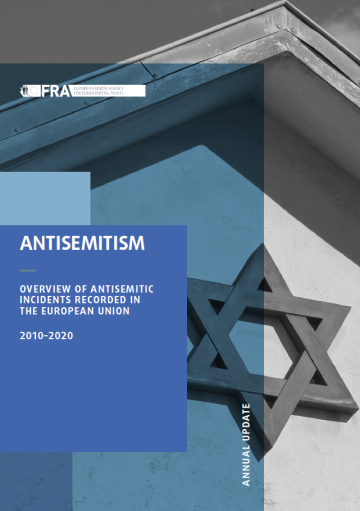
    Antisemitic incidents and hate crimes violate fundamental rights, especially the right to human dignity, the right to equality of treatment, and the freedom of thought, conscience and religion. This report provides an overview of available data on antisemitism as recorded by official and unofficial sources in the EU Member States as well as Albania, North Macedonia and Serbia. The data provided by the countries are supplemented with information from international organisations.
  • Fundamental Rights Report
    10
    June
    2021
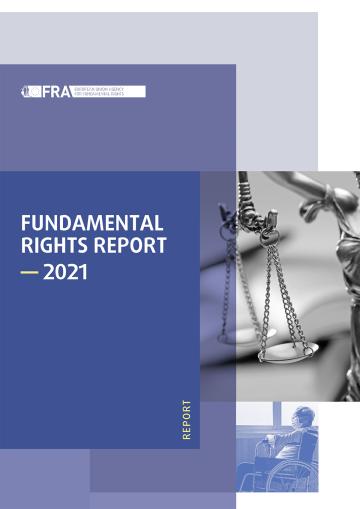
    FRA’s Fundamental Rights Report 2021 reviews major developments in the field in 2020, identifying both achievements and areas of concern. It also presents FRA’s opinions on these developments, including a synopsis of the evidence supporting these opinions. This year’s focus chapter explores the impact of the COVID-19 pandemic on fundamental rights. The remaining chapters cover: the EU Charter of Fundamental Rights; equality and non-discrimination; racism, xenophobia and related intolerance; Roma equality and inclusion; asylum, borders and migration; information society, privacy and data protection; rights of the child; access to justice; and the implementation of the Convention on the Rights of Persons with Disabilities.
  • Report / Paper / Summary
    19
    February
    2021
    This is the second main report from FRA’s Fundamental Rights Survey, which collected data from 35,000 people on a range of issues. This report focuses on respondents’ experiences as victims of selected types of crime, including violence, harassment, and property crime. The report also examines how often these crimes are reported to the police, and presents further details relating to harassment and violence, such as the perpetrators and where the incidents took place.
  • Report / Paper / Summary
    23
    September
    2020
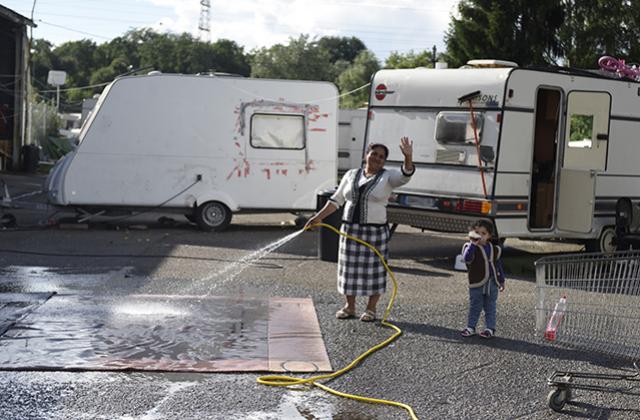
    This report presents findings from FRA’s 2019 survey on Roma and Travellers in Belgium, France, Ireland, the Netherlands, Sweden and the United Kingdom. The survey included interviews with almost 4,700 Roma and Travellers, collecting information on more than 8,200 individuals living in their households.
  • Periodic updates / Series
    29
    July
    2020
    As we enter the second half of 2020, the constraints on our daily lives brought about by the Coronavirus pandemic have become a firm reality. New local lockdowns and the reintroduction of restrictive measures prompted by fresh outbreaks of the virus are a stark reminder that COVID-19 continues to shape our lives – and our enjoyment of fundamental rights – in profound ways. There is compelling evidence of how the pandemic has exacerbated existing challenges in our societies. This FRA Bulletin outlines some of the measures EU Member States adopted to safely reopen their societies and economies while continuing to mitigate the spread of COVID-19. It highlights the impact these measures may have on civil, political and socioeconomic rights.
  • Periodic updates / Series
    30
    June
    2020
    The Coronavirus pandemic continues to interrupt everyday life in the EU in unprecedented ways. But the way it affects our societies is shifting. As governments gradually lift some of the measures put in place to contain the spread of COVID-19, new fundamental rights concerns arise: how to ensure that the rights to life and health are upheld as daily life transitions to a ‘new normal’. This Bulletin looks at declarations of states of emergency, or equivalent, and how they came under scrutiny. It considers
    the impact on fundamental rights in important areas of daily life, and includes a thematic focus on the pandemic's impact on older people.
  • Periodic updates / Series
    28
    May
    2020
    The Coronavirus pandemic continues to interrupt everyday life in the EU in unprecedented ways. But the way it affects our societies is shifting. As governments gradually lift some of the measures put in place to contain the spread of COVID-19, new fundamental rights concerns arise: how to ensure that the rights to life and health are upheld as daily life transitions to a ‘new normal’. This Bulletin looks at declarations of states of emergency, or equivalent, and how they came under scrutiny. It considers the impact on fundamental rights in important areas of daily life, and includes a thematic focus on the processing of users’ data to help contain COVID-19, particularly by contact-tracing apps. It covers the period 21 March – 30 April 2020.
  • Periodic updates / Series
    8
    April
    2020
    The outbreak of COVID-19 affects people’s daily life in the 27 EU Member States. As the number of infected people in the EU territory began to mount rapidly in February and March, governments put in place a raft of measures – often introduced in a period of only a few days – in an effort to contain the spread of the virus. Many of these measures reflect how, in exceptional emergency situations, the urgent need to save lives justifies restrictions on other rights, such as the freedom of movement and of assembly. This report outlines some of the measures EU Member States have put in place to protect public health during the COVID-19 pandemic. It covers the period 1 February – 20 March 2020.
  • Report / Paper / Summary
    12
    September
    2019
    FRA’s second EU Minorities and Discrimination survey (EU-MIDIS II) collected information from over 25,000 respondents with different ethnic minority and immigrant backgrounds across all 28 EU Member States. The main findings from the survey, published in 2017, pointed to a number of differences in the way women and men with immigrant backgrounds across the European Union (EU) experience how their rights are respected. This report summarises some of the most relevant survey findings in this regard, which show the need for targeted, gender-sensitive measures that promote the integration of – specifically – women who are immigrants or descendants of immigrants.
  • Report / Paper / Summary
    6
    December
    2017
    Seventeen years after adoption of EU laws that forbid discrimination, immigrants, descendants of immigrants, and minority ethnic groups continue to face widespread discrimination across the EU and in all areas of life – most often when seeking employment. For many, discrimination is a recurring experience. This is just one of the findings of FRA’s second European Union Minorities and Discrimination Survey (EU-MIDIS II), which collected information from over 25,500 respondents with different ethnic minority and immigrant backgrounds across all 28 EU Member States.