eu-charter

Carta dos Direitos Fundamentais da UE

Artigo 49.o - Princípios da legalidade e da proporcionalidade dos delitos e das penas

Artigo 49.o - Princípios da legalidade e da proporcionalidade dos delitos e das penas

1. Ninguém pode ser condenado por uma acção ou por uma omissão que, no momento da sua prática, não constituía infracção perante o direito nacional ou o direito internacional. Igualmente não pode ser imposta uma pena mais grave do que a aplicável no momento em que a infracção foi cometida. Se, posteriormente à infracção, a lei previr uma pena mais leve, deve ser essa a pena aplicada. 2. O presente artigo não prejudica a sentença ou a pena a que uma pessoa tenha sido condenada por uma acção ou por uma omissão que, no momento da sua prática, constituía crime segundo os princípios gerais reconhecidos por todas as nações. 3. As penas não devem ser desproporcionadas em relação à infracção.

Anotações

  • Text:

    Este artigo retoma a regra clássica da não retroactividade das leis e das penas. Foi aditada a regra da retroactividade da lei penal mais favorável, existente em numerosos Estados-Membros e que consta do artigo 15.o do Pacto sobre os Direitos Civis e Políticos.

    O artigo 7.o da CEDH tem a seguinte redacção:

    `1. Ninguém pode ser condenado por uma acção ou uma omissão que, no momento em que foi cometida, não constituía infracção, segundo o direito nacional ou internacional. Igualmente não pode ser imposta uma pena mais grave do que a aplicável no momento em que a infracção foi cometida.

    2. O presente artigo não invalidará a sentença ou a pena de uma pessoa culpada de uma acção ou de uma omissão que, no momento em que foi cometida, constituía crime segundo os princípios gerais de direito reconhecidos pelas nações civilizadas.`

    No n.o 2, foi simplesmente suprimido o termo `civilizadas`, o que não implica nenhuma alteração no sentido deste número, que visa nomeadamente os crimes contra a humanidade. Nos termos do n.o 3 do artigo 52.o, o direito garantido tem, pois, o mesmo sentido e âmbito que o direito garantido pela CEDH.

    O n.o 3 retoma o princípio geral da proporcionalidade dos delitos e das penas consagrado pelas tradições constitucionais comuns aos Estados-Membros e pela jurisprudência do Tribunal de Justiça das Comunidades Europeias.

    Source:
    Jornal Oficial da União Europeia C 303/17 - 14.12.2007
    Preamble - Explanations relating to the Charter of Fundamental Rights:
    As presentes anotações, inicialmente elaboradas sob a responsabilidade do Praesidium da Convenção que redigiu a Carta dos Direitos Fundamentais da União Europeia, foram actualizadas sob a responsabilidade do Praesidium da Convenção Europeia, à luz das adaptações ao texto (nomeadamente aos artigos 51.o e 52.o) da Carta introduzidas pela Convenção Europeia e da evolução do direito da União. Embora não tenham em si força de lei, constituem um valioso instrumento de interpretação destinado a clarificar as disposições da Carta.

Jurisprudência

Direitos constitucionais nacionais

42 results found

  • Grundgesetz für die Bundesrepublik Deutschland
    País:
    Germany

    Artikel 103 (...) (2) Eine Tat kann nur bestraft werden, wenn die Strafbarkeit gesetzlich bestimmt war, bevor die Tat begangen wurde. (...)

  • Konstytucja Rzeczypospolitej Polskiej
    País:
    Poland

    Art. 42.1. Odpowiedzialności karnej podlega ten tylko, kto dopuścił się czynu zabronionego pod groźbą kary przez ustawę obowiązującą w czasie jego popełnienia. Zasada ta nie stoi na przeszkodzie ukaraniu za czyn, który w czasie jego popełnienia stanowił przestępstwo w myśl prawa międzynarodowego.

  • Konvention zum Schutze der Menschenrechte und Grundfreiheiten
    País:
    Austria

    Artikel 7 (1) Niemand kann wegen einer Handlung oder Unterlassung verurteilt werden, die zur Zeit ihrer Begehung nach inländischem oder internationalem Recht nicht strafbar war. Ebenso darf keine höhere Strafe als die im Zeitpunkt der Begehung der strafbaren Handlung angedrohte Strafe verhängt werden. (2) Durch diesen Artikel darf die Verurteilung oder Bestrafung einer Person nicht ausgeschlossen werden, die sich einer Handlung oder Unterlassung schuldig gemacht hat, welche im Zeitpunkt ihrer Begehung nach den von den zivilisierten Völkern allgemein anerkannten Rechtsgrundsätzen strafbar war.

  • La Constitution Belge
    País:
    Belgium

    Article 14Nulle peine ne peut être établie ni appliquée qu'en vertu de la loi. Article 17La peine de la confiscation des biens ne peut être établie.

  • Lietuvos Respublikos Konstitucija
    País:
    Lithuania

    31 straipsnis. Asmuo laikomas nekaltu, kol jo kaltumas neįrodytas įstatymo nustatyta tvarka ir pripažintas įsiteisėjusiu teismo nuosprendžiu. Asmuo, kaltinamas padaręs nusikaltimą, turi teisę, kad jo bylą viešai ir teisingai išnagrinėtų nepriklausomas ir bešališkas teismas. Draudžiama versti duoti parodymus prieš save, savo šeimos narius ar artimus giminaičius. Bausmė gali būti skiriama ar taikoma tik remiantis įstatymu. Niekas negali būti baudžiamas už tą patį nusikaltimą antrą kartą. Asmeniui, kuris įtariamas padaręs nusikaltimą, ir kaltinamajam nuo jų sulaikymo arba pirmosios apklausos momento garantuojama teisė į gynybą, taip pat ir teisė turėti advokatą.

  • Luxembourg / Constitution of the Grand Ducal of Luxembourg
    País:
    Luxembourg

    Art. 19. Nulle peine ne peut être établie ni appliquée qu’en vertu de la loi. 

    Nul ne peut être condamné pour une action ou omission qui, au moment où elle a été commise, ne constituait pas une infraction prévue par la loi.

    Nul ne peut être condamné à une peine plus forte que celle qui était applicable au moment où l’infraction a été commise.

    ...

    Art. 37. Toute limitation de l’exercice des libertés publiques doit être prévue par la loi et respecter leur contenu essentiel. Dans le respect du principe de proportionnalité, des limitations ne peuvent être apportées que si elles sont nécessaires dans une société démocratique et répondent effectivement à des objectifs d’intérêt général ou au besoin de protection des droits et libertés d’autrui.

  • Magyarország Alaptörvénye
    País:
    Hungary

    III. cikk (SZABADSÁG ÉS FELELŐSSÉG) (1) Senkit nem lehet kínzásnak, embertelen, megalázó bánásmódnak vagy büntetésnek alávetni, valamint szolgaságban tartani. […]

    IV. cikk (SZABADSÁG ÉS FELELŐSSÉG) […] (2) Senkit nem lehet szabadságától másként, mint törvényben meghatározott okokból és törvényben meghatározott eljárás alapján megfosztani. Tényleges életfogytig tartó szabadságvesztés csak szándékos, erőszakos bűncselekmény elkövetése miatt szabható ki.

    XXVIII. cikk (SZABADSÁG ÉS FELELŐSSÉG) […] (4) Senki nem nyilvánítható bűnösnek, és nem sújtható büntetéssel olyan cselekmény miatt, amely az elkövetés idején a magyar jog vagy – nemzetközi szerződés, illetve az Európai Unió jogi aktusa által meghatározott körben – más állam joga szerint nem volt bűncselekmény.
    (5) A (4) bekezdés nem zárja ki valamely személy büntetőeljárás alá vonását és elítélését olyan cselekményért, amely elkövetése idején a nemzetközi jog általánosan elismert szabályai szerint bűncselekmény volt. [...]

  • Netherlands / Constitution of the Kingdom of the Netherlands
    País:
    Netherlands

    Article 16 No offence shall be punishable unless it was an offence under the law at the time it was committed.

  • Portugal / Constituição da República Portuguesa
    País:
    Portugal

    rtigo 29.º (Aplicação da lei criminal) 1. Ninguém pode ser sentenciado criminalmente senão em virtude de lei anterior que declare punível a acção ou a omissão, nem sofrer medida de segurança cujos pressupostos não estejam fixados em lei anterior. 2. O disposto no número anterior não impede a punição, nos limites da lei interna, por acção ou omissão que no momento da sua prática seja considerada criminosa segundo os princípios gerais de direito internacional comummente reconhecidos. 3. Não podem ser aplicadas penas ou medidas de segurança que não estejam expressamente cominadas em lei anterior. 4. Ninguém pode sofrer pena ou medida de segurança mais graves do que as previstas no momento da correspondente conduta ou da verificação dos respectivos pressupostos, aplicando-se retroactivamente as leis penais de conteúdo mais favorável ao arguido. 5. Ninguém pode ser julgado mais do que uma vez pela prática do mesmo crime. 6. Os cidadãos injustamente condenados têm direito, nas condições que a lei prescrever, à revisão da sentença e à indemnização pelos danos sofridos.

    Artigo 30.º (Limites das penas e das medidas de segurança) 1. Não pode haver penas nem medidas de segurança privativas ou restritivas da liberdade com carácter perpétuo ou de duração ilimitada ou indefinida. 2. Em caso de perigosidade baseada em grave anomalia psíquica, e na impossibilidade de terapêutica em meio aberto, poderão as medidas de segurança privativas ou restritivas da liberdade ser prorrogadas sucessivamente enquanto tal estado se mantiver, mas sempre mediante decisão judicial. 3. A responsabilidade penal é insusceptível de transmissão. 4. Nenhuma pena envolve como efeito necessário a perda de quaisquer direitos civis, profissionais ou políticos. 5. Os condenados a quem sejam aplicadas pena ou medida de segurança privativas da liberdade mantêm a titularidade dos direitos fundamentais, salvas as limitações inerentes ao sentido da condenação e às exigências próprias da respectiva execução.

  • Portugal / Constituição da República Portuguesa
    País:
    Portugal

    Artigo 29.º (Aplicação da lei criminal) 1. Ninguém pode ser sentenciado criminalmente senão em virtude de lei anterior que declare punível a acção ou a omissão, nem sofrer medida de segurança cujos pressupostos não estejam fixados em lei anterior. 2. O disposto no número anterior não impede a punição, nos limites da lei interna, por acção ou omissão que no momento da sua prática seja considerada criminosa segundo os princípios gerais de direito internacional comummente reconhecidos. 3. Não podem ser aplicadas penas ou medidas de segurança que não estejam expressamente cominadas em lei anterior. 4. Ninguém pode sofrer pena ou medida de segurança mais graves do que as previstas no momento da correspondente conduta ou da verificação dos respectivos pressupostos, aplicando-se retroactivamente as leis penais de conteúdo mais favorável ao arguido. 5. Ninguém pode ser julgado mais do que uma vez pela prática do mesmo crime. 6. Os cidadãos injustamente condenados têm direito, nas condições que a lei prescrever, à revisão da sentença e à indemnização pelos danos sofridos.

    Artigo 30.º (Limites das penas e das medidas de segurança) 1. Não pode haver penas nem medidas de segurança privativas ou restritivas da liberdade com carácter perpétuo ou de duração ilimitada ou indefinida. 2. Em caso de perigosidade baseada em grave anomalia psíquica, e na impossibilidade de terapêutica em meio aberto, poderão as medidas de segurança privativas ou restritivas da liberdade ser prorrogadas sucessivamente enquanto tal estado se mantiver, mas sempre mediante decisão judicial. 3. A responsabilidade penal é insusceptível de transmissão. 4. Nenhuma pena envolve como efeito necessário a perda de quaisquer direitos civis, profissionais ou políticos. 5. Os condenados a quem sejam aplicadas pena ou medida de segurança privativas da liberdade mantêm a titularidade dos direitos fundamentais, salvas as limitações inerentes ao sentido da condenação e às exigências próprias da respectiva execução.

  • Romania / Constitution of Romania
    País:
    Romania

    Article 23(12) Penalties shall be established or applied only in accordance with and on the grounds of the law.

  • Slovakia / Constitution of the Slovak Republic
    País:
    Slovakia

    Article 49 Only the law shall lay down which conduct constitutes a criminal act, and what punishment, or other forms of deprivation of rights, or property, may be imposed for its commitment. Article 50 (...) (6) Whether any act is criminal is assessed, and punishment is determined, in accordance with the law valid at the time when the act was committed. A more recent law is applied, if it is more favorable for the perpetrator.

  • Slovenia / Constitution of the Republic of Slovenia
    País:
    Slovenia

    Article 28 (Principle of Legality in Criminal Law) No one may be punished for an act which had not been declared a criminal offence under law, or for which a penalty had not been prescribed, at the time the act was performed. Acts that are criminal shall be established and the resulting penalties pronounced according to the law that was in force at the time the act was performed, save where a more recent law adopted is more lenient towards the offender.

  • Spain / Constitution of the Kingdom of Spain
    País:
    Spain

    Section 9 (...) (3) The Constitution guarantees the principle of legality, the hierarchy of legal provisions, the publicity of legal statutes, the non-retroactivity of punitive provisions that are not favourable to or restrictive of individual rights, the certainty that the rule of law shall prevail, the accountability of public authorities, and the prohibition of arbitrary action of public authorities.

    Section 25(1) No one may be convicted or sentenced for actions or omissions which when committed did not constitute a criminal offence, misdemeanour or administrative offence under the law then in force. (2) Punishments entailing imprisonment and security measures shall be aimed at reeducation and social rehabilitation and may not involve forced labour. The person sentenced to prison shall enjoy, during the imprisonment, the fundamental rights contained in this Chapter except those expressly restricted by the content of the sentence, the purpose of the punishment and the penitentiary law. In any case, he or she shall be entitled to paid work and to the appropriate Social Security benefits, as well as to access to cultural opportunities and the overall development of his or her personality. (3) The Civil Administration may not impose penalties which directly of indirectly imply deprivation of freedom.

  • Suomen perustuslaki
    País:
    Finland

    8 § Rikosoikeudellinen laillisuusperiaate Ketään ei saa pitää syyllisenä rikokseen eikä tuomita rangaistukseen sellaisen teon perusteella, jota ei tekohetkellä ole laissa säädetty rangaistavaksi. Rikoksesta ei saa tuomita ankarampaa rangaistusta kuin tekohetkellä on laissa säädetty.

  • The Belgian Constitution
    País:
    Belgium

    Article 14.No punishment can be introduced or administered except by virtue of the law. Article 17.Assets may not be confiscated as a means of punishment.

  • The Constitution of the Republic of Cyprus
    País:
    Cyprus

    Article 12
    1. No person shall be held guilty of any offence on account of any act or omission which did not constitute an offence under the law at the time when it was committed; and no person shall have a heavier punishment imposed on him for an offence other than that expressly provided for it by law at the time when it was committed.

    3. No law shall provide for a punishment which is disproportionate to the gravity of the offence.

  • The Fundamental Law of Hungary
    País:
    Hungary

    Article III (Freedom and Responsibility) (1) No one shall be subject to torture, inhuman or degrading treatment or punishment, or held in servitude. […]

    Article IV (Freedom and Responsibility) […] (2) No one shall be deprived of liberty except for reasons specified in an Act and in accordance with the procedure laid down in an Act. Life imprisonment without parole may only be imposed for the commission of intentional and violent criminal offences.

    Article XXVIII (Freedom and Responsibility) […] (4) No one shall be held guilty of or be punished for an act which, at the time when it was committed, did not constitute a criminal offence under Hungarian law or, within the scope specified in an international treaty or a legal act of the European Union, under the law of another State.
    (5) Paragraph (4) shall not prejudice the prosecution and conviction of any person for any act which, at the time when it was committed, was a criminal offence according to the generally recognised rules of international law.

  • Tο Σύνταγμα της Κυπριακής Δημοκρατίας
    País:
    Cyprus

    ΑΡΘΡΟΝ 12
    1. Ουδείς κηρύσσεται ένοχος οιουδήποτε αδικήματος λόγω πράξεως ή παραλείψεως μη συνιστώσης αδίκημα συμφώνως τω νόμω τω ισχύοντι κατά τον χρόνον της τελέσεως αυτής και εις ουδένα επιβάλλεται δι’ αδίκημά τι ποινή βαρυτέρα της ρητώς προβλεπομένης υπό του κατά τον χρόνον της τελέσεως ισχύοντος νόμου.

    3. Ο νόμος δεν δύναται να προβλέψη ποινήν δυσανάλογον προς την βαρύτητα του αδικήματος.

  • Ustav Republike Hrvatske
    País:
    Croatia

    Članak 16.
    Slobode i prava mogu se ograničiti samo zakonom da bi se zaštitila sloboda i prava drugih ljudi te pravni poredak, javni moral i zdravlje.
    Svako ograničenje slobode ili prava mora biti razmjerno naravi potrebe za ograničenjem u svakom pojedinom slučaju.

    Članak 30.
    Kaznena osuda za teška i osobito nečasna kaznena djela može, u skladu sa zakonom, imati za posljedicu gubitak stečenih ili zabranu stjecanja na određeno vrijeme nekih prava na obavljanje određenih poslova, ako to zahtijeva zaštita pravnog poretka.

    Članak 31.
    (1)Nitko ne može biti kažnjen za djelo koje prije nego je počinjeno nije bilo utvrđeno zakonom ili međunarodnim pravom kao kazneno djelo, niti mu se može izreći kazna koja nije bila određena zakonom. Ako zakon nakon počinjenog djela odredi blažu kaznu, odredit će se takva kazna.

Direito da UE

5 results found

  • Directive (EU) 2024/1203 of the European Parliament and of the Council of 11 April 2024 on the protection of the environment through criminal law

    Preamble 
    (44) The publication of the personal data of convicted persons contained in judicial decisions should only be possible in duly justified exceptional cases following a case-by-case assessment, weighing the public interest against the rights to respect for private life and protection of the personal data of the convicted person provided for in Articles 7 and 8 of the Charter of Fundamental Rights of the European Union (the ‘Charter’), respectively. 


    (53)To ensure successful enforcement of environmental criminal law, Member States should make available to competent authorities effective investigative tools for environmental criminal offences such as those available under their national law for combatting organised crime or other serious criminal offences, if and to the extent that the use of those tools is appropriate and proportionate to the nature and gravity of the criminal offences as provided for in national law. Such tools could include the interception of communications, covert surveillance, including electronic surveillance, controlled deliveries, the monitoring of bank accounts and other financial investigation tools. Those tools should be used in line with the principle of proportionality and in full respect of the Charter. It is imperative that the right to the protection of personal data be respected.


    (75) This Directive respects the fundamental rights and observes the principles as recognised in particular by the Charter, including the protection of personal data, the freedom of expression and information, the freedom to conduct a business, the right to an effective remedy and to a fair trial, the presumption of innocence and right of defence, the principles of legality and proportionality of criminal offences and penalties, and the right not to be tried or punished twice in criminal proceedings for the same offence. This Directive seeks to ensure full respect for those rights and principles and should be implemented accordingly.

    Article 1: Subject matter

    This Directive establishes minimum rules with regard to the definition of criminal offences and penalties in order to protect the environment more effectively, as well as with regard to measures to prevent and combat environmental crime and to effectively enforce Union environmental law.

    Article 5: Penalties for natural persons

    1.   Member States shall take the necessary measures to ensure that criminal offences referred to in Articles 3 and 4 are punishable by effective, proportionate and dissuasive criminal penalties.

    Article 7: Penalties for legal persons

    1.   Member States shall take the necessary measures to ensure that a legal person held liable pursuant to Article 6(1) or (2) is punishable by effective, proportionate and dissuasive criminal or non-criminal penalties or measures.

  • Directive 2009/52/EC of the European Parliament and of the Council of 18 June 2009 providing for minimum standards on sanctions and measures against employers of illegally staying third-country nationals

    Preamble  


    (37) This Directive respects the fundamental rights and observes the principles recognised in particular by the European Convention for the Protection of Human Rights and Fundamental Freedoms and the Charter of Fundamental Rights of the European Union. Specifically, it should be applied with due respect for the freedom to conduct a business, equality before the law and the principle of non-discrimination, the right to an effective remedy and to a fair trial and the principles of legality and proportionality of criminal offences and penalties, in accordance with Articles 16, 20, 21, 47 and 49 of the Charter.

  • Directive (EU) 2019/1153 of the European Parliament and of the Council of 20 June 2019 laying down rules facilitating the use of financial and other information for the prevention, detection, investigation or prosecution of certain criminal offences, and

    .

  • Directive 2014/42/EU of the European Parliament and of the Council of 3 April 2014 on the freezing and confiscation of instrumentalities and proceeds of crime in the European Union

    Article 4 - Confiscation
    ‘1. Member States shall take the necessary measures to enable the confiscation, either in whole or in part, of instrumentalities and proceeds or property the value of which corresponds to such instrumentalities or proceeds, subject to a final conviction for a criminal offence, which may also result from proceedings in absentia.
    2. Where confiscation on the basis of paragraph 1 is not possible, at least where such impossibility is the result of illness or absconding of the suspected or accused person, Member States shall take the necessary measures to enable the confiscation of instrumentalities and proceeds in cases where criminal proceedings have been initiated regarding a criminal offence which is liable to give rise, directly or indirectly, to economic benefit, and such proceedings could have led to a criminal conviction if the suspected or accused person had been able to stand trial.‘
    Article 5 - Extended confiscation
    ‘1. Member States shall adopt the necessary measures to enable the confiscation, either in whole or in part, of property belonging to a person convicted of a criminal offence which is liable to give rise, directly or indirectly, to economic benefit, where a court, on the basis of the circumstances of the case, including the specific facts and available evidence, such as that the value of the property is disproportionate to the lawful income of the convicted person, is satisfied that the property in question is derived from criminal conduct.‘

  • Directive (EU) 2016/680 of the European Parliament and of the Council of 27 April 2016 on the protection of natural persons with regard to the processing of personal data by competent authorities for the purposes of the prevention, investigation, detec...

    Article 1 - Subject-matter and objectives
    ‘1. This Directive lays down the rules relating to the protection of natural persons with regard to the processing of personal data by competent authorities for the purposes of the prevention, investigation, detection or prosecution of criminal offences or the execution of criminal penalties, including the safeguarding against and the prevention of threats to public security.
    2. In accordance with this Directive, Member States shall:
    (a) protect the fundamental rights and freedoms of natural persons and in particular their right to the protection of personal data‘
    Article 4
    ‘Principles relating to processing of personal data
    1. Member States shall provide for personal data to be:
    (a) processed lawfully and fairly;
    (b) collected for specified, explicit and legitimate purposes and not processed in a manner that is incompatible with those purposes;
    (c) adequate, relevant and not excessive in relation to the purposes for which they are processed;
    (d) accurate and, where necessary, kept up to date; every reasonable step must be taken to ensure that personal data that are inaccurate, having regard to the purposes for which they are processed, are erased or rectified without delay;
    (e) kept in a form which permits identification of data subjects for no longer than is necessary for the purposes for which they are processed;
    (f) processed in a manner that ensures appropriate security of the personal data, including protection against unauthorised or unlawful processing and against accidental loss, destruction or damage, using appropriate technical or organisational measures.
    2. Processing by the same or another controller for any of the purposes set out in Article 1(1) other than that for which the personal data are collected shall be permitted in so far as:
    (a) the controller is authorised to process such personal data for such a purpose in accordance with Union or Member State law; and
    (b) processing is necessary and proportionate to that other purpose in accordance with Union or Member State law.
    3. Processing by the same or another controller may include archiving in the public interest, scientific, statistical or historical use, for the purposes set out in Article 1(1), subject to appropriate safeguards for the rights and freedoms of data subjects.
    4. The controller shall be responsible for, and be able to demonstrate compliance with, paragraphs 1, 2 and 3.‘

    Article 57. Penalties:
    Member States shall lay down the rules on penalties applicable to infringements of the provisions adopted pursuant to this Directive and shall take all measures necessary to ensure that they are implemented. The penalties provided for shall be effective, proportionate and dissuasive.

Direito internacional

0 results found

Produtos

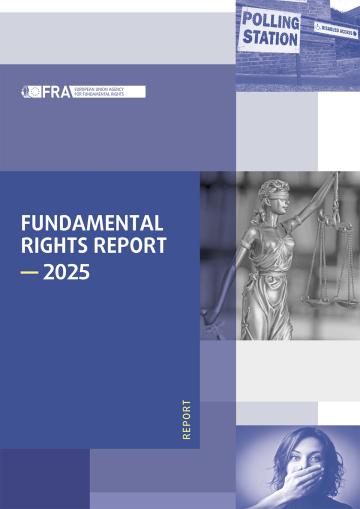
  • Fundamental Rights Report
    10
    June
    2025
    The Fundamental Rights Report 2025 is the annual report of the European Union Agency for Fundamental Rights (FRA). It provides an overview of the state of fundamental rights in the EU and highlights selected critical developments and trends in 2024. The report covers issues such as inclusive elections, gender-based violence, and the implementation of the EU Charter of Fundamental Rights. It presents FRA’s opinions on these developments, setting out the actions that the EU and Member States should take. This annual publication is a valuable resource for those seeking to stay informed about the EU’s shifting landscape of fundamental rights.
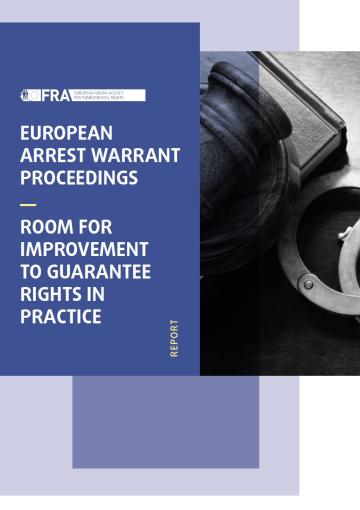
  • Report / Paper / Summary
    26
    March
    2024
    The European Arrest Warrant (EAW) allows Member States to implement judicial decisions issued in another Member State. It applies to decisions such as arrests for the purpose of criminal prosecutions or the execution of custodial sentences. After being in force for over 20 years, FRA’s findings provide evidence for an assessment of the legislation in practice. This report looks at the fundamental rights challenges that people face who are requested through an EAW. It provides a unique insight into their experiences and those of the professionals involved. FRA’s findings indicate that shared challenges exist across EU Member States. They must increase efforts to ensure that people are able to take part in criminal proceedings and receive a fair trial.
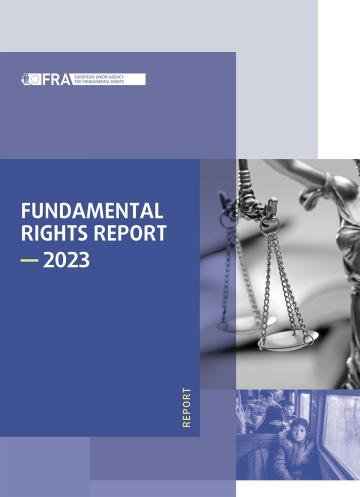
  • Fundamental Rights Report
    8
    June
    2023
    FRA’s Fundamental Rights Report 2023 reviews major developments in the field in 2022, identifying both achievements and areas of concern. It also presents FRA’s opinions on these developments, including a synopsis of the evidence supporting these opinions.
  • Report / Paper / Summary
    28
    September
    2022
    Os atos de terrorismo representam uma grave ameaça para a vida e a segurança das pessoas e um profundo desafio para a segurança dos Estados. Ao mesmo tempo, a legislação, as políticas e outras medidas de combate ao terrorismo podem implicar, direta ou indiretamente, sérias limitações aos direitos fundamentais e podem afetar negativamente os indivíduos, os grupos e a sociedade no seu conjunto. A presente síntese apresenta as principais conclusões da FRA no seu relatório sobre a Diretiva (UE) 2017/541 relativa à luta contra o terrorismo, o principal instrumento do direito penal à escala da União Europeia (UE) no domínio do combate ao terrorismo.
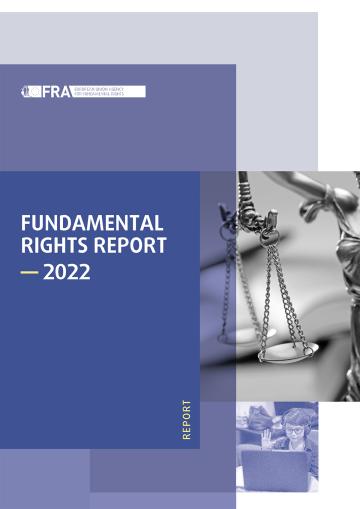
  • Fundamental Rights Report
    8
    June
    2022
    FRA’s Fundamental Rights Report 2022 reviews major developments in the field in 2021, identifying both achievements and areas of concern. It also presents FRA’s opinions on these developments, including a synopsis of the evidence supporting these opinions.
  • Report / Paper / Summary
    18
    November
    2021
    This report examines the EU’s main criminal law instrument in the field of counter-terrorism, Directive (EU) 2017/541. Specifically, it considers how the directive engages issues of fundamental rights, affecting individuals, groups and society as a whole.
  • Fundamental Rights Report
    10
    June
    2021
    O ano de 2020 trouxe avanços e retrocessos no âmbito
    da proteção dos direitos fundamentais. O Relatório
    sobre os Direitos Fundamentais 2021 da FRA analisa
    os principais desenvolvimentos neste domínio,
    identificando tanto as realizações quanto os problemas
    que persistem.
  • Fundamental Rights Report
    10
    June
    2021
    FRA’s Fundamental Rights Report 2021 reviews major developments in the field in 2020, identifying both achievements and areas of concern. It also presents FRA’s opinions on these developments, including a synopsis of the evidence supporting these opinions. This year’s focus chapter explores the impact of the COVID-19 pandemic on fundamental rights. The remaining chapters cover: the EU Charter of Fundamental Rights; equality and non-discrimination; racism, xenophobia and related intolerance; Roma equality and inclusion; asylum, borders and migration; information society, privacy and data protection; rights of the child; access to justice; and the implementation of the Convention on the Rights of Persons with Disabilities.
  • Report / Paper / Summary
    25
    April
    2018
    This report outlines Member States’ approaches to age requirements and limits
    regarding child participation in judicial proceedings; procedural safeguards for, and rights of, children involved in criminal
    proceedings; as well as issues related to depriving children of their liberty.