Artificial intelligence is everywhere and affects everyone – from deciding what content people see on their social media feeds to determining who will receive state benefits. AI technologies are typically based on algorithms that make predictions to support or even fully automate decision-making.
Praćenje poštovanja temeljnih prava na vanjskim granicama EU‑a trebalo bi se sustavno i redovno provoditi za široki raspon aktivnosti upravljanja granicama. Te aktivnosti obuhvaćaju nadzor granica, uhićenja na kopnenim, morskim i zračnim granicama te rad mehanizama za upućivanje, uključujući u slučaju masovnih dolazaka. Ovim općim smjernicama pruža se pomoć državama članicama EU‑a u uspostavi nacionalnih neovisnih mehanizama praćenja poštovanja temeljnih prava na vanjskim granicama EU‑a, u skladu s uredbom o dubinskoj provjeri koju je Europska komisija predložila 23. rujna 2020. Agencija Europske unije za temeljna prava izradila je ove smjernice na zahtjev Komisije.
Teroristička djela ozbiljna su prijetnja životima i sigurnosti ljudi, te velik sigurnosni izazov za države. Istodobno, zakonodavstvo, politike i druge mjere u području borbe protiv terorizma mogu izravno ili neizravno dovesti do ozbiljnih ograničenja temeljnih prava i imati negativan utjecaj na pojedince, skupine i društvo u cjelini. U ovom su sažetku predstavljeni glavni nalazi Agencije Europske unije za temeljna prava iz njezina izvješća o Direktivi (EU) 2017/541 o suzbijanju terorizma, koja predstavlja glavni kaznenopravni instrument na razini EU-a u području borbe protiv terorizma.
FRA’s Fundamental Rights Report 2022 reviews major developments in the field in 2021, identifying both achievements and areas of concern. It also presents FRA’s opinions on these developments, including a synopsis of the evidence supporting these opinions.
This report examines the EU’s main criminal law instrument in the field of counter-terrorism, Directive (EU) 2017/541. Specifically, it considers how the directive engages issues of fundamental rights, affecting individuals, groups and society as a whole.
FRA’s Fundamental Rights Report 2021 reviews major developments in the field in 2020, identifying both achievements and areas of concern. It also presents FRA’s opinions on these developments, including a synopsis of the evidence supporting these opinions. This year’s focus chapter explores the impact of the COVID-19 pandemic on fundamental rights. The remaining chapters cover: the EU Charter of Fundamental Rights; equality and non-discrimination; racism, xenophobia and related intolerance; Roma equality and inclusion; asylum, borders and migration; information society, privacy and data protection; rights of the child; access to justice; and the implementation of the Convention on the Rights of Persons with Disabilities.
This focus looks at COVID-19’s impact on fundamental rights. It underscores that a human rights-based approach to tackling the pandemic requires balanced measures that are based on law, necessary, temporary and proportional. It also requires addressing the pandemic’s socio-economic impact, protecting the vulnerable and fighting racism.
This is the second main report from FRA’s Fundamental Rights Survey, which collected data from 35,000 people on a range of issues. This report focuses on respondents’ experiences as victims of selected types of crime, including violence, harassment, and property crime. The report also examines how often these crimes are reported to the police, and presents further details relating to harassment and violence, such as the perpetrators and where the incidents took place.
This report outlines some of the measures EU Member States have put in place to protect public health as Europe faces the ‘second wave’ of the Coronavirus pandemic. It highlights how these may affect fundamental rights, especially social rights.
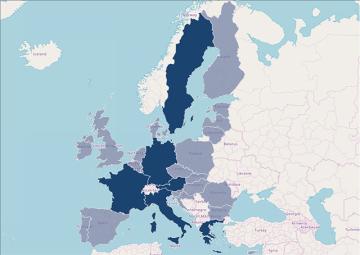
The EU Fundamental Rights Agency published in 2019 its report on the ‘Integration of young refugees in the EU’. The report explored the challenges of young people who fled armed conflict or persecution and arrived in the EU in 2015 and 2016. The report is based on 426 interviews with experts working in the area of asylum and integration, as well as 163 interviews with young people, aged 16 to 24, conducted between October 2017 and June 2018 in 15 regions and cities located in six Member States: Austria, France, Germany, Greece, Italy and Sweden. The links on this page provide a summary of the information collected during this period for each country about unaccompanied children turning 18 and the change in people’s legal status once international protection is granted. These two issues had at the time been identified as moments requiring sufficient, consistent and systematic support, particularly from lawyers, social workers and guardians, to ensure successful integration.