Equality

Equality, non-discrimination and racism

Equality is a core value of the EU. You have the right to fair treatment regardless of who you are, what you believe, or how you chose to live.

We carry out research and share expertise to help fight discrimination, inequality and racism in all its forms.

Highlights

  • Report / Paper / Summary
    3
    March
    2026
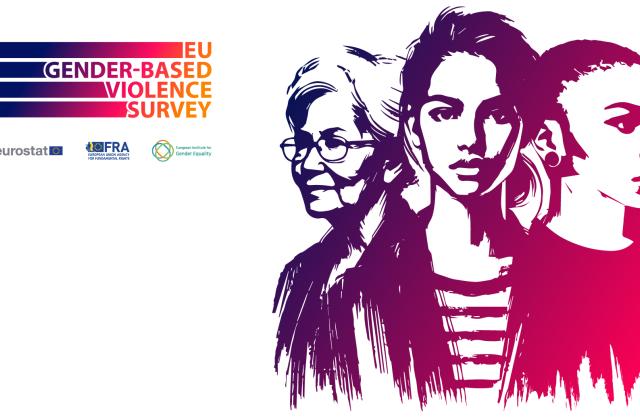
    Violence against women remains widespread in the European Union (EU). This joint report by the EU Agency for Fundamental Rights (FRA) and the European Institute for Gender Equality (EIGE) presents detailed findings from the EU gender-based violence survey. It offers in-depth analysis of the scale, nature and drivers of violence and exposes the structural gender inequality. Building on the 2024 publication, EU gender-based violence survey - Key results, and following up on FRA’s 2014 report, Violence against women: an EU-wide survey, this report tracks trends over the last decade across the EU. Eurostat, FRA, and EIGE jointly conducted the survey. It is based on over 100,000 interviews covering all 27 EU Member States.
  • Report / Paper / Summary
    27
    January
    2026
    This report looks at antisemitism in the EU, focusing on what can be done to address gaps in recording and inconsistencies in data collection. It highlights existing tools and guidance for Member States to improve their recording systems. The analysis is based on official administrative data and information from publicly available sources across EU Member States, as well as Albania, North Macedonia, and Serbia. Detailed country overviews are available for all countries covered. Antisemitism has been monitored by FRA since 2004. This report builds on the 2024 publication, ‘Jewish People’s Experiences and Perceptions of Antisemitism’.
  • Report / Paper / Summary
    27
    November
    2025
    This report looks at the breadth and depth of violence and neglect faced by people with disabilities living in institutions. It highlights the shortcomings by EU Member States in preventing violence and protecting those who are at a higher risk of experiencing it, in line with the UN Convention on the Rights of Persons with Disabilities. Based on research across all EU Member States and FRA observer candidate countries, the report calls for better protection, stronger prevention of violence, and clear accountability. It urges the EU and its Member States to implement their obligations around equality and fundamental rights.
  • Data explorer
    FRA’s 2024 survey on Roma and Travellers in Albania, Bulgaria, Czechia, France, Greece, Hungary, Ireland, Italy, North Macedonia, Portugal, Romania, Serbia and Spain collected information from 10,126 respondents living in private households who self-identify as Roma or Traveller, are 16 or older and have lived in the survey countries for at least the 12 months before the survey.

    Publications and data
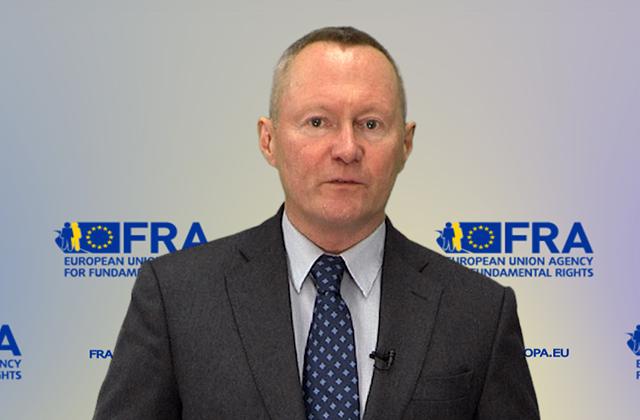
    In the latest edition of his video blog, FRA Director Michael O'Flaherty talks about discrimination on the basis of age in the EU and calls for more respect for Human- and Fundamental Rights of older people.
    5
    April
    2019
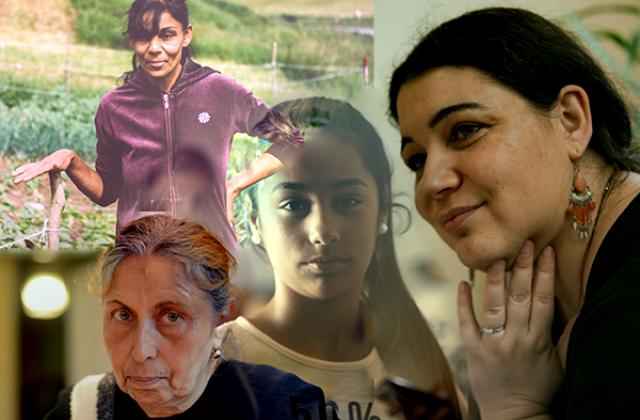
    Despite efforts by the European Union (EU) and its Member States to reduce gender inequalities among citizens of Roma origin, important gender differences persist. Drawing on FRA’s own EU-MIDIS II survey research in nine EU Member States this report highlights the position of Roma women in education, employment and health, as well as the extent to which they experience hate-motivated discrimination, harassment and physical violence.
    In the light of the events in New Zealand, Michael O'Flaherty talks about discrimination and hate crime against Muslims in the EU and makes 4 proposals on how to make Muslims feel more safe.
    The Compendium of Practices on Equality Data is the product of the Subgroup on Equality Data, which was set up in February 2018 by the EU High Level Group on Non-Discrimination, Diversity and Equality and is facilitated by FRA. The Subgroup on Equality Data brings together representatives of EU Member States and Norway, the European Commission, Eurostat and FRA with the aim to support Member States in their efforts to improve the collection and use of equality data.
    8
    March
    2019
    This summary outlines the main findings of FRA’s second survey on Jewish people’s experiences with hate crime, discrimination and antisemitism in the European Union – the biggest survey of Jewish people ever conducted worldwide.
    12
    December
    2018
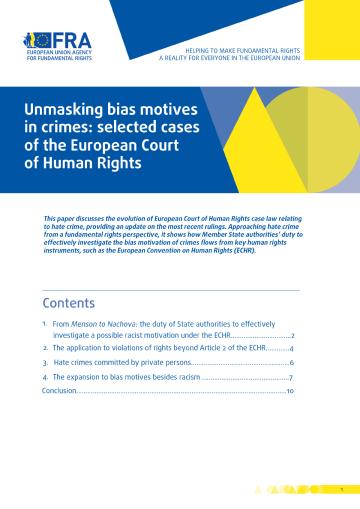
    This paper discusses the evolution of European Court of Human Rights case law relating
    to hate crime, providing an update on the most recent rulings. Approaching hate crime
    from a fundamental rights perspective, it shows how Member State authorities’ duty to
    effectively investigate the bias motivation of crimes flows from key human rights
    instruments, such as the European Convention on Human Rights.
    Michael O'Flaherty focuses on the situation of the Jewish community living in the EU.
    10
    December
    2018
    This report outlines the main findings of FRA’s second survey on Jewish people’s experiences with hate crime, discrimination and antisemitism in the European Union – the biggest survey of Jewish people ever conducted worldwide. Covering 12 EU Member States, the survey reached almost 16,500 individuals who identify as being Jewish. It follows up on the agency’s first survey, conducted in seven countries in 2012.
    5
    December
    2018
    Last versions available are EL and NL
    11 March 2021
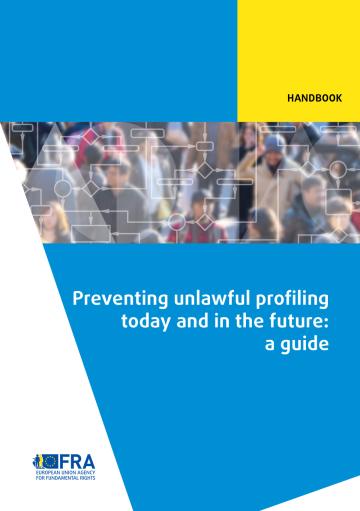
    This guide explains what profiling is, the legal frameworks that regulate it, and why conducting profiling lawfully is both necessary to comply with fundamental rights and crucial for effective policing and border management. The guide also provides practical guidance on how to avoid unlawful profiling in police and border management operations.
    4
    December
    2018
    The Convention on the Rights of Persons with Disabilities commits both the EU and all of its Member States to realising the right of persons with disabilities to live independently in the community – which includes achieving deinstitutionalisation for those residing in institutional settings. But much remains to be done to make this a reality in practice. This report presents the main insights gained during fieldwork on the drivers of and barriers to deinstitutionalisation. Focusing on the local level, it gives voice to a diverse set of actors – most importantly, to people with disabilities themselves.
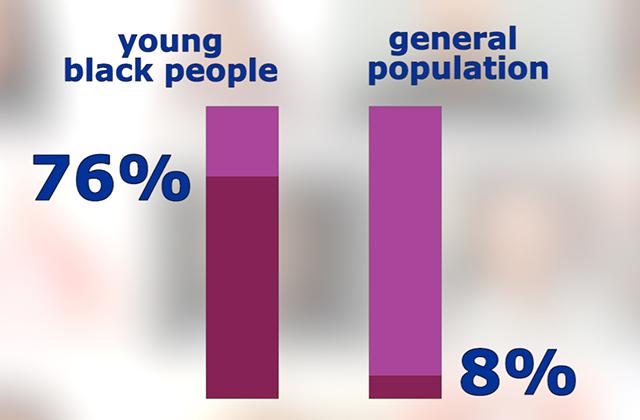
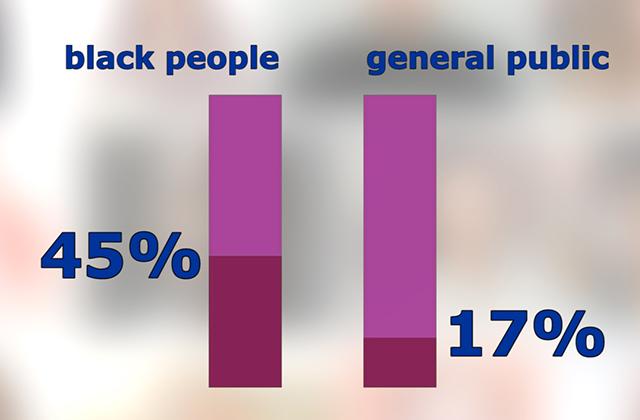
    Black people in the EU face unacceptable difficulties in getting a decent job because of their skin colour. Racist harassment also remains all too common.
    Black people in the EU face unacceptable difficulties in simply finding somewhere to live because of their skin colour.
    28
    November
    2018
    Almost twenty years after adoption of EU laws forbidding discrimination, people of African descent in the EU face widespread and entrenched prejudice and exclusion. This report outlines selected results from FRA's second large-scale EU-wide survey on migrants and minorities (EU-MIDIS II) carried out in 2016. It examines the experiences of almost 6,000 people of African descent in 12 EU Member States.
    16
    November
    2018
    This report presents the main insights gained during the EU Fundamental Rights Agency’s project on local engagement for Roma inclusion, which explores how to best involve Roma in integration efforts at the local level. Bringing together local authorities and residents, especially Roma, it investigated what aspects work, which ones do not, and why this is the case.
    9
    November
    2018
    Antisemitism can be expressed in the form of verbal and physical attacks, threats,
    harassment, discrimination and unequal treatment, property damage and graffiti or other
    forms of speech or text, including on the internet. The present report provides an overview of data on antisemitism as recorded by
    international organisations and by official and unofficial sources in the 28 European
    Union (EU) Member States, based on their own definitions and categorisations.
    26
    October
    2018
    The EU Agency for Fundamental Rights’ 2018 Fundamental Rights Forum
    brought together more than 700 human rights champions at a time of
    widening social divisions and increasingly polarised politics across
    Europe.
    17
    October
    2018
    Almost 25 million children under 18 are at risk of poverty or social exclusion in the EU. Poverty deprives children of educational
    opportunities, childcare, access to health care, adequate food and housing, family support and even protection from violence.
    This report outlines data and survey findings that highlight the magnitude of child poverty in the EU, but also presents tools
    available to counter this phenomenon and keep track of progress made.
    20
    September
    2018
    With enormous volumes of data generated every day, more and more decisions are based on data analysis and algorithms. This can bring welcome benefits, such as consistency and objectivity, but algorithms also entail great risks. A FRA focus paper looks at how the use of automation in decision making can result in, or exacerbate, discrimination.
    12
    September
    2018
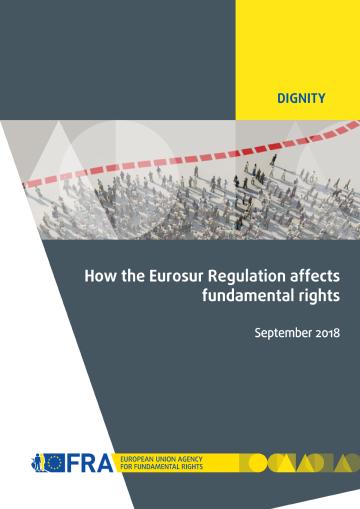
    In November 2017, the European Commission requested FRA’s support in evaluating the impact on fundamental rights of the European Border Surveillance System (Eurosur) Regulation. Further to this request, FRA reviewed the work of the European Border and Coast Guard Agency (Frontex) and analysed cooperation agreements concluded by EU Member States with third countries which are relevant for the exchange of information for the purposes of Eurosur. This report presents the main findings of such review.
    We – The Austrian Federal Ministry for European and International Affairs, and the diplomatic missions of Albania, Andorra, Australia, Belgium, Brazil, Canada, Chile, Colombia, Cyprus, Czechia, Denmark, Estonia, Finland, France, Germany, Greece, Iceland, Ireland, Italy, Latvia, Lithuania, Luxembourg, Malta, Mexico, Montenegro, the Netherlands, New Zealand, Norway, San Marino, Slovenia, Spain, Sweden, Switzerland, the United Kingdom, the United States, Uruguay, as well as the European Union Agency for Fundamental Rights (FRA), the Delegation of the European Union to the International Organisations in Vienna, UN-GLOBE, and the Diplomatische Akademie Wien-Vienna School of International Studies – all welcome 17 May as the International Day Against Homophobia, Biphobia and Transphobia (IDAHOBIT), as a celebration of diversity and inclusion around the world.
    More LGBTIQ people in Europe are now open about who they are. At the same time, they face more violence, harassment, and bullying than before. This is especially true for younger LGBTIQ people, who are particularly vulnerable. These are some of the findings of the latest survey of the EU Agency for Fundamental Rights (FRA), based on responses from more than 100,000 LGBTIQ people across Europe.
    FRA presented findings from its ‘Being Black in the EU’ report at an expert discussion on ‘Economic justice for people of African descent: opportunities and challenges in the labour market’.
    FRA took part in the European Cancer Organisation’s civil society workshop on social cancer inequalities. FRA presented its work drawing from its LGBTIQ survey.
    On 14 March, the European Economic and Social Committee's Permanent group on the Inclusion of Roma held a public hearing on ensuring political participation of Roma at the local, national and European level. It sought to identify obstacles, solutions and good practices.
    FRA presented its approach to measuring self-identification and discrimination experiences, during the second meeting of Eurostat’s Equality and Non-Discrimination Statistics Task Force.
    In its observer role, FRA attended the fourth and final meeting of the informal, ad-hoc and temporary group on combating anti-Muslim hatred.
    From 21 to 23 January, experts and policy makers met to discuss on how to best streamline the implementation and monitoring of international and European policies on children, youth affairs and child rights.
    Over the years, the EU and its Member States have continued to improve child protection systems though gaps still remain. The EU Fundamental Rights Agency (FRA) mapped the current situation across the EU to support efforts to make further improvements.
    FRA took part in a meeting of the European Parliament’s Committee on Civil Liberties, Justice and Home Affairs (LIBE) on 23 January.
    On 17 January, the UN Development Programme held a virtual roundtable event on ‘Being Black in the EU and beyond. People of African Descent, discrimination and the SDGs’. The event was prompted by FRA’s recent publication ‘Being Black in the EU’.
    In Madrid on 30 November, FRA took part in the European Platform for Roma Inclusion, a regular event organised since 2009.
    On 7 December, FRA took part in a meeting of the European Commission’s Interservice Group on Child Rights. The meeting discussed the Commission’s recommendation on integrated child protection systems, planned for the first quarter 2024.
    FRA’s presented its work on antisemitism at the International Holocaust Remembrance Alliance Plenary meeting.
    The UN Special Representative of the Secretary-General on Violence against Children, Dr Najat Maalla M'jid, visited FRA on 27 November.
    FRA addressed the Council of the EU’s Working Party on Fundamental Rights, Citizens Rights and Free Movement of Persons (FREMP) on 15 November in Brussels.
    FRA has updated its anti-Muslim hatred database. It provides an easy-to-use overview of information on hate crime, hate speech and discrimination against Muslims across the EU, Albania, Serbia and North Macedonia.
    The annual overview of antisemitic incidents from the EU Agency for Fundamental Rights (FRA) yet again reveals persistent gaps in the recording of antisemitism across Europe. Each country continues to collect data differently. Some still do not collect any data at all. This impedes efforts to effectively counter hatred towards Jews.
    FRA is aware of the recent reported increase in incidents of intolerance and racial discrimination in EU Member States. The Agency stands firmly against all expressions of intolerance and racial discrimination, including hate speech and violence.
    FRA took part in the Other side of the law: Enforcement of antidiscrimination legislation Equinet conference in Brussels on 12 October.
    FRA will take part in EIGE's gender statistics database expert meeting.
    A delegation of the Council of Europe Parliamentary Assembly Equality and Non-Discrimination Committee, and member of the ‘No Hate Parliamentary Alliance’, will visit FRA on 8 May.
    FRA’s Director will participate in the 18th European Union – African Union Human Rights Dialogue on 4 May in Brussels.
    On 27 April, FRA will give an online lecture on the Agency’s work on child rights within the EU context.
    FRA will participate in the European Parliament’s anti-racism and diversity week in Brussels.
    -
    The European Commission’s Child Rights Coordinator is convening several meetings to move forward with the implementation of the EU Strategy on the Rights of the Child.
    -
    The Eurostat working group on crime and criminal justice statistics will hold its annual meeting.
    On 13 March, FRA will welcome the former ambassador of Israel in the EU and Brussels and a delegation of students.
    -
    From 8 to 9 February, FRA will take part virtually in a meeting of the Working Group on Equality and Values in Education and Training.
    FRA Director Michael O’Flaherty will give a speech on liberal democracy at the European Parliament’s Article 17 dialogue seminar.
    On 13 December, FRA will speak at a webinar on ‘Child-friendly justice: Do words matter’.
    On 8 December, FRA will join the European crime prevention award conference in Prague.
    -
    As the European Year of Youth 2022 comes to an end, FRA will attend the year’s final stakeholders and national coordinators meeting and closing conference.
    On 6 December, FRA will speak at a round-table event on child-friendly justice and children as victims of crime at the European Parliament.
    -
    FRA will attend the final conference of the CLEAR-RIGHTS project in Brussels from 1 to 2 December.
    On 24 November, FRA will give a lecture to a delegation of the Diplomatic Academy in Vienna.
    The OSCE’s Office for Democratic Institutions and Human Rights (ODIHR) will hold a workshop in Vienna on 15 November.
    -
    FRA will take part in a UN Women expert group meeting to develop definitions for measuring online and technology-facilitated violence against women and girls.
    FRA will speak on a panel on improving victim support and data collection via multisectoral cooperation.
    -
    The EU subgroup on the national implementation of the EU anti-racism action plan will meet from 9 to 10 November in Brussels.