eu-charter

Charte des droits fondamentaux de l'Union européenne

Article 47 - Droit à un recours effectif et à accéder à un tribunal impartial

Article 47 - Droit à un recours effectif et à accéder à un tribunal impartial

Toute personne dont les droits et libertés garantis par le droit de l'Union ont été violés a droit à un recours effectif devant un tribunal dans le respect des conditions prévues au présent article. Toute personne a droit à ce que sa cause soit entendue équitablement, publiquement et dans un délai raisonnable par un tribunal indépendant et impartial, établi préalablement par la loi. Toute personne a la possibilité de se faire conseiller, défendre et représenter. Une aide juridictionnelle est accordée à ceux qui ne disposent pas de ressources suffisantes, dans la mesure où cette aide serait nécessaire pour assurer l'effectivité de l'accès à la justice.

Explications

  • Texte:

    Le premier alinéa se fonde sur l'article 13 de la CEDH:

    `Toute personne dont les droits et libertés reconnus dans la présente Convention ont été violés, a droit à l'octroi d'un recours effectif devant une instance nationale, alors même que la violation aurait été commise par des personnes agissant dans l'exercice de leurs fonctions officielles`.

    Cependant, dans le droit de l'Union, la protection est plus étendue puisqu'elle garantit un droit à un recours effectif devant un juge. La Cour de justice a consacré ce droit dans son arrêt du 15 mai 1986 en tant que principe général du droit de l'Union (aff. 222/84, Johnston, rec. 1986, p. 1651; voir aussi les arrêts du 15 octobre 1987, aff. 222/86, Heylens, rec. 1987, p. 4097, et du 3 décembre 1992, C-97/91, Borelli, rec. 1992 , p. I-6313). Selon la Cour, ce principe général du droit de l'Union s'applique également aux États membres lorsqu'ils appliquent le droit de l'Union. L'inscription de cette jurisprudence dans la Charte n'avait pas pour objet de modifier le système de contrôle juridictionnel prévu par les traités, et notamment les règles relatives à la recevabilité des recours formés directement devant la Cour de justice de l'Union européenne. La Convention européenne a examiné le système de contrôle juridictionnel de l'Union, y compris les règles relatives à l'admissibilité, et l'a confirmé tout en en modifiant certains aspects, comme le reflètent les articles 251 à 281 du traité sur le fonctionnement de l'Union européenne, et notamment l'article 263, quatrième alinéa. L'article 47 s'applique à l'égard des institutions de l'Union et des États membres lorsqu'ils mettent en œuvre le droit de l'Union, et ce, pour tous les droits garantis par le droit de l'Union.

    Le deuxième alinéa correspond à l'article 6, paragraphe 1 de la CEDH, qui se lit ainsi:

    `Toute personne a droit à ce que sa cause soit entendue équitablement, publiquement et dans un délai raisonnable, par un tribunal indépendant et impartial, établi par la loi, qui décidera, soit des contestations sur ses droits et obligations de caractère civil, soit du bien-fondé de toute accusation en matière pénale dirigée contre elle. Le jugement doit être rendu publiquement, mais l'accès de la salle d'audience peut être interdit à la presse et au public pendant la totalité ou une partie du procès dans l'intérêt de la moralité, de l'ordre public ou de la sécurité nationale dans une société démocratique, lorsque les intérêts des mineurs ou la protection de la vie privée des parties au procès l'exigent, ou dans la mesure jugée strictement nécessaire par le tribunal, lorsque dans des circonstances spéciales la publicité serait de nature à porter atteinte aux intérêts de la justice`.

    Dans le droit de l'Union, le droit à un tribunal ne s'applique pas seulement à des contestations relatives à des droits et obligations de caractère civil. C'est l'une des conséquences du fait que l'Union est une communauté de droit, comme la Cour l'a constaté dans l'affaire 294/83, `Les Verts` contre Parlement européen (arrêt du 23 avril 1986, rec. 1986, p. 1339). Cependant, à l'exception de leur champ d'application, les garanties offertes par la CEDH s'appliquent de manière similaire dans l'Union.

    En ce qui concerne le troisième alinéa, il convient de noter que, d'après la jurisprudence de la Cour européenne des droits de l'homme, une aide juridictionnelle doit être accordée lorsque l'absence d'une telle aide rendrait inefficace la garantie d'un recours effectif (arrêt CEDH du 9.10.1979, Airey, Série A, Volume 32, p. 11). Il existe également un système d'assistance judiciaire devant la Cour de justice de l'Union européenne.

    Source:
    Journal officiel de l'Union européenne C 303/17 - 14.12.2007
    Preamble - Explanations relating to the Charter of Fundamental Rights:
    Les explications qui figurent ci-après ont été établies initialement sous la responsabilité du praesidium de la Convention qui a élaboré la Charte des droits fondamentaux de l'Union européenne. Elles ont été mises à jour sous la responsabilité du praesidium de la Convention européenne, compte tenu des adaptations apportées au texte de la Charte par ladite Convention (notamment aux articles 51 et 52) et de l'évolution du droit de l'Union. Bien que ces explications n'aient pas en soi de valeur juridique, elles constituent un outil d'interprétation précieux destiné à éclairer les dispositions de la Charte.

Références à la jurisprudence

Droit constitutionnel national

50 results found

  • Costituzione della Repubblica Italiana
    Pays:
    Italy

    Art. 24. Tutti possono agire in giudizio per la tutela dei propri diritti e interessi legittimi.La difesa è diritto inviolabile in ogni stato e grado del procedimento.Sono assicurati ai non abbienti, con appositi istituti, i mezzi per agire e difendersi davanti ad ogni giurisdizione.La legge determina le condizioni e i modi per la riparazione degli errori giudiziari. Art. 25. Nessuno può essere distolto dal giudice naturale precostituito per legge. Nessuno può essere punito se non in forza di una legge che sia entrata in vigore prima del fatto commesso. Nessuno può essere sottoposto a misure di sicurezza se non nei casi previsti dalla legge. Art. 101. La giustizia è amministrata in nome del popolo. I giudici sono soggetti soltanto alla legge. Art. 104. La magistratura costituisce un ordine autonomo e indipendente da ogni altro potere. (...) Art. 111. La giurisdizione si attua mediante il giusto processo regolato dalla legge. Ogni processo si svolge nel contraddittorio tra le parti, in condizioni di parità, davanti a giudice terzo e imparziale. La legge ne assicura la ragionevole durata. Nel processo penale, la legge assicura che la persona accusata di un reato sia, nel più breve tempo possibile, informata riservatamente della natura e dei motivi dell'accusa elevata a suo carico; disponga del tempo e delle condizioni necessari per preparare la sua difesa; abbia la facoltà, davanti al giudice, di interrogare o di far interrogare le persone che rendono dichiarazioni a suo carico, di ottenere la convocazione e l'interrogatorio di persone a sua difesa nelle stesse condizioni dell'accusa e l'acquisizione di ogni altro mezzo di prova a suo favore; sia assistita da un interprete se non comprende o non parla la lingua impiegata nel processo. Il processo penale è regolato dal principio del contraddittorio nella formazione della prova. La colpevolezza dell'imputato non può essere provata sulla base di dichiarazioni rese da chi, per libera scelta, si è sempre volontariamente sottratto all'interrogatorio da parte dell'imputato o del suo difensore. La legge regola i casi in cui la formazione della prova non ha luogo in contraddittorio per consenso dell'imputato o per accertata impossibilità di natura oggettiva o per effetto di provata condotta illecita. Tutti i provvedimenti giurisdizionali devono essere motivati. Contro le sentenze e contro i provvedimenti sulla libertà personale, pronunciati dagli organi giurisdizionali ordinari o speciali, è sempre ammesso ricorso in cassazione per violazione di legge. Si può derogare a tale norma soltanto per le sentenze dei tribunali militari in tempo di guerra.Contro le decisioni del Consiglio di Stato e della Corte dei conti il ricorso in cassazione è ammesso per i soli motivi inerenti alla giurisdizione. Art. 112. Il pubblico ministero ha l'obbligo di esercitare l'azione penale. Art. 113. Contro gli atti della pubblica amministrazione è sempre ammessa la tutela giurisdizionale dei diritti e degli interessi legittimi dinanzi agli organi di giurisdizione ordinaria o amministrativa.Tale tutela giurisdizionale non può essere esclusa o limitata a particolari mezzi di impugnazione o per determinate categorie di atti.La legge determina quali organi di giurisdizione possono annullare gli atti della pubblica amministrazione nei casi e con gli effetti previsti dalla legge stessa.

  • Czechia / Charter of Fundamental Rights and Freedoms
    Pays:
    Czechia

    Article 36 (1) Everyone may assert, through the prescribed procedure, her rights before an independent and impartial court or, in specified cases, before another body. (2) Unless a law provides otherwise, a person who claims that her rights were curtailed by a decision of a public administrative authority may turn to a court for review of the legality of that decision. However, judicial review of decisions affecting the fundamental rights and freedoms listed in this Charter may not be removed from the jurisdiction of courts. (3) Everybody is entitled to compensation for damage caused her by an unlawful decision of a court, other State bodies, or public administrative authorities, or as the result of an incorrect official procedure. (4) Conditions therefor and detailed provisions shall be set by law. Article 37 (1) Everyone has the right to refuse to give testimony if she would thereby incriminate herself or a person close to her. (2) In proceedings before courts, other State bodies, or public administrative authorities, everyone shall have the right to legal assistance from the very beginning of such proceedings. (3) All parties to such proceedings are equal. (4) Anyone who declares that she does not speak the language in which a proceeding is being conducted has the right to the services of an interpreter. Article 38 (1) No one may be removed from the jurisdiction of her lawful judge. The jurisdiction of courts and the competence of judges shall be provided for by law. (2) Everyone has the right to have her case considered in public, without unnecessary delay, and in her presence, as well as to express her opinion on all of the admitted evidence. The public may be excluded only in cases specified by law.

  • Danmarks Riges Grundlov
    Pays:
    Denmark

    § 61. Den dømmende magts udøvelse kan kun ordnes ved lov. Særdomstole med dømmende myndighed kan ikke nedsættes.
    § 62. Retsplejen skal stedse holdes adskilt fra forvaltningen. Regler herom fastsættes ved lov.
    § 63. Stk. 1. Domstolene er berettigede til at påkende ethvert spørgsmål om øvrighedsmyndighedens grænser. Den, der vil rejse sådant spørgsmål, kan dog ikke ved at bringe sagen for domstolene unddrage sig fra foreløbig at efterkomme øvrighedens befaling. Stk. 2. Påkendelse af spørgsmål om øvrighedsmyndighedens grænser kan ved lov henlægges til en eller flere forvaltningsdomstole, hvis afgørelser dog skal kunne prøves ved rigets øverste domstol. De nærmere regler herom fastsættes ved lov.
    § 64. Dommerne har i deres kald alene at rette sig efter loven. De kan ikke afsættes uden ved dom, ejheller forflyttes mod deres ønske, uden for de tilfælde, hvor en omordning af domstolene finder sted. Dog kan den dommer, der har fyldt sit 65. år, afskediges, men uden tab af indtægter indtil det tidspunkt, til hvilket han skulle være afskediget på grund af alder.
    § 65. Stk. 1. I retsplejen gennemføres offentlighed og mundtlighed i videst muligt omfang. Stk. 2. I strafferetsplejen skal lægmænd medvirke. Det fastsættes ved lov, i hvilke sager og under hvilke former denne medvirken skal finde sted, herunder i hvilke sager nævninger skal medvirke.
    § 71, stk. 2 Frihedsberøvelse kan kun finde sted med hjemmel i loven. Stk. 3. Enhver, der anholdes, skal inden 24 timer stilles for en dommer. Hvis den anholdte ikke straks kan sættes på fri fod, skal dommeren ved en af grunde ledsaget kendelse, der afsiges snarest muligt og senest inden tre dage, afgøre, om han skal fængsles, og, hvis han kan løslades mod sikkerhed, bestemme dennes art og størrelse. Denne bestemmelse kan for Grønlands vedkommende fraviges ved lov, forsåvidt dette efter de stedlige forhold må anses for påkrævet. Stk. 4. Den kendelse, som dommeren afsiger, kan af vedkommende straks særskilt indbringes for højere ret. Stk. 5. Ingen kan underkastes varetægtsfængsel for en forseelse, som kun kan medføre straf af bøde eller hæfte.

  • De Belgische Grondwet
    Pays:
    Belgium

    Art 12De vrijheid van de persoon is gewaarborgd.Niemand kan worden vervolgd dan in de gevallen die de wet bepaalt en in de vorm die zij voorschrijft.(...) Art 13Niemand kan tegen zijn wil worden afgetrokken van de rechter die de wet hem toekent.Art 14Geen straf kan worden ingevoerd of toegepast dan krachtens de wet.Art 23Ieder heeft het recht een menswaardig leven te leiden.Daartoe waarborgen de wet, het decreet of de in artikel 134 bedoelde regel, rekening houdend met de overeenkomstige plichten, de economische, sociale en culturele rechten, waarvan ze de voorwaarden voor de uitoefening bepalen.Die rechten omvatten inzonderheid:(...) 2° het recht op sociale zekerheid, bescherming van de gezondheid en sociale, geneeskundige en juridische bijstand(...);Art 144Geschillen over burgerlijke rechten behoren bij uitsluiting tot de bevoegdheid van de rechtbanken.Art 145Geschillen over politieke rechten behoren tot de bevoegdheid van de rechtbanken, behoudens de bij de wet gestelde uitzonderingen.Art 146Geen rechtbank, geen met eigenlijke rechtspraak belast orgaan kan worden ingesteld dan krachtens een wet. Geen buitengewone rechtbanken of commissies kunnen, onder welke benaming ook, in het leven worden geroepen.Art 148De terechtzittingen van de rechtbanken zijn openbaar, tenzij de openbaarheid gevaar oplevert voor de orde of de goede zeden; in dat geval wordt zulks door de rechtbank bij vonnis verklaard.Inzake politieke misdrijven en drukpersmisdrijven kan het sluiten der deuren niet dan met algemene stemmen worden uitgesproken.Art 149Elk vonnis is met redenen omkleed. Het wordt in openbare terechtzitting uitgesproken.

  • Declaration des Droits de l’Homme et du Citoyen du 26 août 1789
    Pays:
    France

    Article 7 Nul homme ne peut être accusé, arrêté ni détenu que dans les cas déterminés par la Loi, et selon les formes qu'elle a prescrites. Ceux qui sollicitent, expédient, exécutent ou font exécuter des ordres arbitraires, doivent être punis ; mais tout citoyen appelé ou saisi en vertu de la Loi doit obéir à l'instant : il se rend coupable par la résistance. 

  • Eesti Vabariigi Põhiseadus
    Pays:
    Estonia

    § 15. Igaühel on õigus pöörduda oma õiguste ja vabaduste rikkumise korral kohtusse. Igaüks võib oma kohtuasja läbivaatamisel nõuda mis tahes asjassepuutuva seaduse, muu õigusakti või toimingu põhiseaduse vastaseks tunnistamist. Kohus järgib põhiseadust ja tunnistab põhiseaduse vastaseks mis tahes seaduse, muu õigusakti või toimingu, mis rikub põhiseaduses sätestatud õigusi ja vabadusi või on muul viisil põhiseadusega vastuolus.
    § 24. Kedagi ei tohi tema vaba tahte vastaselt üle viia seadusega määratud kohtu alluvusest teise kohtu alluvusse. Igaühel on õigus olla oma kohtuasja arutamise juures.Kohtuistungid on avalikud. Kohus võib seaduses sätestatud juhtudel ja korras oma istungi või osa sellest kuulutada kinniseks riigi- või ärisaladuse, kõlbluse või inimeste perekonna- ja eraelu kaitseks või kui seda nõuavad alaealise, kannatanu või õigusemõistmise huvid.Kohtuotsus kuulutatakse avalikult, välja arvatud juhud, kui alaealise, abielupoole või kannatanu huvid nõuavad teisiti. Igaühel on õigus tema kohta tehtud kohtuotsuse peale seadusega sätestatud korras edasi kaevata kõrgemalseisvale kohtule.

  • European Convention on Human Rights - Article 6
    Pays:
    Austria

    Article 6 – Right to a fair trial

    1 In the determination of his civil rights and obligations or of any criminal charge against him, everyone is entitled to a fair and public hearing within a reasonable time by an independent and impartial tribunal established by law. Judgment shall be pronounced publicly but the press and public may be excluded from all or part of the trial in the interests of morals, public order or national security in a democratic society, where the interests of juveniles or the protection of the private life of the parties so require, or to the extent strictly necessary in the opinion of the court in special circumstances where publicity would prejudice the interests of justice.

    2 Everyone charged with a criminal offence shall be presumed innocent until proved guilty according to law.

    3 Everyone charged with a criminal offence has the following minimum rights:

    a to be informed promptly, in a language which he understands and in detail, of the nature and cause of the accusation against him;

    b to have adequate time and facilities for the preparation of his defence;

    c to defend himself in person or through legal assistance of his own choosing or, if he has not sufficient means to pay for legal assistance, to be given it free when the interests of justice so require;

    d to examine or have examined witnesses against him and to obtain the attendance and examination of witnesses on his behalf under the same conditions as witnesses against him;

    e to have the free assistance of an interpreter if he cannot understand or speak the language used in court.

  • Grundgesetz für die Bundesrepublik Deutschland
    Pays:
    Germany

    Artikel 19 (...) (4) Wird jemand durch die öffentliche Gewalt in seinen Rechten verletzt, so steht ihm der Rechtsweg offen. Soweit eine andere Zuständigkeit nicht begründet ist, ist der ordentliche Rechtsweg gegeben. Artikel 10 Abs. 2 Satz 2 bleibt unberührt. Artikel 97 (1) Die Richter sind unabhängig und nur dem Gesetze unterworfen. (...) Artikel 101 (1) Ausnahmegerichte sind unzulässig. Niemand darf seinem gesetzlichen Richter entzogen werden. (2) Gerichte für besondere Sachgebiete können nur durch Gesetz errichtet werden. Artikel 103 (1) Vor Gericht hat jedermann Anspruch auf rechtliches Gehör. (...)

  • Konstytucja Rzeczypospolitej Polskiej
    Pays:
    Poland

    Art. 45.1. Każdy ma prawo do sprawiedliwego i jawnego rozpatrzenia sprawy bez nieuzasadnionej zwłoki przez właściwy, niezależny, bezstronny i niezawisły sąd.2. Wyłączenie jawności rozprawy może nastąpić ze względu na moralność, bezpieczeństwo państwa i porządek publiczny oraz ze względu na ochronę życia prywatnego stron lub inny ważny interes prywatny. Wyrok ogłaszany jest publicznie.Art. 77.1. Każdy ma prawo do wynagrodzenia szkody, jaka została mu wyrządzona przez niezgodne z prawem działanie organu władzy publicznej.2. Ustawa nie może nikomu zamykać drogi sądowej dochodzenia naruszonych wolności lub praw.

  • Konvention zum Schutze der Menschenrechte und Grundfreiheiten
    Pays:
    Austria

    Artikel 6 (1) Jedermann hat Anspruch darauf, daß seine Sache in billiger Weise öffentlich und innerhalb einer angemessenen Frist gehört wird, und zwar von einem unabhängigen und unparteiischen, auf Gesetz beruhenden Gericht, das über zivilrechtliche Ansprüche und Verpflichtungen oder über die Stichhaltigkeit der gegen ihn erhobenen strafrechtlichen Anklage zu entscheiden hat. Das Urteil muß öffentlich verkündet werden, jedoch kann die Presse und die Öffentlichkeit während der gesamten Verhandlung oder eines Teiles derselben im Interesse der Sittlichkeit, der öffentlichen Ordnung oder der nationalen Sicherheit in einem demokratischen Staat ausgeschlossen werden, oder wenn die Interessen von Jugendlichen oder der Schutz des Privatlebens der Prozeßparteien es verlangen, oder, und zwar unter besonderen Umständen, wenn die öffentliche Verhandlung die Interessen der Rechtspflege beeinträchtigen würde, in diesem Fall jedoch nur in dem nach Auffassung des Gerichts erforderlichen Umfang. (3) Jeder Angeklagte hat mindestens (englischer Text) insbesondere (französischer Text) die folgenden Rechte: a) in möglichst kurzer Frist in einer für ihn verständlichen Sprache in allen Einzelheiten über die Art und den Grund der gegen ihn erhobenen Beschuldigung in Kenntnis gesetzt zu werden; b) über ausreichende Zeit und Gelegenheit zur Vorbereitung seiner Verteidigung zu verfügen; c) sich selbst zu verteidigen oder den Beistand eines Verteidigers seiner Wahl zu erhalten und, falls er nicht über die Mittel zur Bezahlung eines Verteidigers verfügt, unentgeltlich den Beistand eines Pflichtverteidigers zu erhalten, wenn dies im Interesse der Rechtspflege erforderlich ist; d) Fragen an die Belastungszeugen zu stellen oder stellen zu lassen und die Ladung und Vernehmung der Entlastungszeugen unter denselben Bedingungen wie die der Belastungszeugen zu erwirken; e) die unentgeltliche Beiziehung eines Dolmetschers zu verlangen, wenn der Angeklagte die Verhandlungssprache des Gerichts nicht versteht oder sich nicht darin ausdrücken kann.

  • La Constitution Belge
    Pays:
    Belgium

    Art 12La liberté individuelle est garantie.Nul ne peut être poursuivi que dans les cas prévus par la loi, et dans la forme qu'elle prescrit.(...) Art 13Nul ne peut être distrait, contre son gré, du juge que la loi lui assigne.Art 14Nulle peine ne peut être établie ni appliquée qu'en vertu de la loi.Art 23Chacun a le droit de mener une vie conforme à la dignité humaine.A cette fin, la loi, le décret ou la règle visée à l'article 134 garantissent, en tenant compte des obligations correspondantes, les droits économiques, sociaux et culturels, et déterminent les conditions de leur exercice.Ces droits comprennent notamment :(...) 2° le droit à la sécurité sociale, à la protection de la santé et à l'aide sociale, médicale et juridique(...);Art 144Les contestations qui ont pour objet des droits civils sont exclusivement du ressort des tribunaux.(....)Art 145Les contestations qui ont pour objet des droits politiques sont du ressort des tribunaux, sauf les exceptions établies par la loi.Art 146Nul tribunal, nulle juridiction contentieuse ne peut être établi qu'en vertu d'une loi. Il ne peu être créé de commissions ni de tribunaux extraordinaires, sous quelque dénomination que ce soit.Art 148Les audiences des tribunaux sont publiques, à moins que cette publicité ne soit dangereuse pour l'ordre ou les moeurs; et, dans ce cas, le tribunal le déclare par un jugement.En matière de délits politiques et de presse, le huis clos ne peut être prononcé qu'à l'unanimité.Art 149Tout jugement est motivé. Il est prononcé en audience publique.

  • Latvijas Republikas Satversme
    Pays:
    Latvia

    92. Ikviens var aizstāvēt savas tiesības un likumiskās intereses taisnīgā tiesā. Ikviens uzskatāms par nevainīgu, iekams viņa vaina nav atzīta saskaņā ar likumu. Nepamatota tiesību aizskāruma gadījumā ikvienam ir tiesības uz atbilstīgu atlīdzinājumu. Ikvienam ir tiesības uz advokāta palīdzību.

  • Lietuvos Respublikos Konstitucija
    Pays:
    Lithuania

    20 straipsnis. Niekas negali būti savavališkai sulaikytas arba laikomas suimtas. Niekam neturi būti atimta laisvė kitaip, kaip tokiais pagrindais ir pagal tokias procedūras, kokias yra nustatęs įstatymas. Nusikaltimo vietoje sulaikytas asmuo per 48 valandas turi būti pristatytas į teismą, kur sulaikytajam dalyvaujant sprendžiamas sulaikymo pagrįstumas. Jeigu teismas nepriima nutarimo asmenį suimti, sulaikytasis tuojau pat paleidžiamas.
    30 straipsnis. Asmuo, kurio konstitucinės teisės ar laisvės pažeidžiamos, turi teisę kreiptis į teismą. Asmeniui padarytos materialinės ir moralinės žalos atlyginimą nustato įstatymas.31 straipsnis Asmuo, kaltinamas padaręs nusikaltimą, turi teisę, kad jo bylą viešai ir teisingai išnagrinėtų nepriklausomas ir bešališkas teismas.
    109 straipsnis. Teisingumą Lietuvos Respublikoje vykdo tik teismai. Teisėjas ir teismai, vykdydami teisingumą, yra nepriklausomi. Teisėjai, nagrinėdami bylas, klauso tik įstatymo. Teismas priima sprendimus Lietuvos Respublikos vardu.

  • Luxembourg / Constitution du Grand-Duché de Luxembourg
    Pays:
    Luxembourg

    Art. 17. (1) La liberté individuelle est garantie. 

    (2) Nul ne peut être poursuivi, arrêté ou privé de sa liberté que dans les cas prévus et dans la forme déterminée par la loi. 

    (3) Sauf le cas de flagrant délit, nul ne peut être arrêté qu’en vertu d’une décision de justice motivée, qui doit être notifiée au moment de l’arrestation ou au plus tard dans les vingt-quatre heures. 

    (4) Toute personne accusée d’une infraction est présumée innocente jusqu’à ce que sa culpabilité ait été légalement établie. 

    Toute personne doit être informée sans délai des raisons de son arrestation ou de la privation de sa liberté, des accusations portées contre elle et des moyens de recours légaux dont elle dispose pour recouvrer sa liberté.

    Art. 18. Toute personne a droit à ce que sa cause soit portée devant la juridiction prévue par la loi. 

    Nul ne peut être distrait contre son gré du juge que la loi lui assigne.

    ...

    Art. 108. Les audiences des juridictions sont publiques, à moins que cette publicité ne soit dangereuse pour l’ordre ou les moeurs, et, dans ce cas, la juridiction le déclare par une décision de justice.

    Art. 109. Tout jugement est motivé. Il est prononcé en audience publique.

    Art. 110. La loi garantit l’impartialité du magistrat du siège, le caractère équitable et loyal ainsi que le délai raisonnable des procédures, le respect du contradictoire et des droits de la défense.

  • Magyarország Alaptörvénye
    Pays:
    Hungary

    XXVIII. cikk (SZABADSÁG ÉS FELELŐSSÉG) (1) Mindenkinek joga van ahhoz, hogy az ellene emelt bármely vádat vagy valamely perben a jogait és kötelezettségeit törvény által felállított, független és pártatlan bíróság tisztességes és nyilvános tárgyaláson, ésszerű határidőn belül bírálja el.
    […]
    (3) A büntetőeljárás alá vont személynek az eljárás minden szakaszában joga van a védelemhez. A védő nem vonható felelősségre a védelem ellátása során kifejtett véleménye miatt.
    […]
    (7) Mindenkinek joga van ahhoz, hogy jogorvoslattal éljen az olyan bírósági, hatósági és más közigazgatási döntés ellen, amely a jogát vagy jogos érdekét sérti.

  • Netherlands / Constitution of the Kingdom of the Netherlands
    Pays:
    Netherlands

    Article 15 (...) 3. The trial of a person who has been deprived of his liberty pending trial shall take place within a reasonable period.

    Article 18 (...)  2. Rules concerning the granting of legal aid to persons of limited means shall be laid down by Act of Parliament.

    Article 121 Except in cases laid down by Act of Parliament, trials shall be held in public and judgments shall specify the grounds on which they are based. Judgments shall be pronounced in public.

  • Portugal / Constitution of the Portuguese Republic
    Pays:
    Portugal

    Article 20 (Access to law and effective judicial protection) (1) Everyone is guaranteed access to the law and the courts in order to defend those of his rights and interests that are protected by law, and justice may not be denied to anyone due to lack of sufficient financial means. (2) Subject to the terms of the law, everyone has the right to legal information and advice, to legal counsel and to be accompanied by a lawyer before any authority. (3) The law shall define and ensure adequate protection of the secrecy of legal proceedings. (4) Everyone has the right to secure a decision in any suit in which he is intervening, within a reasonable time limit and by means of fair process. (5) For the purpose of defending the personal rights, freedoms and guarantees and in such a way as to secure effective and timely judicial protection against threats thereto or breaches thereof, the law shall ensure citizens judicial proceedings that are characterised by their swiftness and by the attachment of priority to them.
    ...
    Article 29 (Application of criminal law) (1) No one may be sentenced under the criminal law unless the action or omission in question is punishable under a pre-existing law, nor may any person be the object of a security measure unless the prerequisites therefore are laid down by a pre-existing law. (2) The provisions of the previous paragraph do not preclude the punishment up to the limits laid down by internal Portuguese law of an action or omission which was deemed criminal under the general principles of international law that were commonly recognised at the moment of its commission. (3) No sentence or security measure may be applied unless it is expressly sanctioned by a pre-existing law. (4) No one may be the object of a sentence or security measure that is more severe than those provided for at the moment of the conduct in question, or at that at which the prerequisites for the application of such a measure were fulfilled, while criminal laws whose content is more favourable to the accused person shall be applied retroactively. (5) No one may be tried more than once for commission of the same crime. (6) Citizens who are unjustly convicted have the right to the review of their sentences and to compensation for the damages they have suffered, as laid down by law.
    ...
    Article 203 (Independence) The courts are independent and subject only to the law.

  • Romania / Constitution of Romania
    Pays:
    Romania

    Article 21(1) Every person is entitled to bring cases before the courts for the defence of his legitimate rights, liberties and interests. (2) The exercise of this right shall not be restricted by any law. (3) All parties shall be entitled to a fair trial and a solution of their cases within a reasonable term. (4) Administrative special jurisdiction is optional and free of charge. Article 24(1) The right to defence is guaranteed. (2) All throughout the trial, the parties shall have the right to be assisted by a lawyer of their own choosing or appointed ex officio.

  • Slovakia / Constitution of the Slovak Republic
    Pays:
    Slovakia

    Article 46 (1) Everyone may claim his right in a manner laid down by law in an independent and impartial court and, in cases laid down by law, at another body of the Slovak Republic. (2) Anyone who claims to have been deprived of his rights by a decision of a public administration body may turn to the court to have the lawfulness of such decision reexamined, unless laid down otherwise by law. The reexamination of decisions concerning basic rights and freedoms may not, however, be excluded from the court's authority. (3) Everyone is entitled to compensation for damage incurred as a result of an unlawful decision by a court, or another state or public administration body, or as a result of an incorrect official procedure. (4) Conditions and details concerning judicial and other legal protection shall be laid down by law.

    Article 47 (…) (2) Everyone has the right to legal assistance in court proceedings, or proceedings before other state or public administration bodies from the start of the proceedings, under conditions laid down by law. (...)

    Article 48 (1) No one must be removed from his assigned judge. The jurisdiction of the court shall be laid down by law.

    Article 50 (1) Only the court decides on guilt and punishment for criminal acts.

  • Slovenia / Constitution of the Republic of Slovenia
    Pays:
    Slovenia

    Article 22 Everyone shall be guaranteed equal protection of rights in any proceeding before a court and before other state authorities, local community authorities, and bearers of public authority that decide on his rights, duties, or legal interests.

    Article 23 Everyone has the right to have any decision regarding his rights, duties, and any charges brought against him made without undue delay by an independent, impartial court constituted by law. Only a judge duly appointed pursuant to rules previously established by law and by judicial regulations may judge such an individual.

    Article 25 Everyone shall be guaranteed the right to appeal or to any other legal remedy against the decisions of courts and other state authorities, local community authorities, and bearers of public authority by which his rights, duties, or legal interests are determined.

Droit de l'UE

35 results found

  • Regulation (EU) 2021/784 of the European Parliament and of the Council of 29 April 2021 on addressing the dissemination of terrorist content online

    Preamble 


    (20) It should be possible for the competent authority of the Member State where the hosting service provider has its main establishment or where its legal representative resides or is established to scrutinise the removal order issued by competent authorities of another Member State to determine whether it seriously or manifestly infringes this Regulation or the fundamental rights enshrined in the Charter. Both the content provider and the hosting service provider should have the right to request such scrutiny by the competent authority in the Member State where the hosting service provider has its main establishment or where its legal representative resides or is established. Where such a request is made, that competent authority should adopt a decision on whether the removal order comprises such an infringement. Where that decision finds such an infringement, the removal order should cease to have legal effects. The scrutiny should be carried out swiftly so as to ensure that erroneously removed or disabled content is reinstated as soon as possible.


    (23) When putting in place specific measures, hosting service providers should ensure that users’ right to freedom of expression and information as well as the freedom and pluralism of the media as protected under the Charter are preserved. In addition to any requirement laid down in the law, including legislation on the protection of personal data, hosting service providers should act with due diligence and implement safeguards, where appropriate, including human oversight and verifications, to avoid any unintended or erroneous decision leading to the removal of or disabling of access to content that is not terrorist content.

    Article 1: Subject matter and scope

    1. This Regulation lays down uniform rules to address the misuse of hosting services for the dissemination to the public of terrorist content online, in particular on:

    (a) reasonable and proportionate duties of care to be applied by hosting service providers in order to address the dissemination to the public of terrorist content through their services and ensure, where necessary, the expeditious removal of or disabling of access to such content;

    (b) the measures to be put in place by Member States, in accordance with Union law and subject to suitable safeguards to protect fundamental rights, in particular the freedom of expression and information in an open and democratic society, in order to:

    (i) identify and ensure the expeditious removal of terrorist content by hosting service providers; and

    (ii) facilitate cooperation among the competent authorities of Member States, hosting service providers and, where appropriate, Europol.

    2. This Regulation applies to hosting service providers offering services in the Union, irrespective of their place of main establishment, insofar as they disseminate information to the public.

    3. Material disseminated to the public for educational, journalistic, artistic or research purposes or for the purposes of preventing or countering terrorism, including material which represents an expression of polemic or controversial views in the course of public debate, shall not be considered to be terrorist content. An assessment shall determine the true purpose of that dissemination and whether material is disseminated to the public for those purposes.

    4. This Regulation shall not have the effect of modifying the obligation to respect the rights, freedoms and principles referred to in Article 6 TEU and shall apply without prejudice to fundamental principles relating to freedom of expression and information, including freedom and pluralism of the media.

    5. This Regulation shall be without prejudice to Directives 2000/31/EC and 2010/13/EU. For audiovisual media services as defined in point (a) of Article 1(1) of Directive 2010/13/EU, Directive 2010/13/EU shall prevail.

    Article 4: Procedure for cross-borders removal orders 

    3.   The competent authority of the Member State where the hosting service provider has its main establishment or where its legal representative resides or is established may, on its own initiative, within 72 hours of receiving the copy of the removal order in accordance with paragraph 1, scrutinise the removal order to determine whether it seriously or manifestly infringes this Regulation or the fundamental rights and freedoms guaranteed by the Charter.

    Where it finds an infringement, it shall, within the same period, adopt a reasoned decision to that effect. 

  • Directive (EU) 2016/800 of the European Parliament and of the Council of 11 May 2016 on procedural safeguards for children who are suspects or accused persons in criminal proceedings

    Preamble

    (31) Member States should be able to derogate temporarily from the obligation to provide assistance by a lawyer in the pre-trial phase for compelling reasons, namely where there is an urgent need to avert serious adverse consequences for the life, liberty or physical integrity of a person, or where immediate action by the investigating authorities is imperative to prevent substantial jeopardy to criminal proceedings in relation to a serious criminal offence, inter alia, with a view to obtaining information concerning the alleged co-perpetrators of a serious criminal offence, or in order to avoid the loss of important evidence regarding a serious criminal offence. During a temporary derogation for one of those compelling reasons, the competent authorities should be able to question children without the lawyer being present, provided that they have been informed of their right to remain silent and can exercise that right, and that such questioning does not prejudice the rights of the defence, including the right not to incriminate oneself. It should be possible to carry out questioning, to the extent necessary, for the sole purpose of obtaining information that is essential to avert serious adverse consequences for the life, liberty or physical integrity of a person, or to prevent substantial jeopardy to criminal proceedings. Any abuse of this temporary derogation would, in principle, irretrievably prejudice the rights of the defence.‘
     

    (33) Confidentiality of communication between children and their lawyer is key to ensuring the effective exercise of the rights of the defence and is an essential part of the right to a fair trial. Member States should therefore respect the confidentiality of meetings and other forms of communication between the lawyer and the child in the context of the assistance by a lawyer provided for in this Directive, without derogation.

    (35) Children who are suspects or accused persons in criminal proceedings should have the right to an individual assessment to identify their specific needs in terms of protection, education, training and social integration, to determine if and to what extent they would need special measures during the criminal proceedings, the extent of their criminal responsibility and the appropriateness of a particular penalty or educative measure.

    Article 3: Definitions
    For the purposes of this Directive the following definitions apply:
    (1) ‘child’ means a person below the age of 18;
    (2) ‘holder of parental responsibility’ means any person having parental responsibility over a child;  [...]
    With regard to point (1) of the first paragraph, where it is uncertain whether a person has reached the age of 18, that person shall be presumed to be a child.


    Article 4: Right to information
    1.   Member States shall ensure that when children are made aware that they are suspects or accused persons in criminal proceedings, they are informed promptly about their rights [...].


    Article 5 - Right of the child to have the holder of parental responsibility informed
    1.   Member States shall ensure that the holder of parental responsibility is provided, as soon as possible, with the information that the child has a right to receive in accordance with Article 4.

    Article 6: Assistance by a lawyer
    2.   Member States shall ensure that children are assisted by a lawyer in accordance with this Article in order to allow them to exercise the rights of the defence effectively.


    Article 10: Limitation of deprivation of liberty
    1.   Member States shall ensure that deprivation of liberty of a child at any stage of the proceedings is limited to the shortest appropriate period of time. Due account shall be taken of the age and individual situation of the child, and of the particular circumstances of the case.
    2.   Member States shall ensure that deprivation of liberty, in particular detention, shall be imposed on children only as a measure of last resort. Member States shall ensure that any detention is based on a reasoned decision, subject to judicial review by a court. Such a decision shall also be subject to periodic review, at reasonable intervals of time, by a court, either ex officio or at the request of the child, of the child's lawyer, or of a judicial authority which is not a court. Without prejudice to judicial independence, Member States shall ensure that decisions to be taken pursuant to this paragraph are taken without undue delay. 
     

    Article 11: Alternative measures
    Member States shall ensure that, where possible, the competent authorities have recourse to measures alternative to detention (alternative measures).
     

    Article 12: Specific treatment in the case of deprivation of liberty
    1.   Member States shall ensure that children who are detained are held separately from adults, unless it is considered to be in the child's best interests not to do so.
    2.   Member States shall also ensure that children who are kept in police custody are held separately from adults, unless:
    (a) it is considered to be in the child's best interests not to do so; or
    (b) in exceptional circumstances, it is not possible in practice to do so, provided that children are held together with adults in a manner that is compatible with the child's best interests.
    3.   Without prejudice to paragraph 1, when a detained child reaches the age of 18, Member States shall provide for the possibility to continue to hold that person separately from other detained adults where warranted, taking into account the circumstances of the person concerned, provided that this is compatible with the best interests of children who are detained with that person.
    4.   Without prejudice to paragraph 1, and taking into account paragraph 3, children may be detained with young adults, unless this is contrary to the child's best interests.
    5.   When children are detained, Member States shall take appropriate measures to:
    (a) ensure and preserve their health and their physical and mental development;
    (b) ensure their right to education and training, including where the children have physical, sensory or learning disabilities;
    (c) ensure the effective and regular exercise of their right to family life;
    (d) ensure access to programmes that foster their development and their reintegration into society; and
    (e) ensure respect for their freedom of religion or belief.
    The measures taken pursuant to this paragraph shall be proportionate and appropriate to the duration of the detention.
    Points (a) and (e) of the first subparagraph shall also apply to situations of deprivation of liberty other than detention. The measures taken shall be proportionate and appropriate to such situations of deprivation of liberty.
    Points (b), (c), and (d) of the first subparagraph shall apply to situations of deprivation of liberty other than detention only to the extent that is appropriate and proportionate in the light of the nature and duration of such situations.
    6.   Member States shall endeavour to ensure that children who are deprived of liberty can meet with the holder of parental responsibility as soon as possible, where such a meeting is compatible with investigative and operational requirements. This paragraph shall be without prejudice to the nomination or designation of another appropriate adult pursuant to Article 5 or 15.
     

  • Council Regulation (EU) 2016/1103 of 24 June 2016 implementing enhanced cooperation in the area of jurisdiction, applicable law and the recognition and enforcement of decisions in matters of matrimonial property regimes

    [...]

    (73) This Regulation respects fundamental rights and observes the principles recognised in the Charter, in particular Articles 7, 9, 17, 21 and 47 concerning, respectively, respect for private and family life, the right to marry and to found a family according to national laws, property rights, the principle of non-discrimination and the right to an effective remedy and to a fair trial. This Regulation should be applied by the courts and other competent authorities of the Member States in compliance with those rights and principles.

    [...]

  • Regulation (EU) 2023/1543 of the European Parliament and of the Council of 12 July 2023 on European Production Orders and European Preservation Orders for electronic evidence in criminal proceedings and for the execution of custodial sentences

    Preamble 


    (13) The respect for private and family life and the protection of natural persons regarding the processing of personal data are fundamental rights. In accordance with Article 7 and Article 8(1) of the Charter, everyone has the right to respect for their private and family life, home and communications and to the protection of personal data concerning them.

    (46) The principle of ne bis in idem is a fundamental principle of law in the Union, as recognised by the Charter and developed by the case law of the Court of Justice of the European Union. Where the issuing authority has grounds to believe that parallel criminal proceedings could be ongoing in another Member State, it should consult the authorities of that Member State in accordance with Council Framework Decision 2009/948/JHA . In any case, a European Production Order or a European Preservation Order is not to be issued where the issuing authority has grounds to believe that this would be contrary to the ne bis in idem principle.

    Article 1: Subject matter

    1. This Regulation lays down the rules under which an authority of a Member State, in criminal proceedings, may issue a European Production Order or a European Preservation Order and thereby order a service provider offering services in the Union and established in another Member State, or, if not established, represented by a legal representative in another Member State, to produce or to preserve electronic evidence regardless of the location of the data. This Regulation is without prejudice to the powers of national authorities to address service providers established or represented on their territory for the purpose of ensuring that they comply with national measures similar to those referred to in the first subparagraph.

    2. The issuing of a European Production Order or of a European Preservation Order may also be requested by a suspect or an accused person, or by a lawyer on that person’s behalf within the framework of applicable defence rights in accordance with national criminal procedural law.

    3. This Regulation shall not have the effect of modifying the obligation to respect the fundamental rights and legal principles as enshrined in the Charter and in Article 6 TEU, and any obligations applicable to law enforcement authorities or judicial authorities in this respect shall remain unaffected. This Regulation applies without prejudice to fundamental principles, in particular the freedom of expression and information, including the freedom and pluralism of the media, respect for private and family life, the protection of personal data, as well as the right to effective judicial protection.

  • Directive (EU) 2022/2381 of the European Parliament and of the Council of 23 November 2022 on improving the gender balance among directors of listed companies and related measures

    Article 1

    Purpose

    This Directive aims to achieve a more balanced representation of women and men among the directors of listed companies by establishing effective measures that aim to accelerate progress towards gender balance, while allowing listed companies sufficient time to make the necessary arrangements for that purpose.

  • Directive (EU) 2019/1937 of the European Parliament and of the Council of 23 October 2019 on the protection of persons who report breaches of Union law

    Article 1

    Purpose

    The purpose of this Directive is to enhance the enforcement of Union law and policies in specific areas by laying down common minimum standards providing for a high level of protection of persons reporting breaches of Union law.

  • Regulation (EU) 2022/2065 of the European Parliament and of the Council of 19 October 2022 on a Single Market For Digital Services and amending Directive 2000/31/EC (Digital Services Act)

    Article 34: Risk assessment

    1. Providers of very large online platforms and of very large online search engines shall diligently identify, analyse and assess any systemic risks in the Union stemming from the design or functioning of their service and its related systems, including algorithmic systems, or from the use made of their services.

    They shall carry out the risk assessments by the date of application referred to in Article 33(6), second subparagraph, and at least once every year thereafter, and in any event prior to deploying functionalities that are likely to have a critical impact on the risks identified pursuant to this Article. This risk assessment shall be specific to their services and proportionate to the systemic risks, taking into consideration their severity and probability, and shall include the following systemic risks:

    [...]

    (b) any actual or foreseeable negative effects for the exercise of fundamental rights, in particular the fundamental rights to human dignity enshrined in Article 1 of the Charter, to respect for private and family life enshrined in Article 7 of the Charter, to the protection of personal data enshrined in Article 8 of the Charter, to freedom of expression and information, including the freedom and pluralism of the media, enshrined in Article 11 of the Charter, to non-discrimination enshrined in Article 21 of the Charter, to respect for the rights of the child enshrined in Article 24 of the Charter and to a high-level of consumer protection enshrined in Article 38 of the Charter;

  • Directive 2010/64/EU of the European Parliament and of the Council of 20 October 2010 on the right to interpretation and translation in criminal proceedings

    Preamble 

    (5) Article 6 of the European Convention for the Protection of Human Rights and Fundamental Freedoms (hereinafter the ECHR) and Article 47 of the Charter of Fundamental Rights of the European Union (hereinafter the Charter) enshrine the right to a fair trial. Article 48(2) of the Charter guarantees respect for the right of defence. This Directive respects those rights and should be implemented accordingly.

    Article 1: Subject matter and scope

    1. This Directive lays down rules concerning the right to interpretation and translation in criminal proceedings and proceedings for the execution of a European arrest warrant.

    2. The right referred to in paragraph 1 shall apply to persons from the time that they are made aware by the competent authorities of a Member State, by official notification or otherwise, that they are suspected or accused of having committed a criminal offence until the conclusion of the proceedings, which is understood to mean the final determination of the question whether they have committed the offence, including, where applicable, sentencing and the resolution of any appeal.

    3. Where the law of a Member State provides for the imposition of a sanction regarding minor offences by an authority other than a court having jurisdiction in criminal matters, and the imposition of such a sanction may be appealed to such a court, this Directive shall apply only to the proceedings before that court following such an appeal.

    4. This Directive does not affect national law concerning the presence of legal counsel during any stage of the criminal proceedings, nor does it affect national law concerning the right of access of a suspected or accused person to documents in criminal proceedings.

  • Directive 2013/48/EU of the European Parliament and of the Council of 22 October 2013 on the right of access to a lawyer in criminal proceedings and in European arrest warrant proceedings

    Preamble 

    (1) Article 47 of the Charter of Fundamental Rights of the  European Union (the Charter), Article 6 of the European  Convention for the Protection of Human Rights and  Fundamental Freedoms (the ECHR) and Article 14 of the International Covenant on Civil and Political Rights (the ICCPR) enshrine the right to a fair trial. Article 48(2) of the Charter guarantees respect for the rights of the defence.


    (12) This Directive lays down minimum rules concerning the right of access to a lawyer in criminal proceedings and in proceedings for the execution of a European arrest warrant pursuant to Council Framework Decision 2002/584/JHA of 13 June 2002 on the European arrest warrant and the surrender procedures between Member States (European arrest warrant proceedings) and the right to have a third party informed upon deprivation of liberty and to communicate with third persons and with consular authorities while deprived of liberty. In doing so, it promotes the application of the Charter, in particular Articles 4, 6, 7, 47 and 48 thereof, by building upon Articles 3, 5, 6 and 8 ECHR, as interpreted by the European Court of Human Rights, which, in its case-law, on an ongoing basis, sets standards on the right of access to a lawyer. That case-law provides, inter alia, that the fairness of proceedings requires that a suspect or accused person be able to obtain the whole range of services specifically associated with legal assistance. In that regard, the lawyers of suspects or accused persons should be able to secure without restriction, the fundamental aspects of the defence.

    (52) This Directive upholds the fundamental rights and principles recognised by the Charter, including the prohibition of torture and inhuman and degrading treatment, the right to liberty and security, respect for private and family life, the right to the integrity of the person, the rights of the child, integration of persons with disabilities, the right to an effective remedy and the right to a fair trial, the presumption of innocence and the rights of the defence. This Directive should be implemented in accordance with those rights and principles.

    Article 1: Subject matter

    This Directive lays down minimum rules concerning the rights of suspects and accused persons in criminal proceedings and of persons subject to proceedings pursuant to Framework Decision 2002/584/JHA (‘European arrest warrant proceedings’) to have access to a lawyer, to have a third party informed of the deprivation of liberty and to communicate with third persons and with consular authorities while deprived of liberty.

    Article 11: Legal aid

    This Directive is without prejudice to national law in relation to legal aid, which shall apply in accordance with the Charter and the ECHR.

     
  • Regulation (EU) 2021/693 of the European Parliament and of the Council of 28 April 2021 establishing the Justice Programme and repealing Regulation (EU) No 1382/2013

    Article 1

    Subject matter

    This Regulation establishes the Justice Programme (the ‘Programme’) for the duration of the multiannual financial framework 2021-2027, as laid down in Regulation (EU, Euratom) 2020/2093.

    It lays down the objectives of the Programme, the budget for the period 2021–2027, the forms of Union funding and the rules for providing such funding.

Droit international

0 results found

Produits

  • Fundamental Rights Report
    11
    juin
    2026
    The Fundamental Rights Report: Challenges and Achievements in 2025 is FRA’s flagship annual publication. It provides an overview of the state of fundamental rights in the EU and highlights selected critical developments from 2025. This year, it focuses on four areas: rights protection in a rapidly changing digital environment; the housing crisis and rising homelessness rates; employment challenges for people from non-EU countries; and the implementation of the EU Charter of Fundamental Rights. The publication is a valuable resource for those seeking to stay informed about the EU’s shifting landscape of fundamental rights.
  • Report / Paper / Summary
    29
    mai
    2026
    Online fraud represents a major criminal threat, affecting a growing number of people across the EU. This report presents findings from an EU-wide Eurobarometer survey of 26 453 respondents, focusing on responses to survey questions developed by FRA. It explores the prevalence of online fraud, who is most at risk, and which schemes people are most likely to fall victim to. It also looks at the reporting rate to the police and contact with other services, and at the impact on victims.
  • Periodic updates / Series
    21
    avril
    2026
    From 2015 to 2023, FRA regularly published bulletins on fundamental rights issues related to migration and asylum. As part of the EU's 2024 Asylum and Migration Management Regulation, FRA is now restarting this reporting ahead of the June 2026 implementation of the EU Migration and Asylum Pact. This first bulletin in the new series takes stock of the situation of migrants, asylum seekers and refugees as of March 2026. It looks at key developments between January 2025 and the end of March 2026, as well as ongoing problems and new areas of concern.
  • Report / Paper / Summary
    14
    avril
    2026
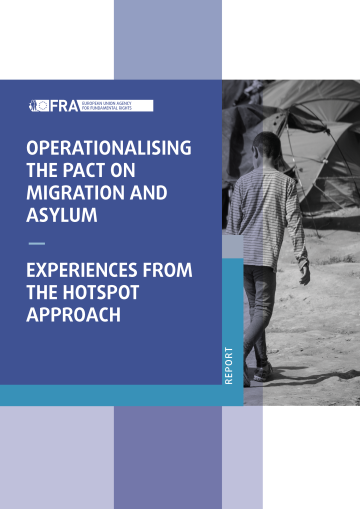
    In response to increased arrivals of asylum seekers, in 2015 the European Commission introduced the hotspot approach. Under this approach, the European Commission and EU agencies supported Greece and Italy in identifying, registering and fingerprinting newly arrived people. FRA regularly visited the initial reception facilities hosting them. This report looks back at the lessons learnt from 10 years of FRA visits. It identifies recurring risks to rights and highlights practical measures and promising practices to prevent or address them. These ‘lessons learnt’ can inform the implementation of the 2024 Pact on Migration and Asylum in line with the EU Charter of Fundamental Rights.
  • Report / Paper / Summary
    3
    mars
    2026
    Violence against women remains widespread in the European Union (EU). This joint report by the EU Agency for Fundamental Rights (FRA) and the European Institute for Gender Equality (EIGE) presents detailed findings from the EU gender-based violence survey. It offers in-depth analysis of the scale, nature and drivers of violence and exposes the structural gender inequality. Building on the 2024 publication, EU gender-based violence survey - Key results, and following up on FRA’s 2014 report, Violence against women: an EU-wide survey, this report tracks trends over the last decade across the EU. Eurostat, FRA, and EIGE jointly conducted the survey. It is based on over 100,000 interviews covering all 27 EU Member States.
  • Report / Paper / Summary
    24
    Février
    2026
    The start of Russia’s war of aggression against Ukraine on 24 February 2022 shocked the global community and gave rise to a
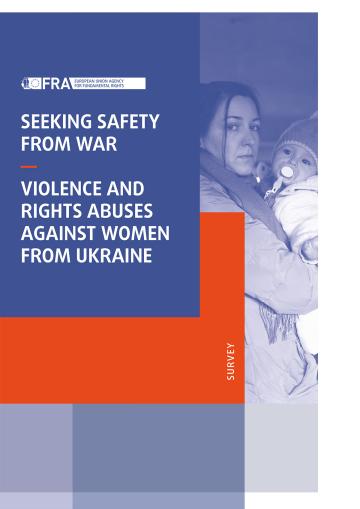
    series of urgent fundamental rights challenges across Europe. While much attention has focused on the scale of devastation and its wider impact on all Ukrainians, the war has also inflicted profound personal harm. This report sheds light on the violence, sexual harassment and exploitation experienced by women displaced from Ukraine. Drawing on a survey and in-depth interviews with women from Ukraine, the report documents the prevalence, forms and patterns of gender-based violence and sets out practical measures to improve safety, access to justice and support.
  • Report / Paper / Summary
    22
    janvier
    2026
    Online terrorist content is a threat to fundamental rights, rule of law and democracy. EU measures to tackle such content aim to prevent terrorism while upholding these values. FRA’s report looks at how online terrorist content is detected and removed under EU legislation. It highlights challenges in interpreting rules, risks of over-removal and potential impacts on freedom of expression. It finds that moderation practices by authorities and platforms can disproportionately affect certain groups, such as Muslims and Arabic speakers, while far-right content often receives less scrutiny. The findings, based on research and expert interviews with those addressing online terrorist content, offer ways to improve transparency in content moderation and to better balance public security and fundamental rights, contributing to wider debates on regulating online content responsibly.
  • In brief / Factsheet
    15
    décembre
    2025
    This factsheet outlines key judgments of the Court of Justice of the European Union (CJEU) and the European Court of Human Rights (ECtHR) relating to the intersection of climate change and human rights. The issues examined include territorial jurisdiction, standards of protection, standing and victim status, and procedural guarantees in climate-related cases, including the rights of access to information. It is intended to assist legal practitioners, policymakers, and researchers in understanding and applying the evolving human rights jurisprudence in the context of climate change within the European legal space.
  • Report / Paper / Summary
    4
    décembre
    2025
    Artificial Intelligence comes with both benefits and risks. Safe AI use that accounts for fundamental rights is thus crucial. While the 2024 EU AI Act was a milestone in this regard, its broad definitions regarding AI systems and high-risk AI could introduce loopholes for fundamental rights compliance. This report offers an empirical basis for much-needed practical guidance on the Act’s implementation. Based on interviews with AI developers, sellers, and users, FRA addresses challenges of its use in critical domains, like asylum, education, and employment. Our findings help guide next steps in realising the AI Act’s potential to ensure responsible innovation.