eu-charter

Charte des droits fondamentaux de l'Union européenne

Article 24 - Droits de l'enfant

Article 24 - Droits de l'enfant

1. Les enfants ont droit à la protection et aux soins nécessaires à leur bien-être. Ils peuvent exprimer leur opinion librement. Celle-ci est prise en considération pour les sujets qui les concernent, en fonction de leur âge et de leur maturité.
2. Dans tous les actes relatifs aux enfants, qu'ils soient accomplis par des autorités publiques ou des institutions privées, l'intérêt supérieur de l'enfant doit être une considération primordiale.
3. Tout enfant a le droit d'entretenir régulièrement des relations personnelles et des contacts directs avec ses deux parents, sauf si cela est contraire à son intérêt.

Explications

  • Texte:

    Cet article se fonde sur la Convention de New York sur les Droits de l'enfant, signée le 20 novembre 1989 et ratifiée par tous les États membres, et notamment sur ses articles 3, 9, 12 et 13.

    Le paragraphe 3 tient compte du fait que, dans le cadre de la création d'un espace de liberté, de sécurité et de justice, la législation de l'Union dans les matières civiles ayant une incidence transfrontalière, pour laquelle l'article 81 du traité sur le fonctionnement de l'Union européenne confère les pouvoirs nécessaires, peut couvrir notamment des droits de visite permettant à l'enfant d'entretenir régulièrement des contacts personnels et directs avec ses deux parents.

    Source:
    Journal officiel de l'Union européenne C 303/17 - 14.12.2007
    Preamble - Explanations relating to the Charter of Fundamental Rights:
    Les explications qui figurent ci-après ont été établies initialement sous la responsabilité du praesidium de la Convention qui a élaboré la Charte des droits fondamentaux de l'Union européenne. Elles ont été mises à jour sous la responsabilité du praesidium de la Convention européenne, compte tenu des adaptations apportées au texte de la Charte par ladite Convention (notamment aux articles 51 et 52) et de l'évolution du droit de l'Union. Bien que ces explications n'aient pas en soi de valeur juridique, elles constituent un outil d'interprétation précieux destiné à éclairer les dispositions de la Charte.

Références à la jurisprudence

Droit constitutionnel national

45 results found

  • The Fundamental Law of Hungary
    Pays:
    Hungary

    Article L (Foundation) (1) Hungary shall protect the institution of marriage as the union of a man and a woman
    established by voluntary decision, and the family as the basis of the survival of the nation. Family ties shall be based on marriage or the relationship between parents and children. […]

    Article XV (Freedom and Responsibility) […] (5) By means of separate measures, Hungary shall protect families, children, women, the elderly and those living with disabilities.

    Article XVI (Freedom and Responsibility) (1) Every child shall have the right to the protection and care necessary for his or her proper physical, mental and moral development.
    (2) Parents shall have the right to choose the upbringing to be given to their children.
    (3) Parents shall be obliged to take care of their minor children. This obligation shall include the provision of schooling for their children.
    (4) Adult children shall be obliged to take care of their parents if they are in need.

    Article XXX (Freedom and Responsibility) […] (2) For persons raising children, the extent of their contribution to covering common needs must be determined while taking the costs of raising children into consideration.

  • Ustav Republike Hrvatske
    Pays:
    Croatia

    Članak 63.
    Država štiti materinstvo, djecu i mladež te stvara socijalne, kulturne, odgojne, materijalne i druge uvjete kojima se promiče ostvarivanje prava na dostojan život.

    Članak 64.
    Roditelji su dužni odgajati, uzdržavati i školovati djecu te imaju pravo i slobodu da samostalno odlučuju o odgoju djece.
    Roditelji su odgovorni osigurati pravo djetetu na potpun i skladan razvoj njegove osobnosti.
    Tjelesno i duševno oštećeno i socijalno zapušteno dijete ima pravo na osobitu njegu, obrazovanje i skrb.
    Djeca su dužna brinuti se za stare i nemoćne roditelje.
    Država osobitu skrb posvećuje maloljetnicima bez roditelja i onima za koje se ne brinu roditelji.

    Članak 65.
    Dužnost je svih da štite djecu i nemoćne osobe.
    Djeca ne mogu biti primljena na rad prije zakonom određene dobi niti smiju biti prisiljavana na rad koji štetno utječe na njihovo zdravlje ili ćudoređe, niti im se takav rad smije dopustiti.
    Mladež, majke i osobe s invaliditetom imaju pravo na osobitu zaštitu na radu.

  • Youth Welfare Act 1989
    Pays:
    Austria
  • Το Σύνταγμα της Ελλάδας
    Pays:
    Greece

    Άρθρο 21(1). Η οικογένεια, ως θεμέλιο της συντήρησης και προαγωγής του 'Εθνους, καθώς και ο γάμος, η μητρότητα και η παιδική ηλικία τελούν υπό την προστασία του Κράτους. (2). Πολύτεκνες οικογένειες, ανάπηροι πολέμου και ειρηνικής περιόδου, θύματα πολέμου, χήρες και ορφανά εκείνων που έπεσαν στον πόλεμο, καθώς και όσοι πάσχουν από ανίατη σωματική ή πνευματική νόσο έχουν δικαίωμα ειδικής φροντίδας από το Κράτος. [...]

  • КОНСТИТУЦИЯ на Република България
    Pays:
    Bulgaria

    Чл. 14.Семейството, майчинството и децата са под закрила на държавата и обществото. Чл. 47. (1) Отглеждането и възпитанието на децата до пълнолетието им е право и задължение на техните родители и се подпомага от държавата.(2) Жената майка се ползва от особената закрила на държавата, която й осигурява платен отпуск преди и след раждане, безплатна акушерска помощ, облекчаване на труда и други социални помощи.(3) Децата, родени извън брака, имат равни права с родените в брака.(4) Децата, останали без грижата на близките си, се намират под особената закрила на държавата и обществото.(5) Условията и редът за ограничаване или отнемане на родителските права се определят със закон.

Droit de l'UE

28 results found

  • Regulation (EU) 2024/1356 of the European Parliament and of the Council of 14 May 2024 introducing the screening of third-country nationals at the external borders and amending Regulations (EC) No 767/2008, (EU) 2017/2226, (EU) 2018/1240 and (EU) 2019/817

    Preamble 
    (25) During the screening, the best interests of the child should always be a primary consideration in accordance with Article 24(2) of the Charter of Fundamental Rights of the European Union (the ‘Charter’). Child protection authorities should, wherever necessary, be closely involved in the screening to ensure that the best interests of the child are duly taken into account throughout the screening. A representative should be appointed to represent and assist the unaccompanied minor during the screening or, where a representative has not been appointed, a person trained to safeguard the best interests and general wellbeing of the minor should be designated. Where applicable, that representative should be the same as the representative appointed in accordance with the rules on unaccompanied minors in Directive (EU) 2024/1346. The trained person should be the person designated to provisionally act as a representative under that Directive, where that person has been designated.


    (37) A preliminary vulnerability check should be carried out with a view to identifying persons with indications of being vulnerable, of being victims of torture or other inhuman or degrading treatment, or of being stateless, or who may have special reception or procedural needs within the meaning of Directive (EU) 2024/1346 and Regulation (EU) 2024/1348, respectively. This should be without prejudice to further assessment in ensuing procedures following the completion of the screening. The vulnerability check should be carried out by specialised personnel of the screening authorities trained for that purpose.


    (38) During the screening, all persons concerned should be guaranteed a standard of living complying with the Charter and have access to emergency health care and essential treatment of illnesses. Particular attention should be paid to individuals with vulnerabilities, such as pregnant women, elderly persons, single-parent families, persons with an immediately identifiable physical or mental disability, persons visibly having suffered psychological or physical trauma and unaccompanied minors. In particular, in the case of a minor, information should be provided in a child-friendly and age-appropriate manner. All the authorities involved in the performance of the tasks related to the screening should report any situation of vulnerabilities observed or reported to them, should respect human dignity and privacy, and should refrain from any discrimination.

    Article 8 : Requirements concerning the screening

    8.   Member States shall ensure that all persons subject to the screening are accorded a standard of living which guarantees their subsistence, protects their physical and mental health and respects their rights under the Charter.

    Article 10 : Monitoring of fundamental rights

    2.   Each Member State shall provide for an independent monitoring mechanism in accordance with the requirements set out in this Article, which shall:

    (a) monitor compliance with Union and international law, including the Charter, in particular as regards access to the asylum procedure, the principle of non-refoulement, the best interest of the child and the relevant rules on detention, including relevant provisions on detention in national law, during the screening; and

    (b) ensure that substantiated allegations of failure to respect fundamental rights in all relevant activities in relation to the screening are dealt with effectively and without undue delay, trigger, where necessary, investigations into such allegations and monitor the progress of such investigations.

    Article 12: Preliminary health checks and vulnerabilities

    3.   Third-country nationals subjected to the screening referred to in Articles 5 and 7 shall be subject to a preliminary vulnerability check by specialised personnel of the screening authorities trained for that purpose, with a view to identifying whether a third-country national might be a stateless person, vulnerable or a victim of torture or other inhuman or degrading treatment, or have special needs within the meaning of Directive 2008/115/EC, Article 25 of Directive (EU) 2024/1346 and Article 20 of Regulation (EU) 2024/1348. For the purpose of that vulnerability check, the screening authorities may be assisted by non-governmental organisations and, where relevant, by qualified medical personnel.

    Article 13: Guarantees for minors

    1.   During the screening, the best interests of the child shall always be a primary consideration in accordance with Article 24(2) of the Charter.

  • Regulation (EU) No 656/2014 of the European Parliament and of the Council of 15 May 2014 establishing rules for the surveillance of the external sea borders in the context of operational cooperation coordinated by Frontex

    Preamble 


    (19) This Regulation respects the fundamental rights and observes the principles recognised by Articles 2 and 6 of the Treaty on European Union (TEU) and by the Charter, in particular respect for human dignity, the right to life, the prohibition of torture and of inhuman or degrading treatment or punishment, the prohibition of trafficking in human beings, the right to liberty and security, the right to the protection of personal data, the right to asylum and to protection against removal and expulsion, the principles of non-refoulement and non-discrimination, the right to an effective remedy and the rights of the child. This Regulation should be applied by Member States and the Agency in accordance with those rights and principles.

  • European Parliament resolution of 26 November 2019 on children’s rights on the occasion of the 30th anniversary of the UN Convention on the Rights of the Child (2019/2876(RSP))

    .

  • Treaty on the Functioning of the European Union

    Article 81

    (ex Article 65 TEC)

    1. The Union shall develop judicial cooperation in civil matters having cross-border implications, based on the principle of mutual recognition of judgments and of decisions in extrajudicial cases. Such cooperation may include the adoption of measures for the approximation of the laws and regulations of the Member States.

    2. For the purposes of paragraph 1, the European Parliament and the Council, acting in accordance with the ordinary legislative procedure, shall adopt measures, particularly when necessary for the proper functioning of the internal market, aimed at ensuring:

    (a) the mutual recognition and enforcement between Member States of judgments and of decisions in extrajudicial cases;

    (b) the cross-border service of judicial and extrajudicial documents;

    (c) the compatibility of the rules applicable in the Member States concerning conflict of laws and of jurisdiction;

    (d) cooperation in the taking of evidence;

    (e) effective access to justice;

    (f) the elimination of obstacles to the proper functioning of civil proceedings, if necessary by promoting the compatibility of the rules on civil procedure applicable in the Member States;

    (g) the development of alternative methods of dispute settlement;

    (h) support for the training of the judiciary and judicial staff.

    3. Notwithstanding paragraph 2, measures concerning family law with cross-border implications shall be established by the Council, acting in accordance with a special legislative procedure. The Council shall act unanimously after consulting the European Parliament.

    The Council, on a proposal from the Commission, may adopt a decision determining those aspects of family law with cross-border implications which may be the subject of acts adopted by the ordinary legislative procedure. The Council shall act unanimously after consulting the European Parliament.

    The proposal referred to in the second subparagraph shall be notified to the national Parliaments. If a national Parliament makes known its opposition within six months of the date of such notification, the decision shall not be adopted. In the absence of opposition, the Council may adopt the decision.

  • Regulation (EU) 2019/1155 of the European Parliament and of the Council of 20 June 2019 amending Regulation (EC) No 810/2009 establishing a Community Code on Visas (Visa Code)

    .

  • Council Regulation (EU) 2019/1111 of 25 June 2019 on jurisdiction, the recognition and enforcement of decisions in matrimonial matters and the matters of parental responsibility, and on international child abduction

    .

  • Council Recommendation of 22 May 2019 on High-Quality Early Childhood Education and Care Systems

    .

  • Directive 2010/13/EU of the European Parliament and of the Council of 10 March 2010 on the coordination of certain provisions laid down by law, regulation or administrative action in Member States concerning the provision of audiovisual media services

    Preamble 
    (16) This Directive enhances compliance with fundamental rights and is fully in line with the principles recognised by the Charter of Fundamental Rights of the European Union (12), in particular Article 11 thereof. In this regard, this Directive should not in any way prevent Member States from applying their constitutional rules relating to freedom of the press and freedom of expression in the media.


    (48) Television broadcasting rights for events of high interest to the public may be acquired by broadcasters on an exclusive basis. However, it is essential to promote pluralism through the diversity of news production and programming across the Union and to respect the principles recognised by Article 11 of the Charter of Fundamental Rights of the European Union.


    (60) Measures taken to protect the physical, mental and moral development of minors and human dignity should be carefully balanced with the fundamental right to freedom of expression as laid down in the Charter on Fundamental Rights of the European Union. The aim of those measures, such as the use of personal identification numbers (PIN codes), filtering systems or labelling, should thus be to ensure an adequate level of protection of the physical, mental and moral development of minors and human dignity, especially with regard to on-demand audiovisual media services. The Recommendation on the protection of minors and human dignity and on the right of reply already recognised the importance of filtering systems and labelling and included a number of possible measures for the benefit of minors, such as systematically supplying users with an effective, updatable and easy-to-use filtering system when they subscribe to an access provider or equipping the access to services specifically intended for children with automatic filtering systems.

  • Council Regulation (EU) 2019/1111 of 25 June 2019 on jurisdiction, the recognition and enforcement of decisions in matrimonial matters and the matters of parental responsibility, and on international child abduction (recast)

    (39) Proceedings in matters of parental responsibility under this Regulation as well as return proceedings under the 1980 Hague Convention should, as a basic principle, provide the child who is subject to those proceedings and who is capable of forming his or her own views, in accordance with the case-law of the Court of Justice, with a genuine and effective opportunity to express his or her views and when assessing the best interests of the child, due weight should be given to those views. The opportunity of the child to express his or her views freely in accordance with Article 24(1) of the Charter and in the light of Article 12 of the UN Convention on the Rights of the Child plays an important role in the application of this Regulation. The Regulation should, however, leave the question of who will hear the child and how the child is heard to be determined by national law and procedure of the Member States. Consequently, it should not be the purpose of this Regulation to set out whether the child should be heard by the judge in person or by a specially trained expert reporting to the court afterwards, or whether the child should be heard in the courtroom or in another place or through other means. In addition, while remaining a right of the child, hearing the child cannot constitute an absolute obligation, but must be assessed taking into account the best interests of the child, for example, in cases involving agreements between the parties. Whilst, according to the case-law of the Court of Justice, it is not a requirement of Article 24 of the Charter and of Regulation (EC) No 2201/2003 that the court of the Member State of origin obtain the views of the child in every case by means of a hearing, and that that court thus retains a degree of discretion, the case-law also provides that, where that court decides to provide the opportunity for the child to be heard, the court is required to take all measures which are appropriate to the arrangement of such a hearing, having regard to the best interests of the child and the circumstances of each individual case, in order to ensure the effectiveness of those provisions, and to offer to the child a genuine and effective opportunity to express his or her views. The court of the Member State of origin should, in so far as possible and always taking into consideration the best interests of the child, use all means available to it under national law as well as the specific instruments of international judicial cooperation, including, when appropriate, those provided for by Council Regulation (EC) No 1206/2001.

    [...]

    (71) Although the obligation to provide the child with the opportunity to express his or her views under this Regulation should not apply to authentic instruments and agreements, the right of the child to express his or her views should continue to apply pursuant to Article 24 of the Charter and in light of Article 12 of the UN Convention on the Rights of the Child as implemented by national law and procedure. The fact that the child was not given the opportunity to express his or her views should not automatically be a ground of refusal of recognition and enforcement of authentic instruments and agreements in matters of parental responsibility.

  • Regulation (EU) No 604/2013 of the European Parliament and of the Council of 26 June 2013 establishing the criteria and mechanisms for determining the Member State responsible for examining an application for international protection

    Preamble

    (13) In accordance with the 1989 United Nations Convention on the Rights of the Child and with the Charter of Fundamental Rights of the European Union, the best interests of the child should be a primary consideration of Member States when applying this Regulation. In assessing the best interests of the child, Member States should, in particular, take due account of the minor’s well-being and social development, safety and security considerations and the views of the minor in accordance with his or her age and maturity, including his or her background. In addition, specific procedural guarantees for unaccompanied minors should be laid down on account of their particular vulnerability.

    (19) In order to guarantee effective protection of the rights of the persons concerned, legal safeguards and the right to an effective remedy in respect of decisions regarding transfers to the Member State responsible should be established, in accordance, in particular, with Article 47 of the Charter of Fundamental Rights of the European Union. In order to ensure that international law is respected, an effective remedy against such decisions should cover both the examination of the application of this Regulation and of the legal and factual situation in the Member State to which the applicant is transferred.


    (39) This Regulation respects the fundamental rights and observes the principles which are acknowledged, in particular, in the Charter of Fundamental Rights of the European Union. In particular, this Regulation seeks to ensure full observance of the right to asylum guaranteed by Article 18 of the Charter as well as the rights recognised under Articles 1, 4, 7, 24 and 47 thereof. This Regulation should therefore be applied accordingly.

    Article 3: Access to the procedure for examining an application for international protection

    2.   Where no Member State responsible can be designated on the basis of the criteria listed in this Regulation, the first Member State in which the application for international protection was lodged shall be responsible for examining it.

    Where it is impossible to transfer an applicant to the Member State primarily designated as responsible because there are substantial grounds for believing that there are systemic flaws in the asylum procedure and in the reception conditions for applicants in that Member State, resulting in a risk of inhuman or degrading treatment within the meaning of Article 4 of the Charter of Fundamental Rights of the European Union, the determining Member State shall continue to examine the criteria set out in Chapter III in order to establish whether another Member State can be designated as responsible.

    Where the transfer cannot be made pursuant to this paragraph to any Member State designated on the basis of the criteria set out in Chapter III or to the first Member State with which the application was lodged, the determining Member State shall become the Member State responsible.

Droit international

6 results found

  • Committee on the Protection of the Rights of All Migrant Workers and Members of Their Families, Committee on the Rights of the Child, Joint general comment No. 4 (2017) of the Committee on the Protection of the Rights of All Migrant Workers and Members...
  • Committee on the Rights of the Child General comment No. 15 (2013) on the right of the child to the enjoyment of the highest attainable standard of health (art. 24)
  • Committee on the Rights of the Child General comment No. 17 (2013) on the right of the child to rest, leisure, play, recreational activities, cultural life and the arts (art. 31)
  • Committee on the Rights of the Child, General comment No. 14 (2013) on the right of the child to have his or her best interests taken as a primary consideration (art. 3, para. 1 )
  • Committee on the Rights of the Child, General comment No. 20 (2016) on the implementation of the rights of the child during adolescence
  • Committee on the Protection of the Rights of All Migrant Workers and Members of Their Families, Committee on the Rights of the Child, Joint general comment No. 3 (2017) of the Committee on the Protection of the Rights of All Migrant Workers and Members...

Produits

  • Report / Paper / Summary
    18
    septembre
    2019
    Individuals who are not entitled to stay in the European Union are typically subject to being returned to their home countries. This includes children who are not accompanied by their parents or by another primary caregiver. But returning such children, or finding another durable solution, is a delicate matter, and doing so in full compliance with fundamental rights protections can be difficult. This focus paper therefore aims to help national authorities involved in return-related tasks, including child-protection services, to ensure full rights compliance.
  • Report / Paper / Summary
    17
    octobre
    2018
    Almost 25 million children under 18 are at risk of poverty or social exclusion in the EU. Poverty deprives children of educational
    opportunities, childcare, access to health care, adequate food and housing, family support and even protection from violence.
    This report outlines data and survey findings that highlight the magnitude of child poverty in the EU, but also presents tools
    available to counter this phenomenon and keep track of progress made.
  • Report / Paper / Summary
    12
    septembre
    2018
    In November 2017, the European Commission requested FRA’s support in evaluating the impact on fundamental rights of the European Border Surveillance System (Eurosur) Regulation. Further to this request, FRA reviewed the work of the European Border and Coast Guard Agency (Frontex) and analysed cooperation agreements concluded by EU Member States with third countries which are relevant for the exchange of information for the purposes of Eurosur. This report presents the main findings of such review.
  • Report / Paper / Summary
    25
    avril
    2018
    The methods used to determine the age of
    an applicant may include “invasive” medical tests which interfere with the rights of the child, including their right to dignity,
    integrity and privacy. It is often a challenge to find the right balance between protecting children from harm and promoting
    their participation in these procedures. This report provides important insights and identifies the implications of collecting
    children’s biometric data and conducting age assessments.
  • Report / Paper / Summary
    25
    avril
    2018
    This report outlines Member States’ approaches to age requirements and limits
    regarding child participation in judicial proceedings; procedural safeguards for, and rights of, children involved in criminal
    proceedings; as well as issues related to depriving children of their liberty.
  • Report / Paper / Summary
    28
    mars
    2018
    This report outlines the fundamental rights implications of collecting, storing and using
    biometric and other data in EU IT systems in the area of asylum and migration.
  • Report / Paper / Summary
    5
    Février
    2018
    EU Member States’ legal and practical responses to migrants and refugees implicate several of their fundamental rights, as enshrined in the Charter of Fundamental Rights of the European Union (EU). The EU Agency for Fundamental Rights (FRA) has regularly reported on these issues since September 2015. This report highlights key trends and persistent concerns between October 2016 and December 2017. It focuses on five areas: access to territory, reception conditions, asylum procedures, unaccompanied children and immigration detention.
  • Rapport / Publication / Résumé
    16
    janvier
    2018
    Les tuteurs sont une composante essentielle d’un système de protection des enfants qui sont, de façon temporaire ou permanente, privés de leur milieu familial et qui ne peuvent pas faire représenter leurs intérêts par leurs parents. De fortes disparités existent entre les types de tutelle dont les enfants bénéficient, tant entre les États membres de l’Union européenne qu’au sein même de ces pays. Ce rapport explore les principales caractéristiques des régimes de tutelle mis en place pour satisfaire aux besoins de tous les enfants qui nécessitent une protection, notamment les enfants victimes de la traite des personnes, ou d’autres formes d’exploitation, ainsi que ceux qui sont exposés au risque de le devenir.
  • Easy-to-read report
    3
    janvier
    2018
    Inside this book you will read about the justice system and the problems in justice for children and how to fix the problems.
  • Report / Paper / Summary
    20
    novembre
    2017
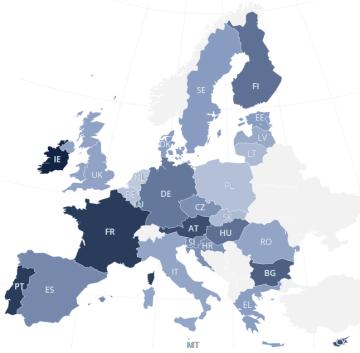
    International treaties, the Charter of Fundamental Rights of the European Union, European Union (EU) secondary law and national legislation provide a number of rights to citizens. The maps and tables presented show the various patterns concerning age requirements for children to acquire rights in the EU. They also identify inconsistencies, protection gaps and restrictions deriving from different age thresholds. The reference period was until April 2016. Any legislative developments since then have been included whenever relevant or if known.