eu-charter

Charte des droits fondamentaux de l'Union européenne

Article 40 - Droit de vote et d'éligibilité aux élections municipales

Article 40 - Droit de vote et d'éligibilité aux élections municipales

Tout citoyen de l'Union a le droit de vote et d'éligibilité aux élections municipales dans l'État membre où il réside, dans les mêmes conditions que les ressortissants de cet État.

Explications

  • Texte:

    Cet article correspond au droit garanti à l'article 20, paragraphe 2, du traité sur le fonctionnement de l'Union européenne (cf. également la base juridique à l'article 22 du traité sur le fonctionnement de l'Union européenne pour l'adoption des modalités d'exercice de ce droit). Conformément à l'article 52, paragraphe 2, il s'applique dans les conditions prévues dans ces articles des traités.

    Source:
    Journal officiel de l'Union européenne C 303/17 - 14.12.2007
    Preamble - Explanations relating to the Charter of Fundamental Rights:
    Les explications qui figurent ci-après ont été établies initialement sous la responsabilité du praesidium de la Convention qui a élaboré la Charte des droits fondamentaux de l'Union européenne. Elles ont été mises à jour sous la responsabilité du praesidium de la Convention européenne, compte tenu des adaptations apportées au texte de la Charte par ladite Convention (notamment aux articles 51 et 52) et de l'évolution du droit de l'Union. Bien que ces explications n'aient pas en soi de valeur juridique, elles constituent un outil d'interprétation précieux destiné à éclairer les dispositions de la Charte.

Références à la jurisprudence

Droit constitutionnel national

45 results found

  • De Belgische Grondwet
    Pays:
    Belgium

    Artikel 8De staat van Belg wordt verkregen, behouden en verloren volgens de regelen bij de burgerlijke wet gesteld.De Grondwet en de overige wetten op de politieke rechten bepalen welke de vereisten zijn waaraan men moet voldoen, benevens de staat van Belg, om die rechten te kunnen uitoefenen.In afwijking van het tweede lid kan de wet het stemrecht regelen van de burgers van de Europese Unie die niet de Belgische nationaliteit hebben, overeenkomstig de internationale en supranationale verplichtingen van België. Het stemrecht bedoeld in het vorige lid kan door de wet worden uitgebreid tot de in België verblijvende niet-Europese Unie onderdanen, onder de voorwaarden en op de wijze door haar bepaald.

  • Eesti Vabariigi Põhiseadus
    Pays:
    Estonia

    § 156. Kohaliku omavalitsuse esinduskogu on volikogu, kes valitakse vabadel valimistel neljaks aastaks. Seadusega võib volikogu volituste perioodi lühendada seoses kohaliku omavalitsuse üksuste ühinemise või jagunemisega või volikogu tegutsemisvõimetusega. Valimised on üldised, ühetaolised ja otsesed. Hääletamine on salajane. [RT I 2003, 29, 174 - jõust. 17.10.2005]
    Kohaliku omavalitsuse volikogu valimistel on seaduses ettenähtud tingimustel hääleõiguslikud selle omavalitsuse maa-alal püsivalt elavad isikud, kes on vähemalt kuusteist aastat vanad. [RT I, 15.05.2015, 1 - jõust. 13.08.2015]

  • Election Act
    Pays:
    Finland

    (714/1998; amendments up to 218/2004 included)Section 2 — Right to voteIn parliamentary elections, the Presidential election and European Parliamentary elections, every Finnish citizen is entitled to vote provided the person has reached the age of 18 not later than on the day of the election. In the Presidential election, the voting age must be reached not later than on the day of the first round of the Presidential election.In European Parliamentary elections, a citizen of another European Union Member State is also entitled to vote provided the person has reached the age of 18 not later than on the day of the election and whose municipality of residence referred to in the Municipality of Residence Act (201/1994) is in Finland provided the person has not lost the right to vote in European elections in the country of which he/she is a citizen (home state).Provisions regarding the right to vote in municipal electionsare laid down in the Constitution and the Municipalities Act.Voting by proxy is not allowed.

  • Grundgesetz für die Bundesrepublik Deutschland
    Pays:
    Germany

    Artikel 28 (1) Die verfassungsmäßige Ordnung in den Ländern muß den Grundsätzen des republikanischen, demokratischen und sozialen Rechtsstaates im Sinne dieses Grundgesetzes entsprechen. In den Ländern, Kreisen und Gemeinden muß das Volk eine Vertretung haben, die aus allgemeinen, unmittelbaren, freien, gleichen und geheimen Wahlen hervorgegangen ist. Bei Wahlen in Kreisen und Gemeinden sind auch Personen, die die Staatsangehörigkeit eines Mitgliedstaates der Europäischen Gemeinschaft besitzen, nach Maßgabe von Recht der Europäischen Gemeinschaft wahlberechtigt und wählbar. In Gemeinden kann an die Stelle einer gewählten Körperschaft die Gemeindeversammlung treten.

  • Kohaliku omavalitsuse volikogu valimise seadus
    Pays:
    Estonia

    § 5. Hääletamis- ja kandideerimisõigus
    (1) Hääletamisõigus on Eesti kodanikul ja Euroopa Liidu kodanikul, kes on valimispäevaks saanud 16-aastaseks ja kelle püsiv elukoht, see on elukoht, mille aadressiandmed on kantud Eesti rahvastikuregistrisse (edaspidi rahvastikuregister), asub vastavas vallas või linnas.
    (2) Hääletamisõigus on välismaalasel, kes vastab käesoleva paragrahvi lõikes 1 nimetatud tingimustele ja kes:
    1) elab Eestis pikaajalise elaniku elamisloa või alalise elamisõiguse alusel.
    (3) Hääleõiguslik ei ole isik, kes on valimisõiguse osas teovõimetuks tunnistatud.
    (4) Hääletamisest ei võta osa isik, kes on kohtu poolt süüdi mõistetud ja kannab karistust kinnipidamiskohas.
    (5) Kandideerimisõigus on igal hääleõiguslikul Eesti kodanikul ja Euroopa Liidu kodanikul, kes on kandidaatide registreerimise viimaseks päevaks saanud 18-aastaseks ja kelle püsiv elukoht asub hiljemalt valimisaasta 1. augustil vastavas vallas või linnas.
    (6) Volikogu liikmeks ei või kandideerida tegevväelane ega isik, kes on kohtu poolt süüdi mõistetud kuriteos ja kannab vanglakaristust.

  • Konstytucja Rzeczypospolitej Polskiej
    Pays:
    Poland

    Art. 62.1. Obywatel polski ma prawo udziału w referendum oraz prawo wybierania Prezydenta Rzeczypospolitej, posłów, senatorów i przedstawicieli do organów samorządu terytorialnego, jeżeli najpóźniej w dniu głosowania kończy 18 lat.2. Prawo udziału w referendum oraz prawo wybierania nie przysługuje osobom, które prawomocnym orzeczeniem sądowym są ubezwłasnowolnione lub pozbawione praw publicznych albo wyborczych.Art. 99.1. Wybrany do Sejmu może być obywatel polski mający prawo wybierania, który najpóźniej w dniu wyborów kończy 21 lat.2. Wybrany do Senatu może być obywatel polski mający prawo wybierania, który najpóźniej w dniu wyborów kończy 30 lat.3. Wybraną do Sejmu lub do Senatu nie może być osoba skazana prawomocnym wyrokiem na karę pozbawienia wolności za przestępstwo umyślne ścigane z oskarżenia publicznego.

  • La Constitution Belge
    Pays:
    Belgium

    Article 8La qualité de Belge s'acquiert, se conserve et se perd d'après les règles déterminées par la loi civile. La Constitution et les autres lois relatives aux droits politiques, déterminent quelles sont, outre cette qualité, les conditions nécessaires pour l'exercice de ces droits.Par dérogation à l'alinéa 2, la loi peut organiser le droit de vote des citoyens de l'Union européenne n'ayant pas la nationalité belge, conformément aux obligations internationales et supranationales de la Belgique. Le droit de vote visé à l'alinéa précédent peut être étendu par la loi aux résidents en Belgique qui ne sont pas des ressortissants d'un Etat membre de l'Union européenne, dans les conditions et selon les modalités déterminées par ladite loi.

  • Latvijas Republikas Satversme
    Pays:
    Latvia

    101. Ikvienam Latvijas pilsonim ir tiesības likumā paredzētajā veidā piedalīties valsts un pašvaldību darbībā, kā arī pildīt valsts dienestu.Pašvaldības ievēlē pilntiesīgi Latvijas pilsoņi un Eiropas Savienības pilsoņi, kas pastāvīgi uzturas Latvijā. Ikvienam Eiropas Savienības pilsonim, kas pastāvīgi uzturas Latvijā, ir tiesības likumā paredzētajā veidā piedalīties pašvaldību darbībā. Pašvaldību darba valoda ir latviešu valoda.

  • Lietuvos Respublikos Konstitucija
    Pays:
    Lithuania

    34 straipsnis. Piliečiai, kuriems rinkimų dieną yra sukakę 18 metų, turi rinkimų teisę. Teisę būti išrinktam nustato Lietuvos Respublikos Konstitucija ir rinkimų įstatymai. Rinkimuose nedalyvauja piliečiai, kurie teismo pripažinti neveiksniais.

  • Luxembourg / Constitution du Grand-Duché de Luxembourg
    Pays:
    Luxembourg

    Art. 10. (1) Les Luxembourgeois jouissent de la plénitude des droits politiques qu’ils exercent dans les conditions déterminées par la Constitution et les lois. 

    (2) Sans préjudice de l’article 64, la loi peut conférer l’exercice de droits politiques à des non-Luxembourgeois.

    Art. 11. La loi règle l’accès aux emplois publics. Elle peut réserver aux Luxembourgeois les emplois publics comportant une participation directe ou indirecte à l’exercice de la puissance publique et aux fonctions qui ont pour objet la sauvegarde des intérêts généraux de l’Etat.

  • Magyarország Alaptörvénye
    Pays:
    Hungary

    XXIII. cikk (SZABADSÁG ÉS FELELŐSSÉG) (1) Minden nagykorú magyar állampolgárnak joga van ahhoz, hogy az országgyűlési képviselők, a helyi önkormányzati képviselők és polgármesterek, valamint az európai parlamenti képviselők választásán választó és választható legyen.
    (2) Az Európai Unió más tagállamának magyarországi lakóhellyel rendelkező minden nagykorú állampolgárának joga van ahhoz, hogy a helyi önkormányzati képviselők és polgármesterek, valamint az európai parlamenti képviselők választásán választó és választható legyen.
    […]
    (5) A helyi önkormányzati képviselők és polgármesterek választásán a választópolgár lakóhelyén vagy bejelentett tartózkodási helyén választhat. A választópolgár a szavazás jogát lakóhelyén vagy bejelentett tartózkodási helyén gyakorolhatja.
    (6) Nem rendelkezik választójoggal az, akit bűncselekmény elkövetése vagy belátási képességének korlátozottsága miatt a bíróság a választójogból kizárt. Nem választható az Európai Unió más tagállamának magyarországi lakóhellyel rendelkező állampolgára, ha az állampolgársága szerinti állam jogszabálya, bírósági vagy hatósági döntése alapján hazájában kizárták e jog gyakorlásából. […]

  • Municipal Council Election Act
    Pays:
    Estonia

    § 5. Right to vote and stand as candidate
    (1) Estonian citizens and citizens of the European Union who have attained 16 years of age by election day and whose permanent residence, i.e. residence the address details of which have been entered in the Estonian population register (hereinafter population register), is located in the corresponding rural municipality or city have the right to vote.
    (2) An alien has the right to vote if he or she meets the conditions specified in subsection (1) of this section and:
    1) resides in Estonia on the basis of a long-term residence permit or the right of permanent residence.
    (3) A person who has been divested of his or her active legal capacity with regard to the right to vote does not have the right to vote.
    (4) A person who has been convicted by a court and is serving a sentence in a custodial institution shall not participate in voting.
    (5) Every Estonian citizen and citizen of the European Union who has the right to vote, who has attained 18 years of age by the last day for the registration of candidates and whose permanent residence is located in the corresponding rural municipality or city not later than on 1 August of an election year has the right to stand as a candidate.
    (6) A person in active service in the Defence Forces or a person who has been convicted of a criminal offence by a court and is serving a prison sentence shall not stand as a candidate for election to a council.

  • Netherlands / Constitution of the Kingdom of the Netherlands
    Pays:
    Netherlands

    Article 130 The right to elect members of a municipal council and the right to be a member of a municipal council may be granted by Act of Parliament to residents who are not Dutch nationals provided they fulfil at least the requirements applicable to residents who are Dutch nationals.

  • Portugal / Constitution of the Portuguese Republic
    Pays:
    Portugal

    Article 15 (Foreigners, stateless persons, European citizens) (4) Under reciprocal terms, the law may accord foreigners who reside in Portugal the eligibility to vote for and stand for election as officeholders of local authority organs. (5) Under reciprocal terms, the law may also accord citizens of European Union Member States who reside in Portugal the eligibility to vote for and stand for election as Members of the European Parliament.
    ...
    Article 49 (Right to vote) (1) Every citizen who has attained the age of eighteen years has the right to vote, subject to the incapacities provided for in the general law. (2) The right to vote shall be exercised personally and constitutes a civic duty.

    Article 50 (Right of access to public office) (1) Every citizen has the right of access to public office under equal and free conditions. (2) No one may be prejudiced in his appointments, job or professional career or the social benefits to which he is entitled, due to the exercise of political rights or of public office. (3) In governing the right of access to elected office, the law may only lay down the ineligibilities needed to guarantee both the electors’ freedom of choice, and independence and absence of bias in the exercise of the offices in question.
    ...
    Article 109 (Citizens’ participation in politics) The direct and active participation in political life by men and women is a condition for and a fundamental instrument in the consolidation of the democratic system, and the law must promote both equality in the exercise of civic and political rights and the absence of gender-based discrimination in access to political office.
    ...
    Article 113 (General principles of electoral law) (1) Direct, secret and periodic suffrage is the general rule for the appointment of the officeholders of the elected entities that exercise sovereignty, elected organs of autonomous regions and elected local government organs.

  • Romania / Constitution of Romania
    Pays:
    Romania

    Article 36(1) Every citizen having turned eighteen up to or on the election day shall have the right to vote. (2) The mentally deficient or alienated persons, laid under interdiction, as well as the persons disenfranchised by a final decision of the court cannot vote.

    Article 37(1) Eligibility is granted to all citizens having the right to vote, who meet the requirements in Article 16 (3), unless they are forbidden to join a political party, in accordance with Article 40 (3).(2) Candidates must have turned, up to or on the election day, at least twenty-three in order to be elected to the Chamber of Deputies or the bodies of local public administration, at least thirty-three in order to be elected to the Senate, and at least thirty-five in order to be elected to the office of President of Romania.

    Article 38 After Romania's accession to the European Union, Romanian citizens shall have the right to elect and be elected to the European Parliament.

    Article 62(1) The Chamber of Deputies and the Senate shall be elected by universal, equal, direct, secret and free suffrage, in accordance with the electoral law. (2) Organizations of citizens belonging to national minorities, which fail to obtain the number of votes for representation in Parliament, have the right to one Deputy seat each, under the terms of the electoral law. Citizens of a national minority are entitled to be represented by one organization only.(3) The number of Deputies and Senators shall be established by the electoral law, in proportion to the population of Romania.

    Article 81(1) The President of Romania shall be elected by universal, equal, direct, secret an free suffrage.(2) The candidate who, in the first ballot, obtained a majority of votes of the electors entered on the electoral lists shall be declared elected. (3) In case no candidate has obtained such a majority, a second ballot shall be held between the first two candidates highest in the order of the number of votes cast for them in the first ballot. The candidate having the greatest number of votes shall be declared elected.(4) No one may hold the office of President of Romania but for two terms of office at the most, that can also be consecutive.

  • Slovakia / Constitution of the Slovak Republic
    Pays:
    Slovakia

    Article 30 (1) Citizens have the right to participate in the administration of public affairs either directly or through the free election of their representatives. Foreigners with a permanent residence on the territory of the Slovak Republic have the right to vote and be elected in the self-administration bodies of municipalities and self-administration bodies of superior territorial units. (2) Elections must be held within deadlines not exceeding the regular electoral period as laid down by law. (3) The right to vote is universal, equal, and direct and is exercised by means of secret ballot. Conditions for exercising the right to vote shall be laid down by law.(4) Citizens have access to elected and other public posts under equal conditions.

  • Spain / Constitution of the Kingdom of Spain
    Pays:
    Spain

    Article 13 Only Spaniards shall have the rights recognised in section 23, except in cases which may be established by treaty or by law concerning the right to vote and the right to be elected in municipal elections, and subject to the principle of reciprocity. (This text includes the first constitutional reform adopted on 27/08/1992; which added the words «and the right to be elected» to the paragraph).
    ...
    Article 23 1. Citizens have the right to participate in public affairs, directly or through representatives freely elected in periodic elections by universal suffrage. 2. They also have the right to accede under conditions of equality to public functions and positions, in accordance with the requirements laid down by the law.

  • Suomen perustuslaki
    Pays:
    Finland

    14 § Vaali- ja osallistumisoikeudet (...) Jokaisella Suomen kansalaisella ja maassa vakinaisesti asuvalla ulkomaalaisella, joka on täyttänyt kahdeksantoista vuotta, on oikeus äänestää kunnallisvaaleissa ja kunnallisessa kansanäänestyksessä sen mukaan kuin lailla säädetään. Oikeudesta muutoin osallistua kuntien hallintoon säädetään lailla.

  • The Belgian Constitution
    Pays:
    Belgium

    Article 8The status as a Belgian citizen is acquired, kept and lost according to rules established by civil law.The Constitution and the other laws concerning political rights, establish, apart from this status, the necessary conditions for the exercising of these rights. In a departure from the second paragraph, the law can, in accordance with Belgium’s international and supranational obligations, establish a right to vote for citizens of the European Union who are not Belgian citizens. The right to vote referred to in the preceding paragraph can be extended by a law to Belgian residents who are not citizens of a Member State of the European Union, under the conditions and in accordance with the terms specifi ed in such a law.

  • The Constitution of the Republic of Cyprus
    Pays:
    Cyprus

    Article 31
    Every citizen has, subject to the provisions of this Constitution and any electoral law of the Republic or of the relevant Communal Chamber made thereunder, the right to vote in any election held under this Constitution or any such law.

Droit de l'UE

5 results found

  • Treaty on the Functioning of the European Union

    Article 22

    (ex Article 19 TEC)

    1. Every citizen of the Union residing in a Member State of which he is not a national shall have the right to vote and to stand as a candidate at municipal elections in the Member State in which he resides, under the same conditions as nationals of that State. This right shall be exercised subject to detailed arrangements adopted by the Council, acting unanimously in accordance with a special legislative procedure and after consulting the European Parliament; these arrangements may provide for derogations where warranted by problems specific to a Member State.

    2. Without prejudice to Article 223(1) and to the provisions adopted for its implementation, every citizen of the Union residing in a Member State of which he is not a national shall have the right to vote and to stand as a candidate in elections to the European Parliament in the Member State in which he resides, under the same conditions as nationals of that State. This right shall be exercised subject to detailed arrangements adopted by the Council, acting unanimously in accordance with a special legislative procedure and after consulting the European Parliament; these arrangements may provide for derogations where warranted by problems specific to a Member State.

  • Treaty on the Functioning of the European Union

    Article 20

    (ex Article 17 TEC)

    2. Citizens of the Union shall enjoy the rights and be subject to the duties provided for in the Treaties. They shall have, inter alia:

    (a) the right to move and reside freely within the territory of the Member States;

    (b) the right to vote and to stand as candidates in elections to the European Parliament and in municipal elections in their Member State of residence, under the same conditions as nationals of that State;

    (c) the right to enjoy, in the territory of a third country in which the Member State of which they are nationals is not represented, the protection of the diplomatic and consular authorities of any Member State on the same conditions as the nationals of that State;

    (d) the right to petition the European Parliament, to apply to the European Ombudsman, and to address the institutions and advisory bodies of the Union in any of the Treaty languages and to obtain a reply in the same language.

    These rights shall be exercised in accordance with the conditions and limits defined by the Treaties and by the measures adopted thereunder.

  • Council Directive 2013/19/EU of 13 May 2013 adapting Directive 94/80/EC laying down detailed arrangements for the exercise of the right to vote and to stand as a candidate in municipal elections by citizens of the Union residing in a Member State of wh...
  • European Parliament resolution of 11 November 2015 on the reform of the electoral law of the European Union (2015/2035(INL))
  • Opinion of the Committee of the Regions on ‘Strengthening EU citizenship: promotion of EU citizens’ electoral rights’

Droit international

0 results found

Produits

  • Fundamental Rights Report
    10
    juin
    2025
    The Fundamental Rights Report 2025 is the annual report of the European Union Agency for Fundamental Rights (FRA). It provides an overview of the state of fundamental rights in the EU and highlights selected critical developments and trends in 2024. The report covers issues such as inclusive elections, gender-based violence, and the implementation of the EU Charter of Fundamental Rights. It presents FRA’s opinions on these developments, setting out the actions that the EU and Member States should take. This annual publication is a valuable resource for those seeking to stay informed about the EU’s shifting landscape of fundamental rights.
  • Fundamental Rights Report
    5
    juin
    2024
    FRA’s Fundamental Rights Report 2024 analyses the year’s developments in fundamental rights. It focuses on the most pressing fundamental rights concerns facing Europe in 2023: the cost-of-living crisis, rights concerns at the EU’s external borders and migration, and threats to democracy. Re-structured, this year’s new approach is a shorter and sharper analysis. It also presents FRA’s opinions on these developments, including a summary of the evidence supporting these opinions.
  • Report / Paper / Summary
    29
    mai
    2024
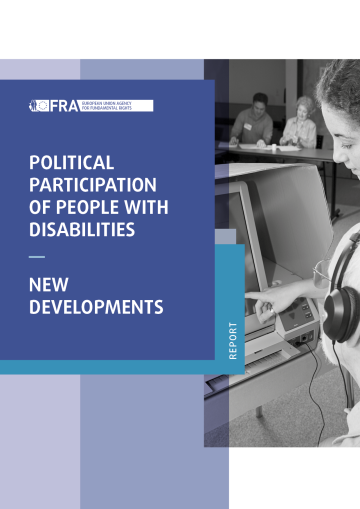
    Ahead of the EU elections, this report explores the political participation of people with disabilities. Although some Member States removed restrictions on the right to vote and to stand for elections, barriers still exist. This report is an update of new developments following FRA’s last report published in 2014. It sets out ways forward to ensure people with disabilities have equal opportunities, in line with the EU Charter of Fundamental Rights and the Convention on the Rights of Persons with Disabilities.
    Lisa F. Young/Adobe Stock
  • Fundamental Rights Report
    11
    juin
    2020
    FRA’s Fundamental Rights Report 2020 reviews major developments in the field in 2019, identifying both achievements and areas of concern. It also presents FRA’s opinions on these developments, including a synopsis of the evidence supporting these opinions. This year’s focus chapter explores how to unlock the full potential of the EU Charter of Fundamental Rights.
  • Report / Paper / Summary
    29
    août
    2018
    The founding treaties, the EU Charter of Fundamental Rights and secondary EU law all provide for EU citizens’ freedom to move and reside freely in any EU country of their choice. Growing numbers of citizens, and their family members, are making use of this freedom and related rights, such as the right not to be discriminated against based on nationality and the right to vote in certain elections in the host Member State. But making these rights a reality remains a challenge. This report presents an EU-wide, comparative overview of the application of the Free Movement Directive (2004/38/EC) across the 28 Member States based on a review of select case law at national level.
  • Report / Paper / Summary
    25
    avril
    2018
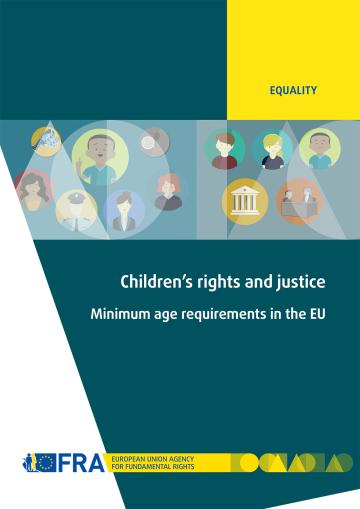
    This report outlines Member States’ approaches to age requirements and limits
    regarding child participation in judicial proceedings; procedural safeguards for, and rights of, children involved in criminal
    proceedings; as well as issues related to depriving children of their liberty.
  • Report / Paper / Summary
    25
    avril
    2018
    The methods used to determine the age of
    an applicant may include “invasive” medical tests which interfere with the rights of the child, including their right to dignity,
    integrity and privacy. It is often a challenge to find the right balance between protecting children from harm and promoting
    their participation in these procedures. This report provides important insights and identifies the implications of collecting
    children’s biometric data and conducting age assessments.
  • Report / Paper / Summary
    21
    mai
    2014
    The opportunity to be involved in political life, whether by standing for elected office, joining a political party, or following political news stories in the media, is at the heart of what it means to live in a democratic society. The report analyses data on the situation of political participation of persons with disabilities collected from across the 28 European Union (EU) Member States by the European Union Agency for Fundamental Rights (FRA) and the European Commission-funded Academic Network of European Disability Experts (ANED).
  • Rapport / Publication / Résumé
    29
    avril
    2014
    Le rapport analyse des données sur la participation politique des personnes handicapées collectées dans les 28 États membres de l’Union européenne par l’Agence des droits fondamentaux de l’Union européenne (FRA) et le Réseau d’études européen d’experts dans le domaine du handicap (ANED), financé par la Commission européenne.
  • Rapport / Publication / Résumé
    8
    novembre
    2010
    Le rapport contient les premiers résultats d’une étude juridique effectuée par l’Agence des droits fondamentaux de l’Union européenne (FRA) dans le cadre de son projet concernant les droits fondamentaux des personnes souffrant de troubles mentaux et des personnes handicapées mentales.