eu-charter

Charte des droits fondamentaux de l'Union européenne

Article 5 - Interdiction de l'esclavage et du travail forcé

Article 5 - Interdiction de l'esclavage et du travail forcé

1. Nul ne peut être tenu en esclavage ni en servitude.

2. Nul ne peut être astreint à accomplir un travail forcé ou obligatoire.

3. La traite des êtres humains est interdite.

Explications

  • Texte:

    1. Le droit inscrit à l'article 5, paragraphes 1 et 2, correspond à l'article 4, paragraphes 1 et 2, au libellé analogue, de la CEDH. Il a donc le même sens et la même portée que ce dernier article, conformément à l'article 52, paragraphe 3, de la Charte. Il en résulte que:
    - aucune limitation ne peut affecter de manière légitime le droit prévu au paragraphe 1;
    - au paragraphe 2, les notions de `travail forcé ou obligatoire` doivent être comprises en tenant compte des définitions `négatives` contenues à l'article 4, paragraphe 3, de la CEDH:
    `N'est pas considéré comme `travail forcé ou obligatoire` au sens du présent article:
    a) tout travail requis normalement d'une personne soumise à la détention dans les conditions prévues par l'article 5 de la présente Convention, ou durant sa mise en liberté conditionnelle;
    b) tout service de caractère militaire ou, dans le cas d'objecteurs de conscience dans les pays où l'objection de conscience est reconnue comme légitime, à un autre service à la place du service militaire obligatoire;
    c) tout service requis dans le cas de crises ou de calamités qui menacent la vie ou le bien-être de la communauté;
    d) tout travail ou service formant partie des obligations civiques normales`.
    2. Le paragraphe 3 résulte directement de la dignité de la personne humaine et tient compte des données récentes en matière de criminalité organisée, telles que l'organisation de filières lucratives d'immigration illégale ou d'exploitation sexuelle. La convention Europol contient en annexe la définition suivante, qui vise la traite à des fins d'exploitation sexuelle: `Traite des êtres humains: le fait de soumettre une personne au pouvoir réel et illégal d'autres personnes en usant de violence et de menaces ou en abusant d'un rapport d'autorité ou de manœuvres en vue notamment de se livrer à l'exploitation de la prostitution d'autrui, à des formes d'exploitation et de violences sexuelles à l'égard des mineurs ou au commerce lié à l'abandon d'enfants`. Le chapitre VI de la convention d'application de l'accord de Schengen, qui a été intégré dans l'acquis de l'Union et auquel le Royaume-Uni et l'Irlande participent, contient, à l'article 27, paragraphe 1, la formule suivante, qui vise les filières d'immigration illégale: `Les Parties contractantes s'engagent à instaurer des sanctions appropriées à l'encontre de quiconque aide ou tente d'aider, à des fins lucratives, un étranger à pénétrer ou à séjourner sur le territoire d'une Partie contractante en violation de la législation de cette Partie contractante relative à l'entrée et au séjour des étrangers`. Le 19 juillet 2002, le Conseil a adopté une décision-cadre relative à la lutte contre la traite des êtres humains (JO L 203 du 1.8.2002, p. 1) dont l'article 1er définit précisément les infractions liées à la traite des êtres humains à des fins d'exploitation de leur travail ou d'exploitation sexuelle que les États membres doivent rendre punissables en application de ladite décision-cadre.

    Source:
    Journal officiel de l'Union européenne C 303/17 - 14.12.2007
    Preamble - Explanations relating to the Charter of Fundamental Rights:
    Les explications qui figurent ci-après ont été établies initialement sous la responsabilité du praesidium de la Convention qui a élaboré la Charte des droits fondamentaux de l'Union européenne. Elles ont été mises à jour sous la responsabilité du praesidium de la Convention européenne, compte tenu des adaptations apportées au texte de la Charte par ladite Convention (notamment aux articles 51 et 52) et de l'évolution du droit de l'Union. Bien que ces explications n'aient pas en soi de valeur juridique, elles constituent un outil d'interprétation précieux destiné à éclairer les dispositions de la Charte.

Références à la jurisprudence

Droit constitutionnel national

27 results found

  • Slovenia / Constitution of the Republic of Slovenia
    Pays:
    Slovenia

    Article 49 Freedom of work shall be guaranteed. Everyone shall choose his employment freely. Everyone shall have access under equal conditions to any position of employment. Forced labour shall be prohibited.

  • Spain / Constitution of the Kingdom of Spain
    Pays:
    Spain

    Section 25(...) 2. Punishments entailing imprisonment and security measures shall be aimed at reeducation and social rehabilitation and may not involve forced labour. (...)

  • The Constitution of the Republic of Cyprus
    Pays:
    Cyprus

    Article 10
    1. No person shall be held in slavery or servitude.
    2. No person shall be required to perform forced or compulsory labour.
    3. For the purposes of this Article the term "forced or compulsory labour" shall not include -
    (a) any work required to be done in the ordinary course of detention imposed according to the provisions of Article 11 or during conditional release from such detention;
    (b) any service of a military character if imposed or, in case of conscientious objectors, subject to their recognition by a law, service exacted instead of compulsory military service;
    (c) any service exacted in case of an emergency or calamity threatening the life or well-being of the inhabitants.

  • The Fundamental Law of Hungary
    Pays:
    Hungary

    Article III (Freedom and Responsibility) (1) No one shall be subject to torture, inhuman or degrading treatment or punishment, or held in servitude. Trafficking in human beings shall be prohibited. […]

  • Tο Σύνταγμα της Κυπριακής Δημοκρατίας
    Pays:
    Cyprus

    ΑΡΘΡΟΝ 10
    1. Ουδείς τελεί εις κατάστασιν δουλείας ή υποτελείας.
    2. Ουδείς εξαναγκάζεται εις εκτέλεσιν αναγκαστικής ή υποχρεωτικής εργασίας.
    3. Ο εν τω παρόντι άρθρω όρος «αναγκαστική ή υποχρεωτική εργασία» δεν περιλαμβάνει:
    (α) οιανδήποτε εργασίαν επιβαλλομένην κατά την κανονικήν διάρκειαν της κρατήσεως συμφώνως ταις διατάξεσι του άρθρου 11 του Συντάγματος ή κατά την διάρκειαν της υπό όρον απολύσεως από τοιαύτης κρατήσεως,
    (β) οιανδήποτε τυχόν επιβληθησομένην στρατιωτικού χαρακτήρος υπηρεσίαν ή, προκειμένου περί των κατά συνείδησιν εναντιουμένων εις αυτήν και υπό την προϋπόθεσιν της αναγνωρίσεως αυτών υπό νόμου, υπηρεσίαν επιβαλλομένην αντί της στρατιωτικής υποχρεωτικής υπηρεσίας, και
    (γ) οιανδήποτε υπηρεσίαν επιβαλλομένην εις περίπτωσιν καταστάσεως εκτάκτου ανάγκης ή συμφοράς απειλούσης την ζωήν ή την ευημερίαν του λαού.

  • Το Σύνταγμα της Ελλάδας
    Pays:
    Greece

    Άρθρο 22(4). Oπoιαδήπoτε μoρφή αναγκαστικής εργασίας απαγoρεύεται. Eιδικoί νόμoι ρυθμίζoυν τα σχετικά με την επίταξη πρoσωπικών υπηρεσιών σε περίπτωση πoλέμoυ ή επιστράτευσης ή για την αντιμετώπιση αναγκών της άμυνας της Xώρας ή επείγoυσας κoινωνικής ανάγκης από θεoμηνία ή ανάγκης πoυ μπoρεί να θέσει σε κίνδυνo τη δημόσια υγεία, καθώς και τα σχετικά με την πρoσφoρά πρoσωπικής εργασίας στoυς oργανισμoύς τoπικής αυτoδιoίκησης για την ικανoπoίηση τoπικών αναγκών [...]

  • КОНСТИТУЦИЯ на Република България
    Pays:
    Bulgaria

    Чл. 48. [...] (4) Никой не може да бъде заставян да извършва принудителен труд.[...]

Droit de l'UE

5 results found

  • Council Directive 2004/81/EC of 29 April 2004 on the residence permit issued to third-country nationals who are victims of trafficking in human beings or who have been the subject of an action to facilitate illegal immigration, who cooperate with the comp

    Preamble


    (9) This Directive introduces a residence permit intended for victims of trafficking in human beings or, if a Member State decides to extend the scope of this Directive, to third-country nationals who have been the subject of an action to facilitate illegal immigration to whom the residence permit offers a sufficient incentive to cooperate with the competent authorities while including certain conditions to safeguard against abuse.


    Article 1: Purpose

    The purpose of this Directive is to define the conditions for granting residence permits of limited duration, linked to the length of the relevant national proceedings, to third-country nationals who cooperate in the fight against trafficking in human beings or against action to facilitate illegal immigration.

  • Directive 2011/36/EU of the European Parliament and of the Council of 5 April 2011 on preventing and combating trafficking in human beings and protecting its victims, and replacing Council Framework Decision 2002/629/JHA

    Preamble 
    (1) Trafficking in human beings is a serious crime, often committed within the framework of organised crime, a gross violation of fundamental rights and explicitly prohibited by the Charter of Fundamental Rights of the European Union. Preventing and combating trafficking in human beings is a priority for the Union and the Member States.


    (8) Children are more vulnerable than adults and therefore at greater risk of becoming victims of trafficking in human beings. In the application of this Directive, the child’s best interests must be a primary consideration, in accordance with the Charter of Fundamental Rights of the European Union and the 1989 United Nations Convention on the Rights of the Child.

    (10) This Directive is without prejudice to the principle of non-refoulement in accordance with the 1951 Convention relating to the Status of Refugees (Geneva Convention), and is in accordance with Article 4 and Article 19(2) of the Charter of Fundamental Rights of the European Union.


    (33) This Directive respects fundamental rights and observes the principles recognised in particular by the Charter of Fundamental Rights of the European Union and notably human dignity, the prohibition of slavery, forced labour and trafficking in human beings, the prohibition of torture and inhuman or degrading treatment or punishment, the rights of the child, the right to liberty and security, freedom of expression and information, the protection of personal data, the right to an effective remedy and to a fair trial and the principles of the legality and proportionality of criminal offences and penalties. In particular, this Directive seeks to ensure full respect for those rights and principles and must be implemented accordingly.

    Article 1: Subject matter

    This Directive establishes minimum rules concerning the definition of criminal offences and sanctions in the area of trafficking in human beings. It also introduces common provisions, taking into account the gender perspective, to strengthen the prevention of this crime and the protection of the victims thereof.

  • Regulation (EU) No 656/2014 of the European Parliament and of the Council of 15 May 2014 establishing rules for the surveillance of the external sea borders in the context of operational cooperation coordinated by Frontex

    Preamble 


    (19) This Regulation respects the fundamental rights and observes the principles recognised by Articles 2 and 6 of the Treaty on European Union (TEU) and by the Charter, in particular respect for human dignity, the right to life, the prohibition of torture and of inhuman or degrading treatment or punishment, the prohibition of trafficking in human beings, the right to liberty and security, the right to the protection of personal data, the right to asylum and to protection against removal and expulsion, the principles of non-refoulement and non-discrimination, the right to an effective remedy and the rights of the child. This Regulation should be applied by Member States and the Agency in accordance with those rights and principles.

  • Council Decision of 6 April 2009 establishing the European Police Office (Europol)

    ANNEX

    ‘trafficking in human beings’ means the recruitment, transportation, transfer, harbouring or receipt of persons, by means of the threat or use of force or other forms of coercion, of abduction, of fraud, of deception, of the abuse of power or of a position of vulnerability or of the giving or receiving of payments or benefits to achieve the consent of a person having control over another person, for the purpose of exploitation. Exploitation shall include, as a minimum, the exploitation of the prostitution of others or other forms of sexual exploitation, the production, sale or distribution of child-pornography material, forced labour or services, slavery or practices similar to slavery, servitude or the removal of organs;

  • Regulation (EU) 2019/1896 of the European Parliament and of the Council of 13 November 2019 on the European Border and Coast Guard and repealing Regulations (EU) No 1052/2013 and (EU) 2016/1624

    Preamble

    (103) This Regulation respects the fundamental rights and observes the principles recognised by Articles 2 and 6 TEU and by the Charter of Fundamental Rights of the European Union (‘the Charter’), in particular respect for human dignity, the right to life, the prohibition of torture and inhuman or degrading treatment or punishment, the prohibition of trafficking in human beings, the right to liberty and security, the right to the protection of personal data, the right of access to documents, the right to asylum and to protection against removal and expulsion, non-refoulement, non-discrimination and the rights of the child.

    Article 1: Subject matter

    This Regulation establishes a European Border and Coast Guard to ensure European integrated border management at the external borders with a view to managing those borders efficiently in full compliance with fundamental rights and to increasing the efficiency of the Union return policy.

    This Regulation addresses migratory challenges and potential future challenges and threats at the external borders. It ensures a high level of internal security within the Union in full respect of fundamental rights, while safeguarding the free movement of persons within the Union. It contributes to the detection, prevention and combating of cross-border crime at the external borders.

    Article 43: Instructions to the teams

    4.   Members of the teams shall, in the performance of their tasks and in the exercise of their powers, fully respect fundamental rights, including access to asylum procedures and human dignity, and shall pay particular attention to vulnerable persons. Any measures taken in the performance of their tasks and in the exercise of their powers shall be proportionate to the objectives pursued by such measures. While performing their tasks and exercising their powers, they shall not discriminate against persons on the basis of any grounds such as sex, race, colour, ethnic or social origin, genetic features, language, religion or belief, political or any other opinion, membership of a national minority, property, birth, disability, age or sexual orientation in line with Article 21 of the Charter.

Droit international

3 results found

  • European Convention on Human Rights - Article 4

    Article 4 – Prohibition of slavery and forced labour

    1 No one shall be held in slavery or servitude.

    2 No one shall be required to perform forced or compulsory labour.

    3 For the purpose of this article the term "forced or compulsory labour" shall not include:

    a any work required to be done in the ordinary course of detention imposed according to the provisions of Article 5 of this Convention or during conditional release from such detention;

    b any service of a military character or, in case of conscientious objectors in countries where they are recognised, service exacted instead of compulsory military service;

    c any service exacted in case of an emergency or calamity threatening the life or wellbeing of the community;

    d any work or service which forms part of normal civic obligations.

  • International Covenant on Civil and Political Rights

    Article 8

    1. No one shall be held in slavery; slavery and the slave-trade in all their forms shall be prohibited.

    2. No one shall be held in servitude.

    3.

    (a) No one shall be required to perform forced or compulsory labour;

    (b) Paragraph 3 (a) shall not be held to preclude, in countries where imprisonment with hard labour may be imposed as a punishment for a crime, the performance of hard labour in pursuance of a sentence to such punishment by a competent court;

    (c) For the purpose of this paragraph the term "forced or compulsory labour" shall not include:

    (i) Any work or service, not referred to in subparagraph (b), normally required of a person who is under detention in consequence of a lawful order of a court, or of a person during conditional release from such detention;

    (ii) Any service of a military character and, in countries where conscientious objection is recognized, any national service required by law of conscientious objectors;

    (iii) Any service exacted in cases of emergency or calamity threatening the life or well-being of the community;

    (iv) Any work or service which forms part of normal civil obligations.

  • Global Compact for Safe, Orderly and Regular Migration

    Resolution adopted by the General Assembly on 19 December 2018

Produits

  • Report / Paper / Summary
    24
    Février
    2026
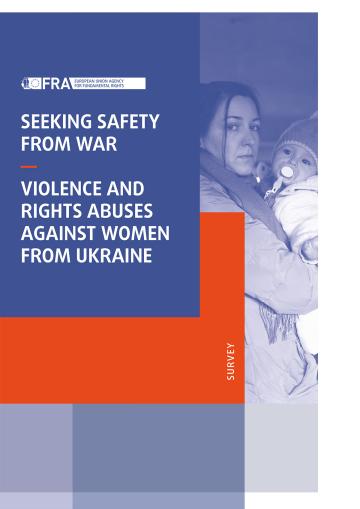
    The start of Russia’s war of aggression against Ukraine on 24 February 2022 shocked the global community and gave rise to a
    series of urgent fundamental rights challenges across Europe. While much attention has focused on the scale of devastation and its wider impact on all Ukrainians, the war has also inflicted profound personal harm. This report sheds light on the violence, sexual harassment and exploitation experienced by women displaced from Ukraine. Drawing on a survey and in-depth interviews with women from Ukraine, the report documents the prevalence, forms and patterns of gender-based violence and sets out practical measures to improve safety, access to justice and support.
  • Handbook / Guide / Manual
    21
    novembre
    2024
    This manual is designed to be used by workplace inspection staff in the Member States. It is intended to empower them to enforce the protective standards in EU law that safeguard the rights of third-country workers, including seasonal workers, migrant workers with temporary permits and migrants in an irregular situation. Third-country workers are nationals who are not from a Member State or from Iceland, Liechtenstein, Norway or Switzerland.
  • Handbook / Guide / Manual
    19
    septembre
    2024
    This publication guides EU countries on setting up independent monitoring mechanisms to ensure fundamental rights are respected during screening and asylum border procedures. These processes at borders are for people arriving from non-EU countries. Monitoring mechanisms are meant to prevent rights violations, protect victims, and support investigations into any allegations of wrongdoing by public authorities. The guidance highlights the importance of transparency and accountability, which builds trust in public authorities. New EU regulations coming into effect in 2026 will require such monitoring systems to be in place. This updates the guidance published in 2022.
  • Fundamental Rights Report
    8
    juin
    2023
    La guerre d'agression non provoquée de la Russie contre l'Ukraine a entraîné des déplacements massifs de personnes à l'intérieur et à l'extérieur du pays. L'Union européenne (UE) a rapidement activé sa directive relative à la protection
    temporaire pour la première fois depuis son adoption en 2001. Cela a donné à près de 4 millions de personnes le droit à un séjour régulier et à un accès au travail, au logement, à l'assistance juridique, à l'éducation et aux soins de santé.
  • Fundamental Rights Report
    8
    juin
    2023
    FRA’s Fundamental Rights Report 2023 reviews major developments in the field in 2022, identifying both achievements and areas of concern. It also presents FRA’s opinions on these developments, including a synopsis of the evidence supporting these opinions.
  • Periodic updates / Series
    21
    octobre
    2022
    The Russian invasion of Ukraine triggered solidarity from EU governments, local authorities and society as they welcomed more than 7 million people fleeing the aggression. The European Union’s rapid response, activating the EU Temporary Protection Directive, offered welcome relief and much-needed support to those in need. It allowed displaced persons the opportunity to quickly settle and to work, travel and access services across the EU. But other pressing human rights issues have come to the fore and remain high on the EU’s agenda, such as human trafficking, sexual and gender-based violence, hate crime and hate-fuelled disinformation.
  • Handbook / Guide / Manual
    14
    octobre
    2022
    ** As of 19 September 2024 a new version of this guidance has been issued. Please see the link below. **

    Fundamental rights monitoring at EU external borders should be systematically and regularly carried out for a range of border management activities. These include border surveillance, apprehensions at land, sea and air borders, and the operation of referral mechanisms, including in the event of mass arrivals. This general guidance provides assistance to EU Member States in setting up national independent mechanisms to monitor fundamental rights compliance at EU external borders, in line with the proposed screening regulation of 23 September 2020 by the European Commission. The EU Agency for Fundamental Rights prepared this guidance at the request of the Commission.
  • Report / Paper / Summary
    9
    décembre
    2021
    This report sheds light on the realities faced by unaccompanied migrant children who are not in the care of child protection systems in the EU. Presented as a case study, it tells the story of children and young adults from Pakistan who travelled alone to the EU without their parents or other adults.
  • Report / Paper / Summary
    4
    novembre
    2021
    This report outlines to what extent legal aid is available to those held in pre-removal detention in the 27 EU Member States, and in North Macedonia and Serbia, during procedures related to their return. These involve decisions on return, on detention pending removal, the removal itself and on bans on entry. The report also examines when people are entitled to free legal aid and how this aid is funded, as well as who provides representation and various factors that limit the scope of legal aid.