eu-charter

Charte des droits fondamentaux de l'Union européenne

Article 2 - Droit à la vie

Article 2 - Droit à la vie

1. Toute personne a droit à la vie.

2. Nul ne peut être condamné à la peine de mort, ni exécuté.

Explications

  • Texte:

    1. Le paragraphe 1 de cet article est fondé sur l'article 2, paragraphe 1, première phrase, de la CEDH, dont le texte est le suivant:
    `1. Le droit de toute personne à la vie est protégé par la loi...`.
    2. La deuxième phrase de cette disposition, qui concerne la peine de mort, a été rendue caduque par l'entrée en vigueur du protocole no 6 annexé à la CEDH, dont l'article 1er est libellé comme suit:
    `La peine de mort est abolie. Nul ne peut être condamné à une telle peine ni exécuté`.
    C'est sur la base de cette disposition qu'est rédigé le paragraphe 2 de l'article 2 de la Charte.
    3. Les dispositions de l'article 2 de la Charte correspondent à celles des articles précités de la CEDH et du protocole additionnel. Elles en ont le même sens et la même portée, conformément à l'article 52, paragraphe 3, de la Charte. Ainsi, les définitions `négatives` qui figurent dans la CEDH doivent être considérées comme figurant également dans la Charte:
    a) l'article 2, paragraphe 2, de la CEDH:
    `La mort n'est pas considérée comme infligée en violation de cet article dans les cas où elle résulterait d'un recours à la force rendu absolument nécessaire:
    a) pour assurer la défense de toute personne contre la violence illégale;
    b) pour effectuer une arrestation régulière ou pour empêcher l'évasion d'une personne régulièrement détenue;
    c) pour réprimer, conformément à la loi, une émeute ou une insurrection.`
    b) l'article 2 du protocole no 6 annexé à la CEDH:
    `Un État peut prévoir dans sa législation la peine de mort pour des actes commis en temps de guerre ou de danger imminent de guerre; une telle peine ne sera appliquée que dans les cas prévus par cette législation et conformément à ses dispositions ...`.

    Source:
    Journal officiel de l'Union européenne C 303/17 - 14.12.2007
    Preamble - Explanations relating to the Charter of Fundamental Rights:
    Les explications qui figurent ci-après ont été établies initialement sous la responsabilité du praesidium de la Convention qui a élaboré la Charte des droits fondamentaux de l'Union européenne. Elles ont été mises à jour sous la responsabilité du praesidium de la Convention européenne, compte tenu des adaptations apportées au texte de la Charte par ladite Convention (notamment aux articles 51 et 52) et de l'évolution du droit de l'Union. Bien que ces explications n'aient pas en soi de valeur juridique, elles constituent un outil d'interprétation précieux destiné à éclairer les dispositions de la Charte.

Références à la jurisprudence

Droit constitutionnel national

41 results found

  • КОНСТИТУЦИЯ на Република България
    Pays:
    Bulgaria

    Чл. 28 Всеки има право на живот. Посегателството върху човешкия живот се наказва като най-тежко престъпление.

Droit de l'UE

5 results found

  • Regulation (EU) No 656/2014 of the European Parliament and of the Council of 15 May 2014 establishing rules for the surveillance of the external sea borders in the context of operational cooperation coordinated by Frontex

    Preamble 


    (19) This Regulation respects the fundamental rights and observes the principles recognised by Articles 2 and 6 of the Treaty on European Union (TEU) and by the Charter, in particular respect for human dignity, the right to life, the prohibition of torture and of inhuman or degrading treatment or punishment, the prohibition of trafficking in human beings, the right to liberty and security, the right to the protection of personal data, the right to asylum and to protection against removal and expulsion, the principles of non-refoulement and non-discrimination, the right to an effective remedy and the rights of the child. This Regulation should be applied by Member States and the Agency in accordance with those rights and principles.

  • Regulation (EU) 2019/1896 of the European Parliament and of the Council of 13 November 2019 on the European Border and Coast Guard and repealing Regulations (EU) No 1052/2013 and (EU) 2016/1624

    Preamble

    (103) This Regulation respects the fundamental rights and observes the principles recognised by Articles 2 and 6 TEU and by the Charter of Fundamental Rights of the European Union (‘the Charter’), in particular respect for human dignity, the right to life, the prohibition of torture and inhuman or degrading treatment or punishment, the prohibition of trafficking in human beings, the right to liberty and security, the right to the protection of personal data, the right of access to documents, the right to asylum and to protection against removal and expulsion, non-refoulement, non-discrimination and the rights of the child.

    Article 1: Subject matter

    This Regulation establishes a European Border and Coast Guard to ensure European integrated border management at the external borders with a view to managing those borders efficiently in full compliance with fundamental rights and to increasing the efficiency of the Union return policy.

    This Regulation addresses migratory challenges and potential future challenges and threats at the external borders. It ensures a high level of internal security within the Union in full respect of fundamental rights, while safeguarding the free movement of persons within the Union. It contributes to the detection, prevention and combating of cross-border crime at the external borders.

    Article 43: Instructions to the teams

    4.   Members of the teams shall, in the performance of their tasks and in the exercise of their powers, fully respect fundamental rights, including access to asylum procedures and human dignity, and shall pay particular attention to vulnerable persons. Any measures taken in the performance of their tasks and in the exercise of their powers shall be proportionate to the objectives pursued by such measures. While performing their tasks and exercising their powers, they shall not discriminate against persons on the basis of any grounds such as sex, race, colour, ethnic or social origin, genetic features, language, religion or belief, political or any other opinion, membership of a national minority, property, birth, disability, age or sexual orientation in line with Article 21 of the Charter.

  • Regulation (EU) 2019/125 of the European Parliament and of the Council of 16 January 2019 concerning trade in certain goods which could be used for capital punishment, torture or other cruel, inhuman or degrading treatment or punishment

    Article 1 Subject matter

    This Regulation lays down Union rules governing trade with third countries in goods that could be used for the purpose of capital punishment or for the purpose of torture or other cruel, inhuman or degrading treatment or punishment, and rules governing the supply of brokering services, technical assistance, training and advertising related to such goods.

    ...

  • Directive (EU) 2017/541 of the European Parliament and of the Council of 15 March 2017 on combating terrorism and replacing Council Framework Decision 2002/475/JHA and amending Council Decision 2005/671/JHA

    Preamble:
    ‘(1) The Union is founded on the universal values of human dignity, freedom, equality and solidarity, and respect for human rights and fundamental freedoms. It is based on the principles of democracy and the rule of law, which are common to the Member States.’
    ‘(2) Acts of terrorism constitute one of the most serious violations of the universal values of human dignity, freedom, equality and solidarity, and enjoyment of human rights and fundamental freedoms on which the Union is founded. They also represent one of the most serious attacks on democracy and the rule of law, principles which are common to the Member States and on which the Union is based. [...]’
    Article 25 - Protection of victims of terrorism
    ‘Member States shall ensure that measures are available to protect victims of terrorism and their family members, in accordance with Directive 2012/29/EU. When determining whether and to what extent they should benefit from protection measures in the course of criminal proceedings, particular attention shall be paid to the risk of intimidation and retaliation and to the need to protect the dignity and physical integrity of victims of terrorism, including during questioning and when testifying.’

  • Directive 2012/29/EU of the European Parliament and of the Council of 25 October 2012 establishing minimum standards on the rights, support and protection of victims of crime, and replacing Council Framework Decision 2001/220/JHA

    Preamble:

    (14) In applying this Directive, children's best interests must be a primary consideration, in accordance with the Charter of Fundamental Rights of the European Union and the United Nations Convention on the Rights of the Child adopted on 20 November 1989. Child victims should be considered and treated as the full bearers of rights set out in this Directive and should be entitled to exercise those rights in a manner that takes into account their capacity to form their own views.
    (16) Victims of terrorism have suffered attacks that are intended ultimately to harm society. They may therefore need special attention, support and protection due to the particular nature of the crime that has been committed against them. Victims of terrorism can be under significant public scrutiny and often need social recognition and respectful treatment by society. Member States should therefore take particular account of the needs of victims of terrorism, and should seek to protect their dignity and security.’
    ‘(38) [...] A main task of these services and their staff, which play an important role in supporting the victim to recover from and overcome potential harm or trauma as a result of a criminal offence, should be to inform victims about the rights set out in this Directive so that they can take decisions in a supportive environment that treats them with dignity, respect and sensitivity. The types of support that such specialist support services should offer could include providing shelter and safe accommodation, immediate medical support, referral to medical and forensic examination for evidence in cases of rape or sexual assault, short and long-term psychological counselling, trauma care, legal advice, advocacy and specific services for children as direct or indirect victims.’
    ‘(52) Measures should be available to protect the safety and dignity of victims and their family members from secondary and repeat victimisation, from intimidation and from retaliation, such as interim injunctions or protection or restraining orders.’

    (66) This Directive respects fundamental rights and observes the principles recognised by the Charter of Fundamental Rights of the European Union. In particular, it seeks to promote the right to dignity, life, physical and mental integrity, liberty and security, respect for private and family life, the right to property, the principle of non-discrimination, the principle of equality between women and men, the rights of the child, the elderly and persons with disabilities, and the right to a fair trial.

    Article 18 - Right to protection
    ‘Without prejudice to the rights of the defence, Member States shall ensure that measures are available to protect victims and their family members from secondary and repeat victimisation, from intimidation and from retaliation, including against the risk of emotional or psychological harm, and to protect the dignity of victims during questioning and when testifying. When necessary, such measures shall also include procedures established under national law for the physical protection of victims and their family members.’

Droit international

10 results found

  • Protocol No. 13 to the Convention for the Protection of Human Rights and Fundamental Freedoms, concerning the abolition of the death penalty in all circumstances

    Article 1 – Abolition of the death penalty

    The death penalty shall be abolished. No one shall be condemned to such penalty or executed.

  • Protocol No. 6 to the Convention for the Protection of Human Rights and Fundamental Freedoms concerning the abolition of the death penalty

    Article 1 – Abolition of the death penalty

    The death penalty shall be abolished. No-one shall be condemned to such penalty or executed.

  • Second Optional Protocol to the International Covenant on Civil and Political Rights, aiming at the abolition of the death penalty

    Adopted and proclaimed by General Assembly resolution 44/128 of 15 December 1989

  • International Covenant on Civil and Political Rights

    Article 6

    ... 

    2. In countries which have not abolished the death penalty, sentence of death may be imposed only for the most serious crimes in accordance with the law in force at the time of the commission of the crime and not contrary to the provisions of the present Covenant and to the Convention on the Prevention and Punishment of the Crime of Genocide. This penalty can only be carried out pursuant to a final judgement rendered by a competent court.

    ...

  • Convention on the Rights of the Child

    Article 6

    1. States Parties recognize that every child has the inherent right to life. 2

    . States Parties shall ensure to the maximum extent possible the survival and development of the child.

  • International Covenant on Economic, Social and Cultural Rights

    Article 10

    The States Parties to the present Covenant recognize that:

    1. The widest possible protection and assistance should be accorded to the family, which is the natural and fundamental group unit of society, particularly for its establishment and while it is responsible for the care and education of dependent children. Marriage must be entered into with the free consent of the intending spouses.

    2. Special protection should be accorded to mothers during a reasonable period before and after childbirth. During such period working mothers should be accorded paid leave or leave with adequate social security benefits.

    3. Special measures of protection and assistance should be taken on behalf of all children and young persons without any discrimination for reasons of parentage or other conditions. Children and young persons should be protected from economic and social exploitation. Their employment in work harmful to their morals or health or dangerous to life or likely to hamper their normal development should be punishable by law. States should also set age limits below which the paid employment of child labour should be prohibited and punishable by law.

  • International Covenant on Civil and Political Rights

    Article 6

    1. Every human being has the inherent right to life. This right shall be protected by law. No one shall be arbitrarily deprived of his life.

    2. In countries which have not abolished the death penalty, sentence of death may be imposed only for the most serious crimes in accordance with the law in force at the time of the commission of the crime and not contrary to the provisions of the present Covenant and to the Convention on the Prevention and Punishment of the Crime of Genocide. This penalty can only be carried out pursuant to a final judgement rendered by a competent court.

    3. When deprivation of life constitutes the crime of genocide, it is understood that nothing in this article shall authorize any State Party to the present Covenant to derogate in any way from any obligation assumed under the provisions of the Convention on the Prevention and Punishment of the Crime of Genocide.

    4. Anyone sentenced to death shall have the right to seek pardon or commutation of the sentence. Amnesty, pardon or commutation of the sentence of death may be granted in all cases.

    5. Sentence of death shall not be imposed for crimes committed by persons below eighteen years of age and shall not be carried out on pregnant women.

    6. Nothing in this article shall be invoked to delay or to prevent the abolition of capital punishment by any State Party to the present Covenant.

  • Parliamentary Assembly of the Council of Europe (PACE) Resolution 2229 (2018) on International obligations of Council of Europe member States to protect life at sea

    Resolution 2229 (2018) - International obligations of Council of Europe member States to protect life at sea

  • UN Human Rights Committee General comment No. 36 (2018) on article 6 of the International Covenant on Civil and Political Rights, on the right to life

    General comment No. 36 (2018) on article 6 of the International Covenant on Civil and Political Rights, on the right to life

    (adopted by the Committee at its 124th session (8 October to 2 November 2018).


  • ECHR provisions of article 2 and Protocols 6 and 13

    ECHR provisions of article 2 and Protocols 6 and 13 have been incorporated into UK law by the Human Rights Act 1998.

Produits

  • Report / Paper / Summary
    27
    mars
    2013
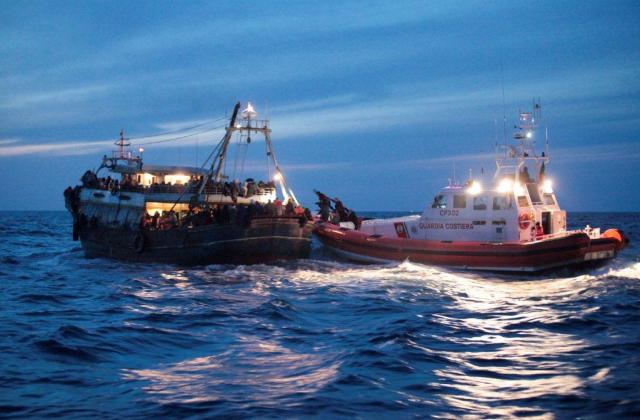
    This FRA report examines the conditions at Europe’s southern sea borders with respect to the most fundamental rights of a person, the right to life and the right not to be sent back to torture, persecution or inhuman treatment. It looks at sea border surveillance and disembarkation procedures, as well as training and Frontex-coordinated operations. It examines practices across the EU Member States researched – Cyprus, Greece, Italy, Malta and Spain.
  • Rapport / Publication / Résumé
    25
    octobre
    2011
    Le présent rapport est la seconde publication issue des résultats d’une étude juridique effectuée par l’Agence des droits fondamentaux de l’Union européenne (FRA) dans le cadre de son projet sur les droits fondamentaux des personnes souffrant de troubles mentaux et des personnes handicapées mentales.
  • Rapport / Publication / Résumé
    23
    juin
    2011
    L’Union européenne est fondée sur la valeur de l’égalité et de la non-discrimination. À travers ses politiques, elle lutte contre la discrimination fondée sur l’orientation sexuelle. Même si des progrès importants ont été accomplis vers la réalisation de l’égalité y compris du point de vue de l’orientation sexuelle et de l’identité de genre, il reste plusieurs obstacles à surmonter. Le présent rapport de synthèse regroupe et met en contexte les principaux résultats des études sociales et juridiques réalisées par la FRA entre 2008 et 2010 sur les thèmes des droits des LGBT et de la situation sociale des personnes LGBT.
  • Rapport / Publication / Résumé
    30
    novembre
    2010
    Le présent rapport met à jour l’analyse juridique comparative de l’Agence des droits fondamentaux de l’Union européenne (FRA) concernant la discrimination fondée sur l’orientation sexuelle et l’identité de genre, publiée à l’origine en juin 2008. Il présente la situation fin 2009 tout en incluant dans la mesure du possible les informations recueillies en 2010. Les informations présentées dans ce rapport permettent de discerner cinq tendances principales.