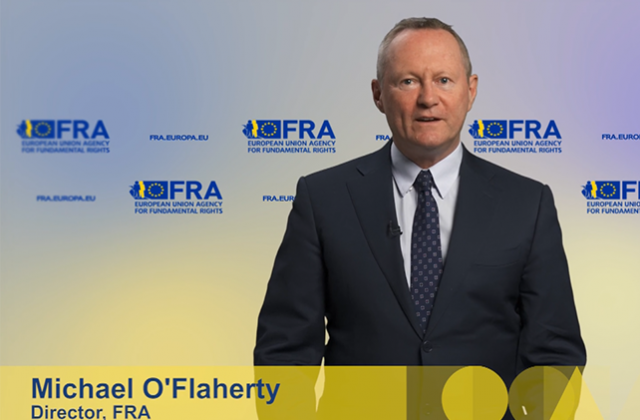
This video statement by FRA Director Michael O’Flaherty was recorded for the 2020 General conference of the International Coalition of Inclusive and Sustainable Cities (ICCAR): “CommunicAction – A common front to protect human rights at the local level”.
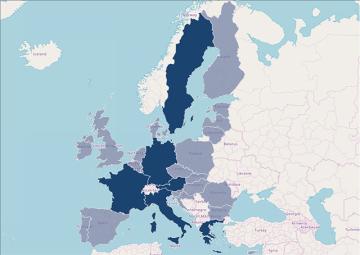
The EU Fundamental Rights Agency published in 2019 its report on the ‘Integration of young refugees in the EU’. The report explored the challenges of young people who fled armed conflict or persecution and arrived in the EU in 2015 and 2016. The report is based on 426 interviews with experts working in the area of asylum and integration, as well as 163 interviews with young people, aged 16 to 24, conducted between October 2017 and June 2018 in 15 regions and cities located in six Member States: Austria, France, Germany, Greece, Italy and Sweden. The links on this page provide a summary of the information collected during this period for each country about unaccompanied children turning 18 and the change in people’s legal status once international protection is granted. These two issues had at the time been identified as moments requiring sufficient, consistent and systematic support, particularly from lawyers, social workers and guardians, to ensure successful integration.
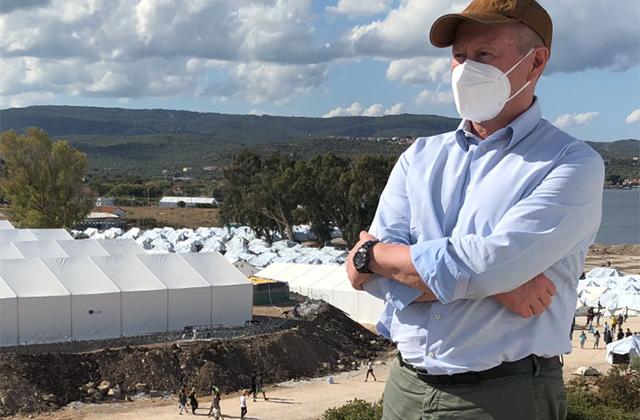
This video statement by FRA Director Michael O’Flaherty was recorded on 15 October 2020 at the Moria migration facility that was destroyed by fire in September 2020.
This video statement by FRA Director Michael O’Flaherty was recorded on 14 October 2020 at the temporary facility at Mavrovouni. This temporary camp was built to re-house people after the fire at the Moria migration facility on the island of Lesbos, in Greece.
This video statement by FRA Director Michael O’Flaherty was recorded for the Annual Conference of the Geneva Human Rights Platform: ''Connectivity between regional and global human rights mechanisms".
Business activity affects not just customers, employees, and contractors along supply chains, but often entire communities and the environment. This makes it vital that every business complies with human rights. This comparative report looks at the realities victims face when they seek redress for business-related human rights abuses. It presents the findings of fieldwork research on the views of professionals regarding the different ways people can pursue complaints. The findings highlight that obstacles to achieving justice are often multi-layered.
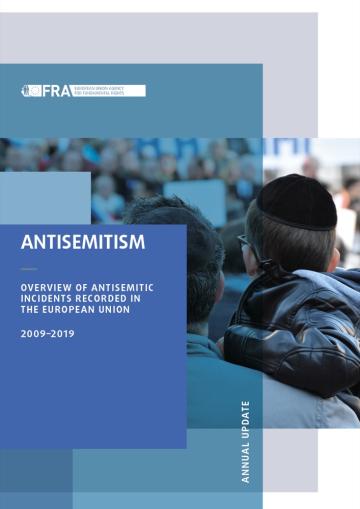
Antisemitism can be expressed in the form of verbal and physical attacks, threats, harassment, discrimination and unequal treatment, property damage and graffiti or other forms of speech or text, including on the internet. Antisemitic incidents and hate crimes violate fundamental rights, especially the right to human dignity, the right to equality of treatment and the freedom of thought, conscience and religion.
National Human Rights Institutions (NHRIs) are a vital part of the country-level human rights protection system. This report, published 10 years after FRA’s first in-depth study on NHRIs, looks at such bodies in the EU, as well as the Republic of North Macedonia, the Republic of Serbia, and the United Kingdom of Great Britain and Northern Ireland. It explores relevant developments, challenges to their effectiveness and ways to maximise their impact.
This paper presents key findings from FRA’s second consultation of its Fundamental Rights Platform, focusing on the experiences of civil society organisations (CSOs) working on human rights. FRA started an annual consultation with organisations participating in its platform in 2018.
Настоящото ръководство е предназначено за служителите по управление на границите в държавите — членки на Европейския съюз, които работят на оперативно ниво. То има за цел да подпомогне ежедневната им работа по прилагането на гаранциите за основните права, предвидени в Кодекса на шенгенските граници (Регламент (ЕС) № 2016/399), и свързаните с него законодателни актове.
Tyto pokyny jsou určeny pracovníkům správy hranic v členských státech EU, kteří pracují na operativní úrovni. Jejich cílem je pomoci těmto pracovníkům při jejich každodenní práci provádět záruky dodržování základních práv stanovené Schengenským hraničním kodexem (nařízení (EU) 2016/399) a souvisejícími právními předpisy EU.
Η παρούσα καθοδήγηση απευθύνεται στο προσωπικό διαχείρισης των συνόρων των κρατών μελών της Ευρωπαϊκής Ένωσης (ΕΕ) που εργάζεται στο επιχειρησιακό επίπεδο. Αποσκοπεί στο να τους βοηθήσει να εφαρμόζουν, στο πλαίσιο της καθημερινής άσκησης των καθηκόντων τους, τις εγγυήσεις των θεμελιωδών δικαιωμάτων του κώδικα συνόρων του Σένγκεν [κανονισμός (ΕΕ) αριθ. 2016/399] και του συναφούς δικαίου της ΕΕ.
This practical guidance addresses border-management staff in European Union (EU) Member States who work at the operational level. It aims to support them in implementing the fundamental rights safeguards of the Schengen Borders Code (Regulation (EU) No. 2016/399) and related EU law instruments in their daily work, when carrying out controls at external land borders.
La presente guía se dirige al personal de gestión fronteriza de los Estados miembros de la Unión Europea (UE) que trabaja a nivel operativo. Su objetivo es ayudarles a aplicar, en su trabajo diario, las salvaguardias de los derechos fundamentales del Código de fronteras Schengen [Reglamento (UE) 2016/399] y la legislación de la UE relacionada.
Käesolev juhend on ELi liikmesriikide piirivalveametnikele, kes töötavad operatiivtasandil. Juhendi eesmärk on aidata neil rakendada oma igapäevatöös Schengeni piirieeskirjades (määrus (EL) 2016/399) ja seotud ELi õiguses sätestatud põhiõiguste kaitsemeetmeid.
Nämä ohjeet on tarkoitettu EU:n jäsenvaltioiden operatiivisella tasolla työskentelevälle rajavalvontahenkilöstölle. Niiden tarkoituksena on auttaa sitä toteuttamaan päivittäisessä työssään Schengenin rajasäännöstön (asetus (EU) 2016/399) ja siihen liittyvän EU:n lainsäädännön perusoikeuksia koskevia takeita.
Ovaj je priručnik namijenjen službenicima za upravljanje državnim granicama u državama članicama EU-a koji djeluju na operativnoj razini. Svrha mu je pomoći im u njihovu svakodnevnom radu primijeniti mjere za zaštitu temeljnih prava iz Zakonika o schengenskim granicama (Uredba (EU) 2016/399) i povezanog prava EU-a.
Ez az útmutató az EU tagállamaiban műveleti szinten határigazgatást végző személyzetnek készült. Célja, hogy segítséget nyújtson napi munkájuk során abban, hogy az alapjogoknak a Schengeni határ-ellenőrzési kódexben (2016/399/EU rendelet) és a kapcsolódó uniós jogban előírt védelmét biztosítani tudják.
I presenti orientamenti sono destinati al personale addetto alla gestione delle frontiere negli Stati membri dell’Unione europea (UE) che lavora a livello operativo e mirano ad assisterli nell’attuare nel loro lavoro quotidiano, le tutele in materia di diritti fondamentali previste dal codice frontiere Schengen [regolamento (UE) 2016/399] e dal relativo diritto dell’UE.
Šios gairės skirtos ES valstybių narių sienų valdymo pareigūnams, dirbantiems operatyviniu lygmeniu. Jomis siekiama padėti jiems kasdieniame darbe įgyvendinti Šengeno sienų kodekse (Reglamentas (ES) 2016/399) ir susijusiuose ES teisės aktuose nustatytas pagrindinių teisių apsaugos priemones.