Highlights

  • Report / Paper / Summary
    27
    January
    2026
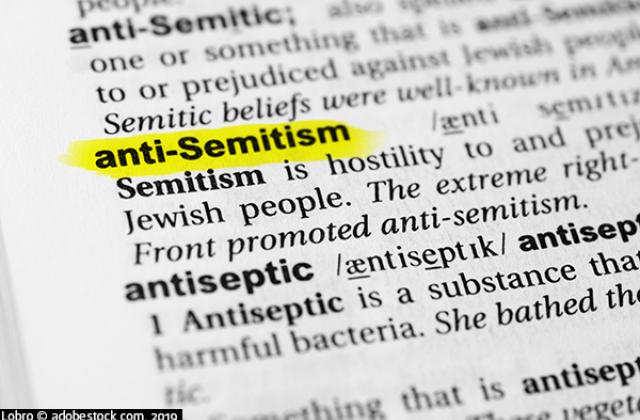
    This report looks at antisemitism in the EU, focusing on what can be done to address gaps in recording and inconsistencies in data collection. It highlights existing tools and guidance for Member States to improve their recording systems. The analysis is based on official administrative data and information from publicly available sources across EU Member States, as well as Albania, North Macedonia, and Serbia. Detailed country overviews are available for all countries covered. Antisemitism has been monitored by FRA since 2004. This report builds on the 2024 publication, ‘Jewish People’s Experiences and Perceptions of Antisemitism’.
  • Report / Paper / Summary
    27
    November
    2025
    This report looks at the breadth and depth of violence and neglect faced by people with disabilities living in institutions. It highlights the shortcomings by EU Member States in preventing violence and protecting those who are at a higher risk of experiencing it, in line with the UN Convention on the Rights of Persons with Disabilities. Based on research across all EU Member States and FRA observer candidate countries, the report calls for better protection, stronger prevention of violence, and clear accountability. It urges the EU and its Member States to implement their obligations around equality and fundamental rights.
  • Data explorer
    FRA’s 2024 survey on Roma and Travellers in Albania, Bulgaria, Czechia, France, Greece, Hungary, Ireland, Italy, North Macedonia, Portugal, Romania, Serbia and Spain collected information from 10,126 respondents living in private households who self-identify as Roma or Traveller, are 16 or older and have lived in the survey countries for at least the 12 months before the survey.
  • Report / Paper / Summary
    25
    October
    2024
    Racism towards Muslims is increasing in countries across the EU. Muslims face racial discrimination and racist harassment because of their religion, skin colour or ethnic background. This report shows a sharp rise since the last survey in 2016.
    Produtos
    21
    September
    2017
    Muslims living in the EU face discrimination in a broad range of settings – and particularly when looking for work, on the job, and when trying to access public or private services. The report examines how characteristics – such as an individual's first and last name, skin colour and the wearing of visible religious symbols like a headscarf, for example – may trigger discriminatory treatment and harassment.
    The Agency, in close cooperation with the Maltese Presidency of the EU Council, held a high-level symposium where the fundamental rights issues that are currently high on the EU’s political agenda were discussed.
    22
    June
    2017
    Up to one third of migrants arriving in the European Union since the summer of 2015 have been children. The current emphasis on speedier asylum processing and making returns more effective may trigger increased use of immigration detention, possibly also affecting children. The detention of children implicates various fundamental rights and will only be in line with EU law if limited to exceptional cases. This report aims to support practitioners in implementing relevant polices in line with applicable law by outlining available safeguards against unlawful and arbitrary detention and highlighting promising practices.
    19
    May
    2017
    This report assesses asylum seekers’ and refugees’ opportunities to access early
    childhood education and primary, secondary and tertiary education and training.
    It identifies measures available for their support, as well as possible areas for
    improvement.
    24
    March
    2017
    This report reviews how asylum claims based on sexual
    orientation and gender identity are assessed and analyses the existence of
    specific reception measures for LGBTI persons.
    Miltos Pavlou, Senior Programme Manager at the EU Agency for Fundamental Rights, talks about the participation of migrants and their descendants in the EU.
    22
    February
    2017
    Around 2.5 million children participate in judicial proceedings across the European Union (EU) every year, affected by parental divorce or as victims of, or witnesses to, crime. Although their effective participation in such proceedings is vital for improving the operation of justice, the treatment of children in justice systems remains a concern. FRA investigated to what extent children’s rights to be heard, to be informed, to be protected, and to non-discrimination are fulfilled in practice.
    The Agency’s Director, Michael O’Flaherty, took part in a meeting of the European Parliament’s Committee on Civil Liberties, Justice and Home Affairs (LIBE) on 9 February.
    20
    December
    2016
    This focus section outlines the specific protection needs of separated children, and highlights current responses and promising practices among EU Member States.
    13
    December
    2016
    Antisemitism can be expressed in the form of verbal and physical attacks, threats,
    harassment, property damage and graffiti or other forms of text, including on the
    internet. The present report relates to manifestations of antisemitism as they are
    recorded by international organisations, and by official and unofficial sources in the
    28 EU Member States.
    8
    December
    2016
    This opinion analyses the effects on children of the proposed recast Dublin Regulation. It covers child-specific rules as well as provisions relating to all asylum applicants that significantly affect children.
    29
    November
    2016
    Tendo em conta que aproximadamente 80% dos ciganos inquiridos vivem abaixo do limiar de risco de pobreza do seu país,
    que um em cada três ciganos vive numa habitação sem água canalizada, que um em cada três ciganos pertence a uma família
    em que alguém se deitou com fome pelo menos uma vez no mês anterior e que as crianças ciganas ficam aquém dos seus
    colegas não ciganos em todos os indicadores educativos, este relatório chama a atenção para uma realidade inquietante mas
    incontornável: a maior minoria étnica da União Europeia continua a enfrentar discriminação e um acesso desigual a serviços vitais.
    This video message was produced for a holocaust education training for public officials.
    17
    November
    2016
    Media content and political discourse in EU Member States, whether online or
    offline, show incitement to discrimination, hatred or violence on different
    grounds, as evidence collected by FRA reveals. The growing reliance on the internet as the main source of
    information for many enables the fast spread of often unverified statements
    that could also incite to hatred.
    A Convenção das Nações Unidas sobre os Direitos das Pessoas com Deficiência (CDPD) é o primeiro instrumento internacional vinculativo de direitos humanos que aborda especificamente a deficiência. O seu objetivo é o de «promover, proteger e garantir o pleno e igual gozo de todos os direitos humanos e liberdades fundamentais por todas as pessoas com deficiência e promover o respeito pela sua dignidade inerente».
    30
    May
    2016
    The European Union (EU) and its Member States introduced and pursued numerous initiatives to safeguard and strengthen
    fundamental rights in 2015. Some of these efforts produced important progress; others fell short of their aims. Meanwhile,
    various global developments brought new – and exacerbated existing – challenges.
    30
    May
    2016
    The European Union (EU) and its Member States introduced and pursued
    numerous initiatives to safeguard and strengthen fundamental rights in 2015.
    FRA’s Fundamental Rights Report 2016 summarises and analyses major
    developments in the fundamental rights field, noting both progress made
    and persisting obstacles. This publication presents FRA’s opinions on the
    main developments in the thematic areas covered and a synopsis of the
    evidence supporting these opinions. In so doing, it provides a compact but
    informative overview of the main fundamental rights challenges confronting
    the EU and its Member States.
    20
    May
    2016
    This opinion addresses the designation and operation of a framework established under Article 33 (2) of the CRPD at EU level (EU Framework). It aims to clarify the requirements of an EU Framework in light of the monitoring practice and jurisprudence of the CRPD Committee and – with regard to the concept of independence –the Committee interpreting the Paris Principles on the establishment of National Human Rights Institutions (NHRIs).
    28
    April
    2016
    Hate crime is the most severe expression of discrimination, and a core fundamental rights abuse. Various initiatives target such crime, but most hate crime across the EU remains unreported and unprosecuted, leaving victims without redress. To counter this trend, it is essential for Member States to improve access to justice for victims. Drawing on interviews with representatives from criminal courts, public prosecutors’ offices, the police, and NGOs involved in supporting hate crime victims, this report sheds light on the diverse hurdles that impede victims’ access to justice and the proper recording of hate crime.
    16
    March
    2016
    The fundamental rights of lesbian, gay, bisexual and transgender (LGBT) people are often not respected across the EU. Public officials and other professionals in education, healthcare and law enforcement are entrusted with the duty to ensure that everyone’s fundamental rights are protected and promoted.