Les enfants sont des titulaires de droits à part entière. Ils sont bénéficiaires de tous les droits fondamentaux et de tous les droits de l’homme, et sont sujets de réglementations particulières compte tenu de leurs caractéristiques spécifiques. Le présent manuel a pour but de montrer comment le droit et la jurisprudence européens s’adaptent aux intérêts et besoins particuliers des enfants. Il illustre également l’importance des parents et des tuteurs ou d’autres représentants légaux et fait référence, le cas échéant, aux principaux droits et responsabilités conférés aux personnes ayant la charge des enfants. Ce manuel entend sensibiliser le lecteur et approfondir ses connaissances des normes juridiques qui protègent et promeuvent les droits de l’enfant en Europe. Il constitue un ouvrage de référence sur le droit de l’Union européenne et du Conseil de l’Europe dans ces domaines. Il explique comment chaque question est réglementée en vertu du droit de l’UE, y compris de la charte des droits fondamentaux de l’Union européenne, ainsi qu’en vertu de la convention européenne des droits de l’homme, de la charte sociale européenne et d’autres instruments du Conseil de l’Europe.
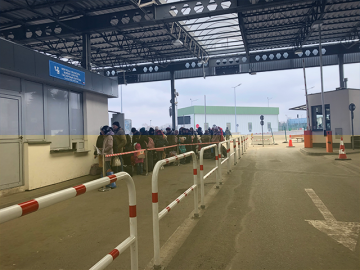
The EU is facing a large-scale humanitarian crisis. Over 10 days at the beginning of March, the EU Agency for Fundamental Rights (FRA) visited all EU countries bordering Ukraine and Moldova – Hungary, Poland, Romania and Slovakia.
The EU Agency for Fundamental Rights has been regularly collecting data on asylum and migration since September 2015. This report focuses on the fundamental rights situation of people arriving in Member States and EU candidate countries particularly affected by migration. It addresses fundamental rights concerns between 1 October and 31 December 2021.
In 2015 and 2016, the numbers of unaccompanied children arriving in Europe increased dramatically, straining national guardianship systems. This report looks at how EU Member States, as well as North Macedonia and Serbia, have adapted their guardianship systems for unaccompanied children since that time.
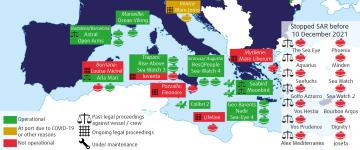
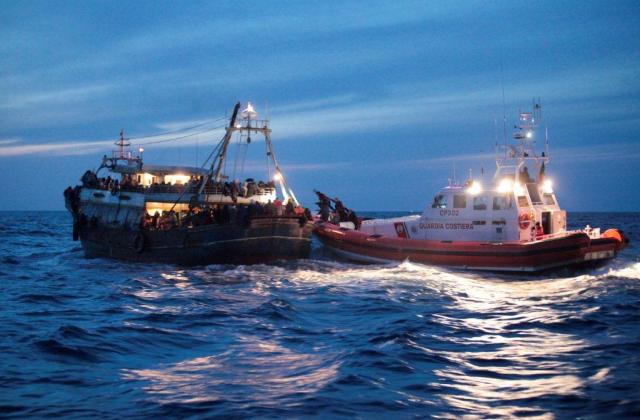
The EU Agency for Fundamental Rights (FRA) regularly collects data on NGO vessels involved in search and rescue in the Mediterranean. This includes any legal proceedings against them, as well as any difficulties disembarking migrants in safe ports. The International Organization for Migration estimates that from January to 10 December 2021 about 1,654 people have died or gone missing while crossing the Mediterranean Sea to reach Europe to escape war or persecution or to pursue a better life. This is an average of more than four people per day. Deadly incidents have also occurred recently in the Channel (La Manche).
The EU Agency for Fundamental Rights has been regularly collecting data on asylum and migration since September 2015. This report focuses on the fundamental rights situation of people arriving in Member States and EU candidate countries particularly affected by migration. It addresses fundamental rights concerns between 1 July and 30 September 2021.
Since 2014, FRA has been publishing an annual update of the forced return monitoring systems EU Member States have set up under Article 8 (6) of the EU’s Return Directive. This overview describes different indicators for an effective forced return monitoring system. It includes the organisation responsible for monitoring forced return, the number of operations monitored in 2020, the phases of monitored return operations, the number of staff trained and working as monitors, and whether the monitoring body issued public reports about their monitoring.
This report sheds light on the realities faced by unaccompanied migrant children who are not in the care of child protection systems in the EU. Presented as a case study, it tells the story of children and young adults from Pakistan who travelled alone to the EU without their parents or other adults.
This report outlines to what extent legal aid is available to those held in pre-removal detention in the 27 EU Member States, and in North Macedonia and Serbia, during procedures related to their return. These involve decisions on return, on detention pending removal, the removal itself and on bans on entry. The report also examines when people are entitled to free legal aid and how this aid is funded, as well as who provides representation and various factors that limit the scope of legal aid.
The EU Agency for Fundamental Rights has been regularly collecting data on asylum and migration since September 2015. This report focuses on the fundamental rights situation of people arriving in Member States and EU candidate countries particularly affected by migration. It addresses fundamental rights concerns between 1 January and 30 June 2021.



 Handbook / Guide / Manual9juin2026
 Handbook / Guide / Manual8octobre2025
 Opinion / Position Paper23juillet2025