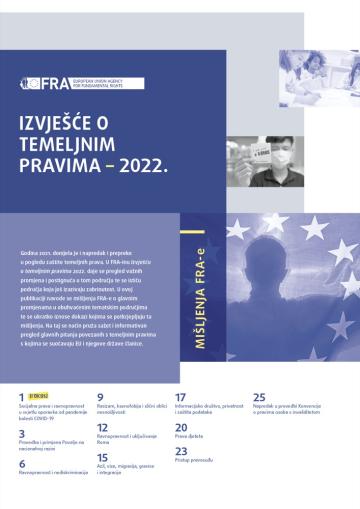
Godina 2021. donijela je i napredak i prepreke u pogledu zaštite temeljnih prava. U FRA-inu Izvješću o temeljnim pravima 2022. daje se pregled važnih promjena i postignuća u tom području te se ističu područja koja još izazivaju zabrinutost. U ovoj publikaciji navode se mišljenja FRA-e o glavnim promjenama u obuhvaćenim tematskim područjima te se ukratko iznose dokazi kojima se potkrjepljuju ta mišljenja. Na taj se način pruža sažet i informativan pregled glavnih pitanja povezanih s temeljnim pravima s kojima se suočavaju EU i njegove države članice.
FRA’s Fundamental Rights Report 2022 reviews major developments in the field in 2021, identifying both achievements and areas of concern. It also presents FRA’s opinions on these developments, including a synopsis of the evidence supporting these opinions.
This focus looks at the impact of the pandemic on social rights. It examines the measures in national recovery and resilience plans that address the social vulnerabilities among a variety of population groups in the EU, including women, children and young people in situations of vulnerability, people with disabilities, older people, Roma and people in precarious working conditions.
Godina 2020. donijela je i napredak i prepreke
u pogledu zaštite temeljnih prava. U FRA-inu Izvješću
o temeljnim pravima 2021. daje se pregled važnih
promjena i postignuća u tom području te se ističu
područja koja još izazivaju zabrinutost.
FRA’s Fundamental Rights Report 2021 reviews major developments in the field in 2020, identifying both achievements and areas of concern. It also presents FRA’s opinions on these developments, including a synopsis of the evidence supporting these opinions. This year’s focus chapter explores the impact of the COVID-19 pandemic on fundamental rights. The remaining chapters cover: the EU Charter of Fundamental Rights; equality and non-discrimination; racism, xenophobia and related intolerance; Roma equality and inclusion; asylum, borders and migration; information society, privacy and data protection; rights of the child; access to justice; and the implementation of the Convention on the Rights of Persons with Disabilities.
This focus looks at COVID-19’s impact on fundamental rights. It underscores that a human rights-based approach to tackling the pandemic requires balanced measures that are based on law, necessary, temporary and proportional. It also requires addressing the pandemic’s socio-economic impact, protecting the vulnerable and fighting racism.
This focus takes a closer look at the application of the Charter of Fundamental Rights of the European Union, which has been legally binding for 10 years. At EU level, it has gained visibility and sparked a new fundamental rights culture. At national level, awareness and use of the Charter are limited. Courts increasingly use the Charter, showing the impact of this modern instrument. But its use by governments and parliaments remains low. For instance, there is little indication of anyone regularly scrutinising national legislation that transposes EU law for compatibility with the Charter.
Godina 2019. donijela je i napredovanja i nazadovanja
u pogledu zaštite temeljnih prava. U Izvješću FRA-e
o temeljnim pravima 2020. daje se pregled važnih
promjena i postignuća u tom području te se ističu
područja koja još izazivaju zabrinutost. U ovoj
publikaciji navode se mišljenja FRA-e o glavnim
promjenama u obuhvaćenim tematskim područjima
i ukratko iznose dokazi koji potkrjepljuju ta mišljenja.
Na taj se način pruža sažet, ali informativan pregled
glavnih pitanja povezanih s temeljnim pravima
s kojima se suočavaju EU i njegove države članice.
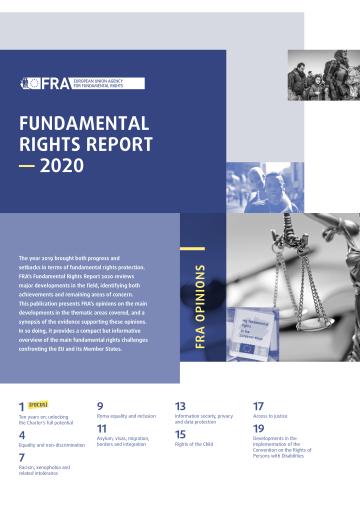
FRA’s Fundamental Rights Report 2020 reviews major developments in the field in 2019, identifying both achievements and areas of concern. It also presents FRA’s opinions on these developments, including a synopsis of the evidence supporting these opinions. This year’s focus chapter explores how to unlock the full potential of the EU Charter of Fundamental Rights.