Displaying 21 - 40 of 303
  • 29
    mai
    2024
    Ahead of the EU elections, this report explores the political participation of people with disabilities. Although some Member States removed restrictions on the right to vote and to stand for elections, barriers still exist. This report is an update of new developments following FRA’s last report published in 2014. It sets out ways forward to ensure people with disabilities have equal opportunities, in line with the EU Charter of Fundamental Rights and the Convention on the Rights of Persons with Disabilities.
  • 14
    mai
    2024
    FRA’s third LGBTIQ survey shows that people still experience hate-motivated violence and discrimination. Trans and intersex people face even greater victimisation. Yet, signs of progress show that the EU’s and Member States’ efforts can positively affect people’s lives. More LGBTIQ people are open about their sexual orientation, gender identity, gender expression and sex characteristics.
  • 10
    avril
    2024
    Racism in the police can include discriminatory racial profiling practices through to excessive use of force. Incidents like these highlight deeper systemic issues that need addressing. Many in society are affected by racism in policing, not only the individuals or communities targeted. Lack of trust in policing can fuel social exclusion and damages the foundations of a fair and equal society, however promising practices are developing to address these issues. This is the first EU-wide report on racism in policing. FRA’s findings identify gaps in regulatory frameworks and propose concrete steps for action.
  • FRA in close cooperation with the European Commission and the Academic Network of European Disability Experts (ANED), developed 28 human rights indicators to assess the political participation of persons with disabilities in the EU.
  • 2
    Février
    2024
    This technical report provides all the relevant technical information on the design, implementation and finalisation of the survey on immigrants and descendants of immigrants. Details of the data collection process also contribute to the iterative improvement of survey methodologies, especially when it comes to surveying populations and groups that are considered ‘hard-to-reach’ or difficult to survey.
  • 31
    janvier
    2024
    Children’s rights exist to ensure the safety and wellbeing of every child. Improved child protection systems ensure that these rights are met. In recent years, the EU has taken significant steps to improve child protection systems. This mapping of child protection systems gives an overview of the state of such systems at national level and developments since 2015. It promotes the improvement of integrated child protection systems. It is an update of FRA’s mapping of child protection systems in 2015, based on data collected in 2023 in the 27 EU Member States. By publishing this, FRA aims to support securing the sustainable well-being, safety and rights of all children living in the EU.
  • 12
    décembre
    2023
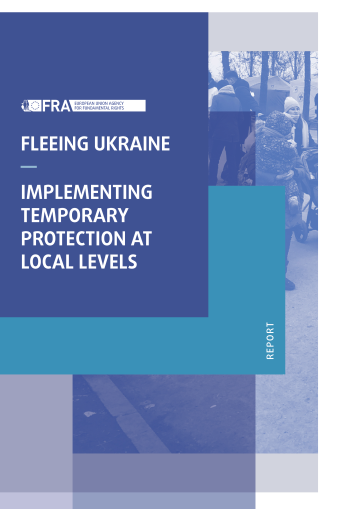
    Russia’s invasion of Ukraine forced millions of people to flee. Arriving in EU countries, they received protection in EU law under the Temporary Protection Directive. Many have begun to build a new life in their host country and enrich our societies in new ways. Local authorities took the lead in ensuring access to fundamental rights under temporary protection. This report explores the measures to ensure access to housing, education, employment and healthcare in 26 cities and regional authorities across 12 EU Member States. Despite unprecedented coordination and cooperation to overcome challenges, many uncertainties remain. Longer-term solutions will be needed after the directive expires in March 2025. Based on the information collected, the report identifies 12 priority actions and builds on FRA’s bulletins and survey findings on experiences of people displaced from Ukraine.
  • 7
    novembre
    2023
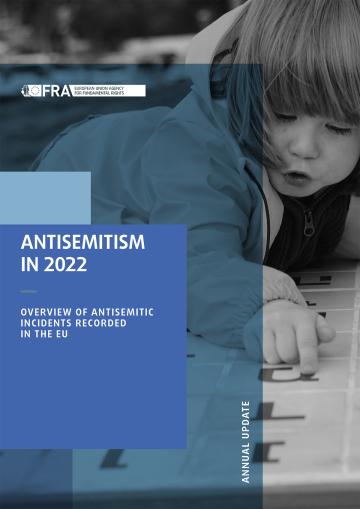
    Antisemitic incidents and hate crimes violate fundamental rights. This report provides an overview of antisemitic incidents in 2022. It reveals persistent gaps in the recording of antisemitism across Europe that impedes efforts to effectively counter hatred towards Jews. It covers antisemitic incidents reported in the 27 EU Member States in 2022 and includes available data of the same year from Albania, the Republic of North Macedonia and Serbia. As this is a yearly publication covering the period 01/01/2022–31/12/2022, it does not include antisemitic incidents reported in 2023. This is the 19th edition and is the only annual source of data of this nature for the EU.
  • 31
    octobre
    2023
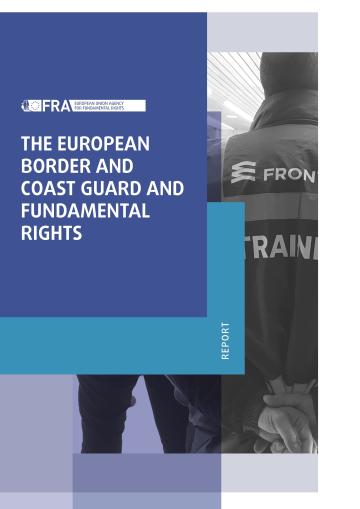
    Fundamental rights are an important consideration in European border management. Virtually all activities can have an impact on rights – from risk analysis to training, border checks and border surveillance. Safeguards in laws regulating European border management aim to protect rights. This report is a contribution to the first review of the European Border and Coast Guard Regulation (EU) 2019/1896 that offers an opportunity to reflect on how best to improve the fundamental rights situation at the external borders of the EU.
  • 25
    octobre
    2023
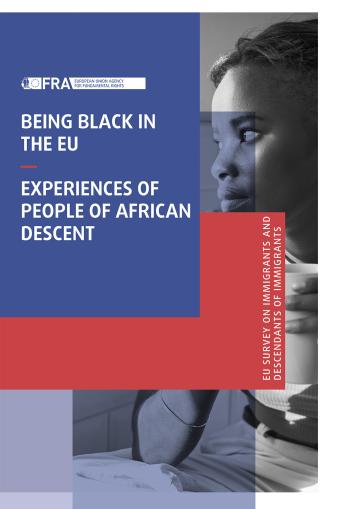
    FRA's first Being Black in the EU report exposed widespread and entrenched racism against people of African descent in Europe. Now updated with new data, this report revisits the situation revealing persistent racial discrimination, harassment and violence. Overall, experiences of racial discrimination increased in the EU countries since 2016, reaching as high as 77%. The lack of progress is alarming despite binding anti-discrimination law in the EU since 2000 and significant EU policy developments since then.
  • 18
    octobre
    2023
    Civil society organisations struggle to maintain an environment safe from threats and attacks. FRA’s sixth annual update on civic space explores the challenges for organisations across the EU. While there has been significant development since FRA began monitoring the situation in 2018, civil society organisations remain under immense pressure. Abusive lawsuits and attacks against those involved in migrant search and rescue at sea are just some of the challenges identified. This report presents ways forward to protect civil society and human rights.
  • 11
    octobre
    2023
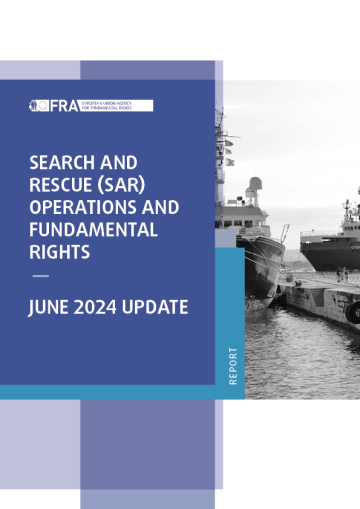
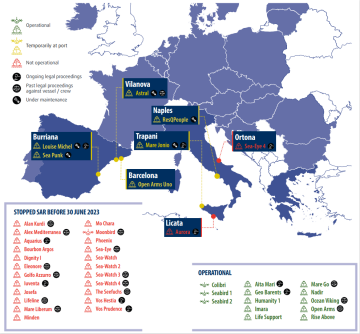
    Since October 2018, FRA has been publishing regular updates on NGO ships involved in search and rescue (SAR) operations in the Mediterranean, and the status of legal proceedings against them. This latest update covers until the end of June 2023.
  • 29
    septembre
    2023
    Russia’s invasion of Ukraine posed new challenges for the EU. Millions were forced to flee the war. As a result of the scale of people’s displacement, the EU activated for the first time the Temporary Protection Directive (TPD). More than 1.3 million children sought international protection in the EU. This bulletin explores the respect, protection and fulfilment of the fundamental rights of displaced children and ways to safeguard their rights. The third in a series, this bulletin builds on the evidence in FRA’s Bulletin #1 and #2 on the experiences of displaced people seeking safety in the EU.
  • 13
    septembre
    2023
    Europe’s ageing population is ever-increasing, and our societies are becoming more digitalised. Many public services are now available online, with many more services in the process of being digitalised. But the digitalisation of public services poses a risk of exclusion for older persons. In this new report, FRA explores the impact of digitalisation on the fundamental rights of older persons. The report maps the current legislation, policies and practices fostering digital inclusion. It provides an overview of the laws at the national level that provide for equal access to public services, both online and offline. The findings show how Member States safeguard older person’s rights to access services undergoing digitalisation. It outlines how Member States can support digital skills and ensure older people can fully participate in public life.

  • 6
    septembre
    2023
    Integration and social inclusion are important aspects of EU migration and asylum policy. The fundamental rights of long-term residents in the EU are explored through this report, focussing on the Long-Term Residence Directive. EU long-term resident status includes rights to move and reside in other EU Member States. This report examines the reasons behind the low uptake of EU long-term resident permits, despite them typically giving more rights than national long-term resident permits.
  • 11
    juillet
    2023
    Across the world, human rights defenders protect and uphold human rights in some of the most challenging situations. In some countries they face worrying levels of threats and attacks, intimidation and harassment. This report outlines how human rights defenders can enter and stay in the EU when they need protection. It suggests how EU institutions and Member States could use the flexibility in existing legal provisions and provide shelter for defenders who seek protection.
  • Report / Paper / Summary
    6
    juillet
    2023
    Following yet another recent tragic shipwreck and loss of life in the Mediterranean, this short report sets out examples of actions the EU could take to meet its obligations to protect the right to life and prevent more deaths at sea. As part of the work that the EU Agency for Fundamental Rights (FRA) does on upholding fundamental rights in asylum and return procedures, this report calls for better protection for shipwreck survivors, and prompt and independent investigations. It sets out measures that EU Member States should take to improve search and rescue efforts and provide legal pathways to safety to prevent deaths at sea.
  • Report / Paper / Summary
    15
    juin
    2023
    The Consolidated Annual Activity Report (CAAR) 2022 provides an overview of the activities and achievements of the European Union Agency for Fundamental Rights (FRA) in 2022.
  • 14
    juin
    2023
    In responding to Russia’s war against Ukraine, the EU activated its Temporary Protection Directive (TPD) for people who fled the country, allowing them to settle in the EU and to access basic public services and the labour market. By spring 2023, more than 4.5 million people had made use of the TPD or similar national protection schemes in the EU. In 2022, the European Union Agency for Fundamental Rights conducted an online survey among people displaced from Ukraine. Eurofound has analysed the survey results on their experiences when seeking to access employment. This paper highlights the main barriers that displaced people encountered and suggests ways to facilitate their inclusion.
  • 8
    juin
    2023
    Russia’s unprovoked war of aggression against Ukraine has resulted in massive internal and external population displacement. The European Union (EU) rapidly activated its Temporary Protection Directive for the first time since it was adopted in 2001. This entitled nearly 4 million people to legal residence and access to work, housing and legal assistance, education and healthcare.