The EU Agency for Fundamental Rights has been collecting relevant data since September 2015, in light of the increasing numbers of refugees, asylum seekers and migrants entering the EU. This report focuses on the fundamental rights situation of people arriving in Member States particularly affected by large migration movements. The countries covered are: Austria, Bulgaria, Croatia, Denmark, Finland, France, Germany, Greece, Hungary, Italy, the Netherlands, Poland, Spain and Sweden.
The EU Return Directive (2008/115/EC) in Article 8 (6) introduced an important fundamental rights safeguard for third-country nationals ordered to leave the EU because they do not or no longer fulfil the conditions for entry and/or stay. According to the Directive, Member States must provide for an effective forced-return monitoring system.
The Consolidated Annual Activity Report (CAAR) 2017
provides an overview of the activities and achievements
of the European Union Agency for Fundamental
Rights (FRA) in that year. It follows the guidelines of
the European Union (EU) Agencies Network.
European societies are not getting any younger! It is a simple truth we must face both about ourselves and Europe as a whole. In two generations, by 2080, those aged 65 or above will account for almost 30% of the European Union’s population.
The year 2017 brought both progress and setbacks in terms of rights protection. The European Pillar of Social Rights marked an important move towards a more ‘social Europe’. But, as experiences with the EU Charter of Fundamental Rights underscore, agreement on a text is merely a first step. Even in its eighth year as the EU's binding bill of rights, the Charter's potential was not fully exploited, highlighting the need to more actively promote its use.
The year 2017 brought both progress and setbacks in terms of fundamental rights protection. FRA’s Fundamental Rights Report 2018 reviews major developments in the field, identifying both achievements and remaining areas of concern.
We live in a world of big data, where technological developments in the area of machine learning and artificial intelligence have changed the way we live. Decisions and processes concerning everyday life are increasingly automated, based on data. This affects fundamental rights in various ways. This focus paper specifically deals with discrimination, a fundamental rights area particularly affected by technological developments.
With terrorism, cyber-attacks and sophisticated cross-border criminal networks posing growing threats, the work of intelligence services has become more urgent, complex and international. Such work can strongly interfere with fundamental rights, especially privacy and data protection. While continuous technological advances potentially exacerbate the threat of such interference, effective oversight and remedies can curb the potential for abuse.
The right to access justice and all other relevant procedural rights are not just rights in themselves; they also protect against violations of every other right. Respect for children’s rights in the area of justice is therefore essential. International treaties, the Charter of Fundamental Rights of the European Union, European Union (EU) secondary law, and national legislation provide a number of relevant rights.
This Opinion by the European Union Agency for Fundamental Rights (FRA) aims to inform the European Parliament position concerning legislative proposals on interoperability between EU information technology systems (IT systems) presented on 12 December 2017 and currently discussed by the EU legislators.
This report outlines the fundamental rights implications of collecting, storing and using
biometric and other data in EU IT systems in the area of asylum and migration.
This focus report assesses how the presence of
large numbers of persons in need of international
protection affects local communities in terms of
housing, education, the local economy and social
responses.
EU Member States’ legal and practical responses to migrants and refugees implicate several of their fundamental rights, as enshrined in the Charter of Fundamental Rights of the European Union (EU). The EU Agency for Fundamental Rights (FRA) has regularly reported on these issues since September 2015. This report highlights key trends and persistent concerns between October 2016 and December 2017. It focuses on five areas: access to territory, reception conditions, asylum procedures, unaccompanied children and immigration detention.
FRA’s Second European Union Minorities and Discrimination Survey surveys around 26,000 individuals from different ethnic minority and immigrant backgrounds across all 28 EU Member States. This technical report presents a detailed overview of the research methods used by FRA when collecting the survey data.
International treaties, the Charter of Fundamental Rights of the European Union, European Union (EU) secondary law and national legislation provide a number of rights to citizens. The maps and tables presented show the various patterns concerning age requirements for children to acquire rights in the EU. They also identify inconsistencies, protection gaps and restrictions deriving from different age thresholds. The reference period was until April 2016. Any legislative developments since then have been included whenever relevant or if known.
This report is FRA’s second publication addressing a European Parliament request for in-depth research on the impact of surveillance on fundamental rights. It updates FRA’s 2015 legal analysis on the topic, and supplements that analysis with field-based insights gained from extensive interviews with diverse experts in intelligence and related fields, including its oversight.
This report assesses to which extent selected EU Member States have put
in place mechanisms to ensure appropriate oversight and control of quality
standards in reception facilities. Such oversight and control is essential for
providing dignified and fundamental rights-compatible living conditions
for asylum seekers.
The European Parliament requested this FRA Opinion on the fundamental rights and personal data protection implications of the proposed Regulation for the creation of a European Travel Information and Authorisation System (ETIAS), including an assessment of the fundamental rights aspects of the access
by law enforcement authorities and Europol.
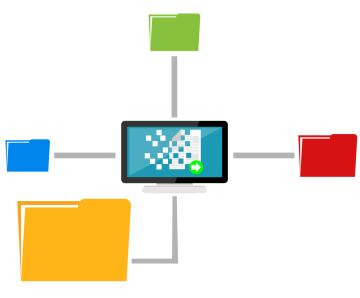
Various proposals on EU-level information systems in the areas of borders and security mention interoperability, aiming to provide fast and easy access to information about third-country nationals.
Up to one third of migrants arriving in the European Union since the summer of 2015 have been children. The current emphasis on speedier asylum processing and making returns more effective may trigger increased use of immigration detention, possibly also affecting children. The detention of children implicates various fundamental rights and will only be in line with EU law if limited to exceptional cases. This report aims to support practitioners in implementing relevant polices in line with applicable law by outlining available safeguards against unlawful and arbitrary detention and highlighting promising practices.