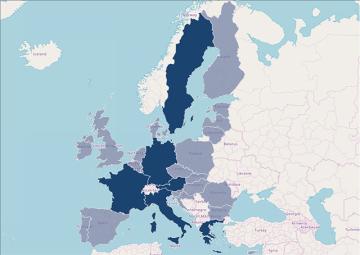
This Coronavirus Bulletin focuses on equitable access to vaccines. It outlines the situation in the 27 EU Member States from 1 March to 30 April 2021. The bulletin looks at two main areas: planning and prioritisation in deploying Covid-19 vaccinations and their rollout in the countries. It covers information and communication campaigns, as well as (pre)registration channels for and the administration of vaccinations.
FRA’s Fundamental Rights Report 2021 reviews major developments in the field in 2020, identifying both achievements and areas of concern. It also presents FRA’s opinions on these developments, including a synopsis of the evidence supporting these opinions. This year’s focus chapter explores the impact of the COVID-19 pandemic on fundamental rights. The remaining chapters cover: the EU Charter of Fundamental Rights; equality and non-discrimination; racism, xenophobia and related intolerance; Roma equality and inclusion; asylum, borders and migration; information society, privacy and data protection; rights of the child; access to justice; and the implementation of the Convention on the Rights of Persons with Disabilities.
This focus looks at COVID-19’s impact on fundamental rights. It underscores that a human rights-based approach to tackling the pandemic requires balanced measures that are based on law, necessary, temporary and proportional. It also requires addressing the pandemic’s socio-economic impact, protecting the vulnerable and fighting racism.
This opinion illustrates the extent and nature of lived experiences of inequality and discrimination across the EU. It does so with reference to the grounds of discrimination and areas of life covered by the racial and employment equality directives, as well as in relation to the grounds and areas covered by the proposed Equal Treatment Directive.
FRA Director Michael O'Flaherty, in his latest vlog, reflects on the migration situation at the EU’s external borders. He highlights the need for sustained joined-up efforts from all relevant bodies, including civil society, to protect the wellbeing and human rights of migrants. He underlines the importance of working with local communities as we receive migrants into our communities. He also points to room for improvement is our treatment of unaccompanied children.
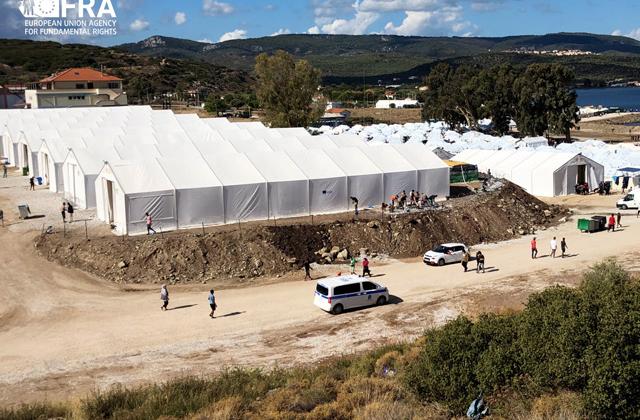
This note outlines how to help ensure a dignified stay for third-country nationals who are apprehended or intercepted at external borders. Specifically, FRA identifies twelve points for protection-sensitive and fundamental rights-compliant planning and design of initial-reception facilities at such borders. These are based on the agency’s work at external borders, including data collection and research activities.
FRA Director Michael O'Flaherty visited the Canary Islands in March 2021 to get a sense of the migration situation there. He highlights the need to support the Canary Islands in relocating unaccompanied children and providing clear procedures on asylum applications.
The EU Agency for Fundamental Rights has been regularly collecting data on asylum and migration since September 2015. This report focuses on the fundamental rights situation of people arriving in Member States and EU candidate countries particularly affected by migration. It addresses fundamental rights concerns between 1 October and 31 December 2020.
This is the second main report from FRA’s Fundamental Rights Survey, which collected data from 35,000 people on a range of issues. This report focuses on respondents’ experiences as victims of selected types of crime, including violence, harassment, and property crime. The report also examines how often these crimes are reported to the police, and presents further details relating to harassment and violence, such as the perpetrators and where the incidents took place.
On 13 November, the Fundamental Rights Agency (FRA) hosted its first Fundamental Rights Dialogue - a virtual event that gave young people an opportunity to voice their fundamental rights concerns and discussed ways to solve them with FRA's Director Michael O'Flaherty.
The European Convention on Human Rights and European Union law provide an increasingly important framework for the protection of the rights of foreigners. European Union legislation relating to asylum, borders and immigration is developing fast. There is an impressive body of case law by the European Court of Human Rights relating in particular to Articles 3, 5, 8 and 13 of the ECHR. The Court of Justice of the European Union is increasingly asked to pronounce on the interpretation of European Union law provisions in this field. The third edition of this handbook, updated up to July 2020, presents this European Union legislation and the body of case law by the two European courts in an accessible way.
Artificial intelligence (AI) already plays a role in deciding what unemployment benefits someone gets, where a burglary is likely to take place, whether someone is at risk of cancer, or who sees that catchy advertisement for low mortgage rates. Its use keeps growing, presenting seemingly endless possibilities. But we need to make sure to fully uphold fundamental rights standards when using AI. This report presents concrete examples of how companies and public administrations in the EU are using, or trying to use, AI. It focuses on four core areas – social benefits, predictive policing, health services and targeted advertising.
This report looks at fundamental rights compliance at the European Union (EU)’s external land borders, including rivers and lakes. On 30 January 2020, the European Parliament requested the EU Agency for Fundamental Rights (FRA) to prepare a report on these borders. It noted that the report should focus on the correct application of the safeguards in the European asylum acquis and the provisions of the Schengen Borders Code (Regulation (EU) 2016/399).
This report outlines some of the measures EU Member States have put in place to protect public health as Europe faces the ‘second wave’ of the Coronavirus pandemic. It highlights how these may affect fundamental rights, especially social rights.
The EU Fundamental Rights Agency published in 2019 its report on the ‘Integration of young refugees in the EU’. The report explored the challenges of young people who fled armed conflict or persecution and arrived in the EU in 2015 and 2016. The report is based on 426 interviews with experts working in the area of asylum and integration, as well as 163 interviews with young people, aged 16 to 24, conducted between October 2017 and June 2018 in 15 regions and cities located in six Member States: Austria, France, Germany, Greece, Italy and Sweden. The links on this page provide a summary of the information collected during this period for each country about unaccompanied children turning 18 and the change in people’s legal status once international protection is granted. These two issues had at the time been identified as moments requiring sufficient, consistent and systematic support, particularly from lawyers, social workers and guardians, to ensure successful integration.
Often living in substandard and overcrowded housing conditions, Roma and Travellers face an increased risk of contracting COVID-19. They are also disproportionately affected by measures taken to contain the virus. This FRA Bulletin takes a closer look at this reality in 15 EU Member States, focusing on education; employment; poverty; healthcare; housing; and anti-Gypsyism. It also outlines civil society efforts to tackle the diverse challenges triggered by the Coronavirus pandemic.
National Human Rights Institutions (NHRIs) are a vital part of the country-level human rights protection system. This report, published 10 years after FRA’s first in-depth study on NHRIs, looks at such bodies in the EU, as well as the Republic of North Macedonia, the Republic of Serbia, and the United Kingdom of Great Britain and Northern Ireland. It explores relevant developments, challenges to their effectiveness and ways to maximise their impact.
As we enter the second half of 2020, the constraints on our daily lives brought about by the Coronavirus pandemic have become a firm reality. New local lockdowns and the reintroduction of restrictive measures prompted by fresh outbreaks of the virus are a stark reminder that COVID-19 continues to shape our lives – and our enjoyment of fundamental rights – in profound ways. There is compelling evidence of how the pandemic has exacerbated existing challenges in our societies. This FRA Bulletin outlines some of the measures EU Member States adopted to safely reopen their societies and economies while continuing to mitigate the spread of COVID-19. It highlights the impact these measures may have on civil, political and socioeconomic rights.
This practical guidance addresses border-management staff in European Union (EU) Member States who work at the operational level. It aims to support them in implementing the fundamental rights safeguards of the Schengen Borders Code (Regulation (EU) No. 2016/399) and related EU law instruments in their daily work, when carrying out controls at external land borders.
The Coronavirus pandemic continues to interrupt everyday life in the EU in unprecedented ways. But the way it affects our societies is shifting. As governments gradually lift some of the measures put in place to contain the spread of COVID-19, new fundamental rights concerns arise: how to ensure that the rights to life and health are upheld as daily life transitions to a ‘new normal’. This Bulletin looks at declarations of states of emergency, or equivalent, and how they came under scrutiny. It considers
the impact on fundamental rights in important areas of daily life, and includes a thematic focus on the pandemic's impact on older people.