V tem povzetku so predstavljeni glavni uvidi iz
prvega poročila agencije FRA na podlagi njene
raziskave o temeljnih pravicah. V raziskavi so bili
pri približno 35 000 ljudeh zbrani podatki o njihovih
izkušnjah, dojemanju in mnenjih v zvezi z vrsto
vprašanj, ki se na različne načine nanašajo na
človekove pravice.
Den här sammanfattningen innehåller de viktigaste
lärdomarna från FRA:s första rapport, baserad
på undersökningen om de grundläggande
rättigheterna. I undersökningen samlades data in
från runt 35 000 människor om deras erfarenheter
av, inställning till och åsikter om en mängd frågor
som på olika sätt rör de mänskliga rättigheterna.
This report looks at fundamental rights compliance at the European Union (EU)’s external land borders, including rivers and lakes. On 30 January 2020, the European Parliament requested the EU Agency for Fundamental Rights (FRA) to prepare a report on these borders. It noted that the report should focus on the correct application of the safeguards in the European asylum acquis and the provisions of the Schengen Borders Code (Regulation (EU) 2016/399).
This report outlines some of the measures EU Member States have put in place to protect public health as Europe faces the ‘second wave’ of the Coronavirus pandemic. It highlights how these may affect fundamental rights, especially social rights.
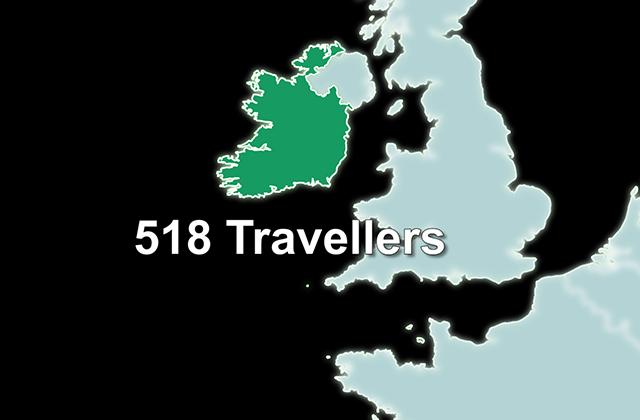
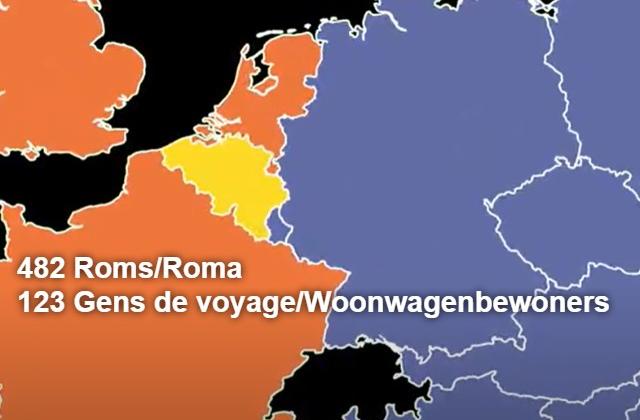
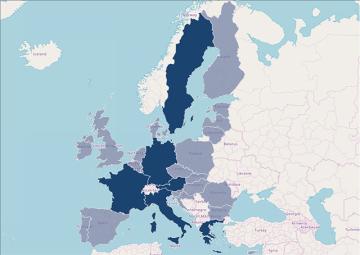
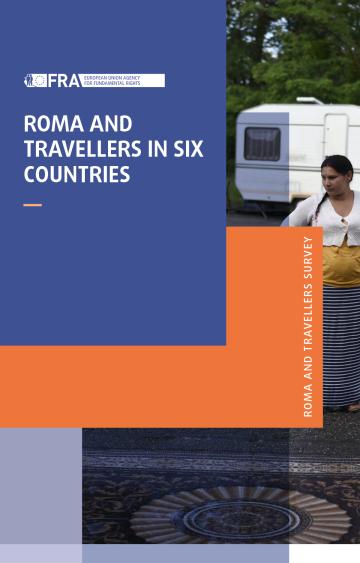
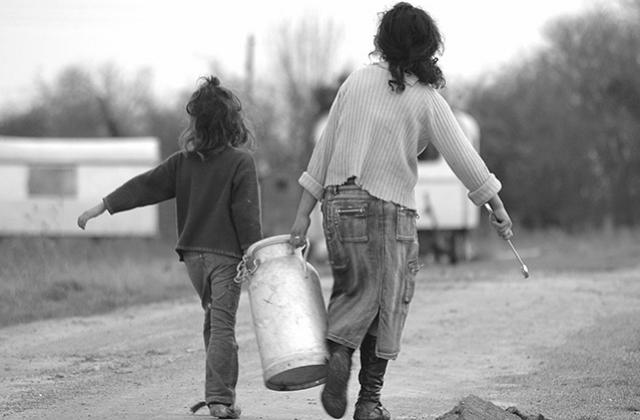
Roma and Travellers living in western EU countries are less often in the limelight than those living in central, eastern and southern EU countries. While they represent a smaller proportion of the population in the west, they also face problems with social exclusion, marginalisation and discrimination. These country sheets present findings from the survey conducted by FRA in 2019 covering Roma and Travellers populations in Belgium, France, Ireland, the Netherlands, Sweden and the United Kingdom. The survey included interviews with almost 4,700 Roma and Travellers, collecting information on more than 8,200 individuals living in their households.
The EU Fundamental Rights Agency published in 2019 its report on the ‘Integration of young refugees in the EU’. The report explored the challenges of young people who fled armed conflict or persecution and arrived in the EU in 2015 and 2016. The report is based on 426 interviews with experts working in the area of asylum and integration, as well as 163 interviews with young people, aged 16 to 24, conducted between October 2017 and June 2018 in 15 regions and cities located in six Member States: Austria, France, Germany, Greece, Italy and Sweden. The links on this page provide a summary of the information collected during this period for each country about unaccompanied children turning 18 and the change in people’s legal status once international protection is granted. These two issues had at the time been identified as moments requiring sufficient, consistent and systematic support, particularly from lawyers, social workers and guardians, to ensure successful integration.
Often living in substandard and overcrowded housing conditions, Roma and Travellers face an increased risk of contracting COVID-19. They are also disproportionately affected by measures taken to contain the virus. This FRA Bulletin takes a closer look at this reality in 15 EU Member States, focusing on education; employment; poverty; healthcare; housing; and anti-Gypsyism. It also outlines civil society efforts to tackle the diverse challenges triggered by the Coronavirus pandemic.
This report presents findings from FRA’s 2019 survey on Roma and Travellers in Belgium, France, Ireland, the Netherlands, Sweden and the United Kingdom. The survey included interviews with almost 4,700 Roma and Travellers, collecting information on more than 8,200 individuals living in their households.
Le rapport présente les conclusions issues de l’enquête de l’Agence des droits
fondamentaux de l’Union européenne (FRA) de 2019 sur la situation des Roms et
des Gens du voyage en Belgique, en France, en Irlande, aux Pays-Bas, en Suède et
au Royaume-Uni. L’enquête comportait des entretiens avec près de 4 700 Roms et
Gens du voyage, et a recueilli des informations concernant plus de 8 200 personnes
vivant dans leurs ménages.
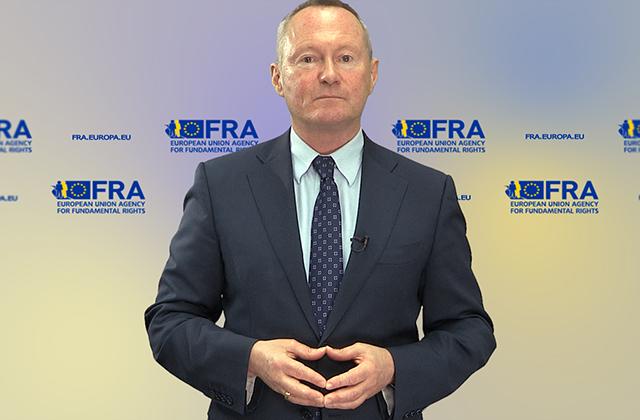
In his latest vlog, FRA Director Michael O'Flaherty speaks about the devastating effects of the Covid-19 pandemic on the Roma community. Roma children are in danger of losing almost a whole year of schooling. It’s like losing a generation. It’s robbing children of the one place where they can have hope and dream the same dreams of every other child.
This video statement by FRA Director Michael O’Flaherty was recorded on the occasion of the Holocaust Memorial Day for Sinti and Roma on 2 August 2020.
As we enter the second half of 2020, the constraints on our daily lives brought about by the Coronavirus pandemic have become a firm reality. New local lockdowns and the reintroduction of restrictive measures prompted by fresh outbreaks of the virus are a stark reminder that COVID-19 continues to shape our lives – and our enjoyment of fundamental rights – in profound ways. There is compelling evidence of how the pandemic has exacerbated existing challenges in our societies. This FRA Bulletin outlines some of the measures EU Member States adopted to safely reopen their societies and economies while continuing to mitigate the spread of COVID-19. It highlights the impact these measures may have on civil, political and socioeconomic rights.
This paper presents key findings from FRA’s second consultation of its Fundamental Rights Platform, focusing on the experiences of civil society organisations (CSOs) working on human rights. FRA started an annual consultation with organisations participating in its platform in 2018.
The EU Agency for Fundamental Rights has been regularly collecting data on asylum and migration since September 2015. This report focuses on the fundamental rights situation of people arriving in Member States and EU candidate countries particularly affected by migration. It addresses fundamental rights concerns between 1 April and 30 June 2020.
The Coronavirus pandemic continues to interrupt everyday life in the EU in unprecedented ways. But the way it affects our societies is shifting. As governments gradually lift some of the measures put in place to contain the spread of COVID-19, new fundamental rights concerns arise: how to ensure that the rights to life and health are upheld as daily life transitions to a ‘new normal’. This Bulletin looks at declarations of states of emergency, or equivalent, and how they came under scrutiny. It considers
the impact on fundamental rights in important areas of daily life, and includes a thematic focus on the pandemic's impact on older people.
FRA’s Fundamental Rights Survey collected data from 35,000 people about their experiences, perceptions and opinions on a range of issues that are variously encompassed by human rights. This report presents a small selection of the survey results. It focuses on findings with respect to respondents’ opinions about human – or fundamental rights; their views and perceptions on the functioning of democratic societies – as a pillar on which human rights can flourish; and on their thoughts on and engagement with public services that have a duty to enforce human rights law and to protect people’s rights.
In diesem Fokus wird die Anwendung der Charta der Grundrechte
der Europäischen Union, die seit zehn Jahren rechtsverbindlich
ist, näher beleuchtet. Auf EU-Ebene hat sie an Außenwirkung
gewonnen und Impulse für eine neue Grundrechtekultur
gesetzt. Auf nationaler Ebene sind der Bekanntheitsgrad und die
Anwendung der Charta begrenzt. Die Gerichte nutzen die Charta in
zunehmendem Maße, was deutlich macht, welche Wirkung dieses
moderne Instrument besitzt. Von Regierungen und Parlamenten
wird sie jedoch kaum genutzt. So gibt es beispielsweise nur wenige
Anhaltspunkte dafür, dass die einzelstaatlichen Rechtsvorschriften,
mit denen EU-Recht umgesetzt wird, regelmäßig daraufhin
überprüft werden, ob sie mit der Charta im Einklang stehen.
This focus takes a closer look at the application of the Charter of Fundamental Rights of the European Union, which has been legally binding for 10 years. At EU level, it has gained visibility and sparked a new fundamental rights culture. At national level, awareness and use of the Charter are limited. Courts increasingly use the Charter, showing the impact of this modern instrument. But its use by governments and parliaments remains low. For instance, there is little indication of anyone regularly scrutinising national legislation that transposes EU law for compatibility with the Charter.