Displaying 21 - 40 of 239
  • 12
    décembre
    2023
    Russia’s invasion of Ukraine forced millions of people to flee. Arriving in EU countries, they received protection in EU law under the Temporary Protection Directive. Many have begun to build a new life in their host country and enrich our societies in new ways. Local authorities took the lead in ensuring access to fundamental rights under temporary protection. This report explores the measures to ensure access to housing, education, employment and healthcare in 26 cities and regional authorities across 12 EU Member States. Despite unprecedented coordination and cooperation to overcome challenges, many uncertainties remain. Longer-term solutions will be needed after the directive expires in March 2025. Based on the information collected, the report identifies 12 priority actions and builds on FRA’s bulletins and survey findings on experiences of people displaced from Ukraine.
  • 29
    novembre
    2023
    Online hate speech is a growing problem in today’s digitalised societies. Women, Black people, Jews and Roma are often targets of online hate speech. Online hate proliferates where human content moderators miss offensive content. Also, algorithms are prone to errors. They may multiply errors over time and may even end up promoting online hate. This report presents the challenges in identifying and detecting online hate. Hate of any kind should not be tolerated, regardless of whether it is online or offline. The report discusses the implications for fundamental rights to support creating a rights-compliant digital environment.
  • 7
    novembre
    2023
    Antisemitic incidents and hate crimes violate fundamental rights. This report provides an overview of antisemitic incidents in 2022. It reveals persistent gaps in the recording of antisemitism across Europe that impedes efforts to effectively counter hatred towards Jews. It covers antisemitic incidents reported in the 27 EU Member States in 2022 and includes available data of the same year from Albania, the Republic of North Macedonia and Serbia. As this is a yearly publication covering the period 01/01/2022–31/12/2022, it does not include antisemitic incidents reported in 2023. This is the 19th edition and is the only annual source of data of this nature for the EU.
  • 18
    octobre
    2023
    Civil society organisations struggle to maintain an environment safe from threats and attacks. FRA’s sixth annual update on civic space explores the challenges for organisations across the EU. While there has been significant development since FRA began monitoring the situation in 2018, civil society organisations remain under immense pressure. Abusive lawsuits and attacks against those involved in migrant search and rescue at sea are just some of the challenges identified. This report presents ways forward to protect civil society and human rights.
  • 12
    octobre
    2023
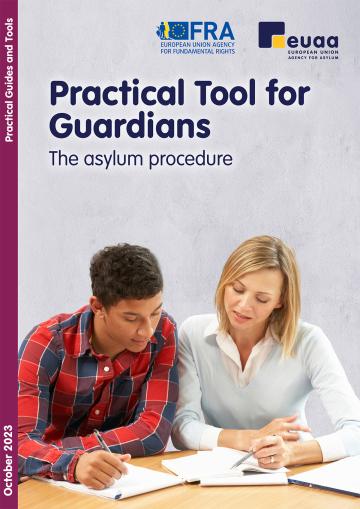
    This tool introduces newly appointed guardians to the concept of international protection, possible forms of protection recognised through the asylum procedure, the relevant legal framework and the related rights of the child. It is part of a series of four practical tools for guardians of unaccompanied children with international protection needs. The objective is to support guardians in their daily tasks and responsibilities during the asylum procedure, including the procedure under the Regulation (EU) No 604/2013 (Dublin III regulation) and temporary protection. The tools have been developed by the European Union Agency for Asylum (EUAA) and the European Union Agency for Fundamental Rights (FRA).
  • 12
    octobre
    2023
    This booklet aims to support guardians assigned to children in the asylum procedure. It includes an overview of the asylum procedure with a specific focus on children, the guarantees in the asylum procedure and your role as a guardian in the different phases of the asylum process. There is also a section on what to do if something unexpected may happen, or if the age of the applicant is disputed. It is part of a series of four practical tools for guardians of unaccompanied children with international protection needs. The objective is to support guardians in their daily tasks and responsibilities during the asylum procedure, including the procedure under the Regulation (EU) No 604/2013 (Dublin III regulation) and temporary protection. The tools have been developed by the European Union Agency for Asylum (EUAA) and the European Union Agency for Fundamental Rights (FRA).
  • 29
    septembre
    2023
    Russia’s invasion of Ukraine posed new challenges for the EU. Millions were forced to flee the war. As a result of the scale of people’s displacement, the EU activated for the first time the Temporary Protection Directive (TPD). More than 1.3 million children sought international protection in the EU. This bulletin explores the respect, protection and fulfilment of the fundamental rights of displaced children and ways to safeguard their rights. The third in a series, this bulletin builds on the evidence in FRA’s Bulletin #1 and #2 on the experiences of displaced people seeking safety in the EU.
  • 13
    septembre
    2023
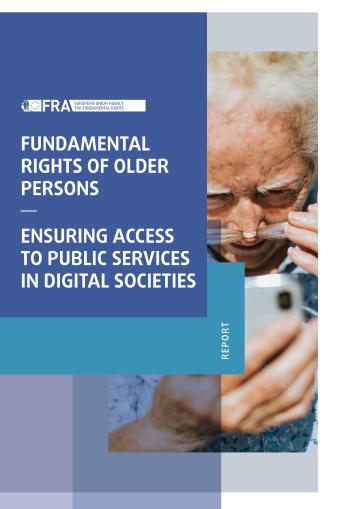
    Europe’s ageing population is ever-increasing, and our societies are becoming more digitalised. Many public services are now available online, with many more services in the process of being digitalised. But the digitalisation of public services poses a risk of exclusion for older persons. In this new report, FRA explores the impact of digitalisation on the fundamental rights of older persons. The report maps the current legislation, policies and practices fostering digital inclusion. It provides an overview of the laws at the national level that provide for equal access to public services, both online and offline. The findings show how Member States safeguard older person’s rights to access services undergoing digitalisation. It outlines how Member States can support digital skills and ensure older people can fully participate in public life.

  • 6
    septembre
    2023
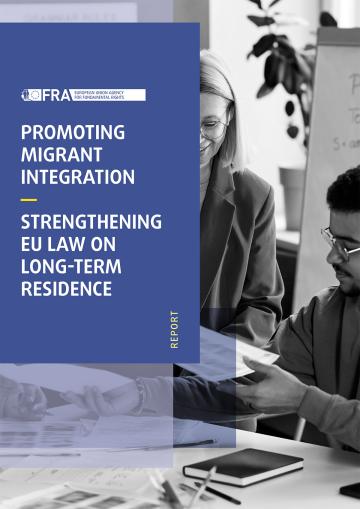
    Integration and social inclusion are important aspects of EU migration and asylum policy. The fundamental rights of long-term residents in the EU are explored through this report, focussing on the Long-Term Residence Directive. EU long-term resident status includes rights to move and reside in other EU Member States. This report examines the reasons behind the low uptake of EU long-term resident permits, despite them typically giving more rights than national long-term resident permits.
  • 8
    juin
    2023
    FRA’s Fundamental Rights Report 2023 reviews major developments in the field in 2022, identifying both achievements and areas of concern. It also presents FRA’s opinions on these developments, including a synopsis of the evidence supporting these opinions.
  • 8
    juin
    2023
    The year 2022 brought both progress and setbacks in terms of fundamental rights protection. FRA’s Fundamental Rights Report 2023 reviews major developments in the field, identifying both achievements and remaining areas of concern. This publication presents FRA’s opinions on the main developments in the thematic areas covered, and a synopsis of the evidence supporting these opinions.
  • 30
    mai
    2023
    Over the span of nearly eight years, there have been developments in showing respect for the human rights of those who arrive at the EU’s borders. Russia’s war of aggression against Ukraine has shown how a large and sudden influx of people can be managed effectively and respectfully. Notwithstanding the improvements, the growing number of people crossing or attempting to enter the EU pose a wide range of fundamental rights challenges.

    In this bulletin, FRA takes stock of concerns and improvements regarding the fundamental rights of migrants, asylum seekers and refugees. It highlights the EU Member States’ legal and practical responses. It identifies key trends, promising practices, long-standing and emerging patterns, and persistent concerns.
  • 20
    mars
    2023
    This guide helps independent national monitoring frameworks to fulfil their monitoring responsibility set out in Article 33 of the Convention on the Rights of Persons with Disabilities (CRPD). It focuses on the use of indicators. It does not deal with aspects such as compliance with the Paris Principles or the efficiency of complaints mechanisms. Its objective is to support national monitoring frameworks in designing or improving indicators for assessing progress of CRPD implementation at national level.
  • 1
    mars
    2023
    This manual is designed to help institutions, organisations and individuals to train guardians of unaccompanied children or to deliver ‘train-the-trainers’ courses. It can be used in a range of training contexts, such as professional and academic training, on-the-job training and continuing training. The manual is based on human and fundamental rights principles and ethical standards and recognises that the child and the guardian have their own personal stories, resources and capacities. It enhances guardians’ confidence to promote the child’s rights and best interests. It also enhances their confidence to act independently and impartially in relation to different state
    officials, service providers and other community members.
  • 27
    Février
    2023
    FRA’s 2021 survey on Roma was conducted in Croatia, Czechia, Greece, Hungary, Italy, Portugal, Romania, and Spain, as well as in North Macedonia and Serbia. It includes interviews with more than 8,400 Roma, collecting information on more than 20,000 individuals living in their households. This technical report provides a detailed overview of the survey methodology used by FRA when collecting the survey data.
  • In this video, human rights leaders, experts and activists share their views on the human rights impact of the Russian war of aggression in Ukraine.
  • 8
    décembre
    2022
    Artificial intelligence is everywhere and affects everyone – from deciding what content people see on their social media feeds to determining who will receive state benefits. AI technologies are typically based on algorithms that make predictions to support or even fully automate decision-making.
  • 3
    novembre
    2022
    Antisemitic incidents and hate crimes violate fundamental rights, especially the right to human dignity, the right to equality of treatment and the freedom of thought, conscience and religion. This report provides an overview of available data on antisemitism as recorded by official and unofficial sources in the EU Member States and in Albania, North Macedonia and Serbia. The data provided by the countries are supplemented with information from international organisations.
  • In this video, several human rights leaders, experts and activists share their views on the impact of disinformation on human rights and the ways to address this phenomenon.
  • 25
    octobre
    2022
    02 November 2022
    This report presents findings from FRA’s 2021 survey on Roma in Croatia, Czechia, Greece, Hungary, Italy, Portugal, Romania and Spain, as well as in North Macedonia and Serbia. The survey includes interviews with more than 8,400 Roma, collecting information on more than 20,000 individuals living in their households. By focusing on Roma, the survey provides unique data and information that are not available from European general population surveys, which do not disaggregate on grounds of ethnic origin. The findings present a bleak but familiar picture of exclusion, deprivation, discrimination and racism.