Never take today’s freedoms for granted. FRA’s Jana Gajdošová remembers authoritarian rule in her native Czechoslovakia. Then, shortages, secret police and petty corruption were the norm. The State Security even posted spies to watch churchgoers at mass. Jana tells how the repression she experienced in her childhood inspired her to fight for the rights we all enjoy now in Europe. If you care for freedom, this is a must-listen.
On 13 November, the Fundamental Rights Agency (FRA) hosted its first Fundamental Rights Dialogue - a virtual event that gave young people an opportunity to voice their fundamental rights concerns and discussed ways to solve them with FRA's Director Michael O'Flaherty.
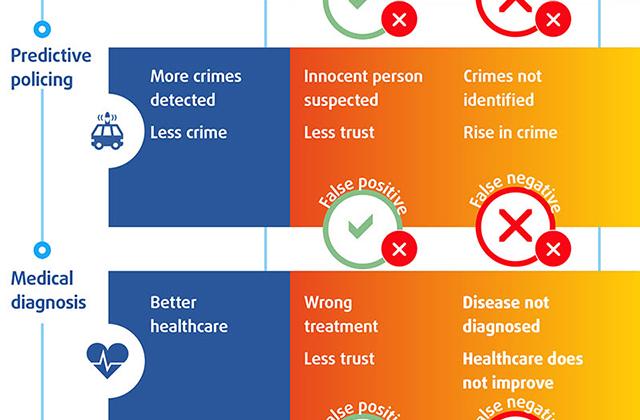
Artificial intelligence (AI) already plays a role in many decisions that affect our daily lives. From deciding what unemployment benefits someone gets to where a burglary is likely to take place. But we need to make sure to fully uphold fundamental rights standards when using AI. Drawing on the ‘Getting the future right – Artificial intelligence and fundamental rights’ report, FRA explores the potential benefits and possible errors that can occur focusing on four core areas – social benefits, predictive policing, health services and targeted advertising.
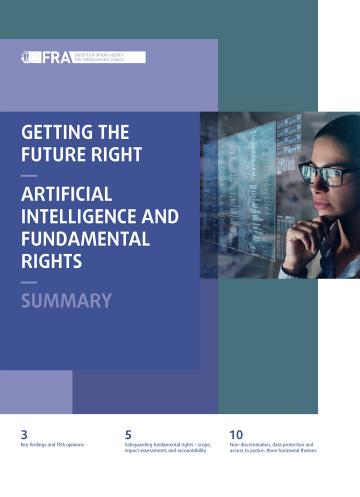
FRA’s report on artificial intelligence and fundamental rights presents concrete examples of how companies and public administrations in the EU are using, or trying to use, AI. This summary presents the main insights from the report. These can inform EU and national policymaking efforts to regulate the use of AI tools in compliance with human and fundamental rights.
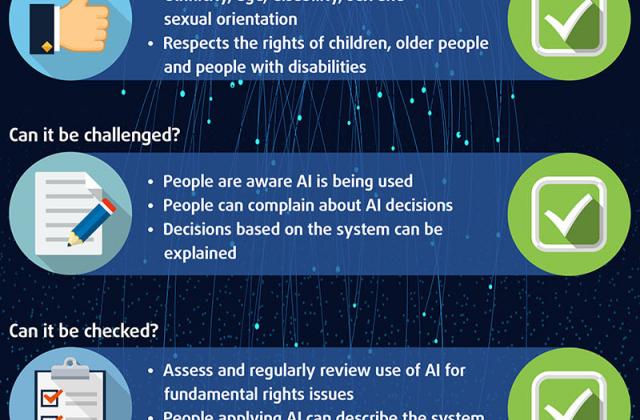
Artificial intelligence (AI) already plays a role in many decisions that affect our daily lives. From deciding what unemployment benefits someone gets to where a burglary is likely to take place. But we need to make sure to fully uphold fundamental rights standards when using AI. Drawing on the ‘Getting the future right – Artificial intelligence and fundamental rights’ report, FRA presents a number of key considerations to help businesses and administrations respect fundamental rights when using AI.
As a parent, you realise children are the future. FRA’s Nicole Romain shares the anxiety she has felt as the mother of a mixed race family living in predominantly white countries. She explains how the Fundamental Rights Charter delivers hope for an inclusive Europe where we all respect and celebrate our differences.
National Human Rights Institutions (NHRIs) are a vital part of the country-level human rights protection system. By raising awareness, providing advice, monitoring and holding authorities to account, they have a central role in navigating the great human rights challenges of our day – tackling both persistent concerns like discrimination and inequality, and novel issues such as the rights implications of artificial intelligence and of the COVID-19 pandemic.
Minorities across Europe routinely experience discrimination. As a child, FRA Director Michael O’Flaherty saw first-hand how prejudice led to violence and hatred in his native Ireland. Michael shares some early experiences of violence against Irish Travellers. He also speaks about what motivates him to fight to protect human rights for people everywhere.
This is a recording from the morning session of the high-level virtual event "Doing Artificial Intelligence the European way" which took place on 14 December 2020.
This is a recording from the afternoon session of the high-level virtual event "Doing Artificial Intelligence the European way" which took place on 14 December 2020.
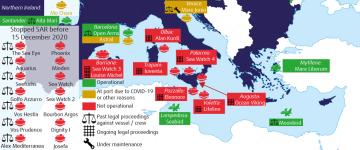
In 2020 (until 15 December), the International Organization for Migration estimated that about 1,054 people have died or gone missing while crossing the Mediterranean Sea to reach Europe to escape war or persecution or to pursue a better life. This is an average of almost three people per day. In the past years, a significant number of migrants in distress at sea have been rescued by civil society vessels deployed with a humanitarian mandate to reduce fatalities and bring rescued migrants to safety. Since 2018, however, national authorities initiated some 50 administrative and criminal proceedings against crew members or vessels, also seizing the latter. In some cases, rescue vessels were blocked in harbours due to flag issues or the inability to meet maritime safety-related and other technical requirements.
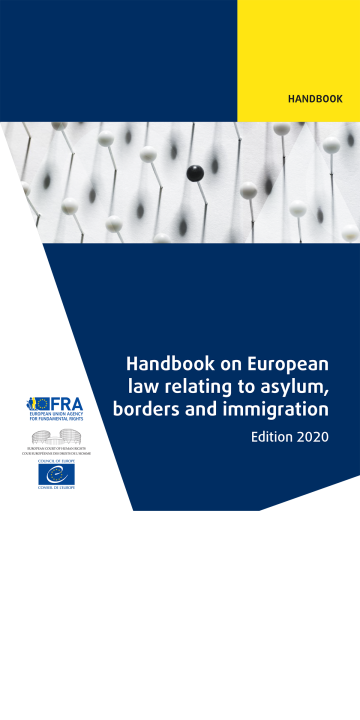
The European Convention on Human Rights and European Union law provide an increasingly important framework for the protection of the rights of foreigners. European Union legislation relating to asylum, borders and immigration is developing fast. There is an impressive body of case law by the European Court of Human Rights relating in particular to Articles 3, 5, 8 and 13 of the ECHR. The Court of Justice of the European Union is increasingly asked to pronounce on the interpretation of European Union law provisions in this field. The third edition of this handbook, updated up to July 2020, presents this European Union legislation and the body of case law by the two European courts in an accessible way.
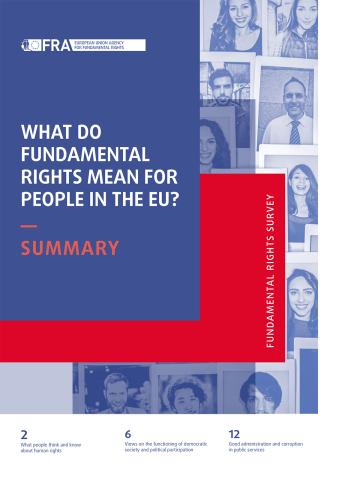
The EU is founded on the values of democracy, rule of law and respect for human rights. Yet these values, and discussions on fundamental rights at the EU and Member State level, can seem remote in people’s daily lives. With this in mind, FRA explored what people understand, know and experience with respect to their fundamental rights in practice. The resulting data provide comprehensive and comparable evidence on these aspects.
Artificial intelligence is here. It’s not going away. It can be a force for good, but it needs to be watched so carefully in terms of respect for our human fundamental rights. The EU Fundamental Rights Agency is deeply committed to this work.Our ambition is not just to ensure that AI respects our rights, but also that it protects and promotes them.
Will AI revolutionise the delivery of our public services? And what's the right balance? How is the private sector using AI to automate decisions — and what implications
might that have? Are some form of binding rules necessary to monitor and regulate the use of AI technology - and what should these rules look like?
How do we embrace progress while protecting our fundamental rights? As data-driven decision making increasingly touches our daily lives, what does this mean
for our fundamental rights? A step into the dark? Or the next giant leap? The time to answer these questions is here and now. Let’s seize the opportunities, but understand the challenges. Let’s make AI work for everyone in Europe…And get the future right.
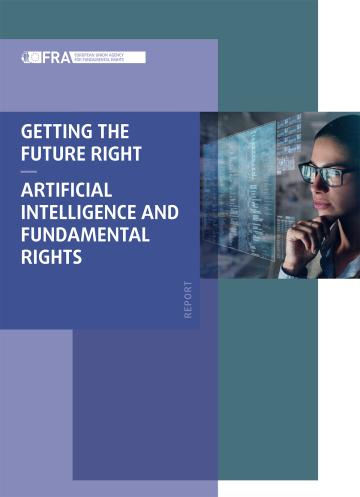
Artificial intelligence (AI) already plays a role in deciding what unemployment benefits someone gets, where a burglary is likely to take place, whether someone is at risk of cancer, or who sees that catchy advertisement for low mortgage rates. Its use keeps growing, presenting seemingly endless possibilities. But we need to make sure to fully uphold fundamental rights standards when using AI. This report presents concrete examples of how companies and public administrations in the EU are using, or trying to use, AI. It focuses on four core areas – social benefits, predictive policing, health services and targeted advertising.
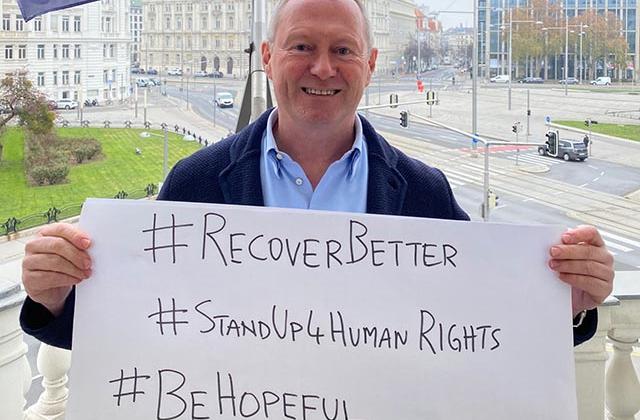
This year, the COVID-19 pandemic leaves a lasting mark on society worldwide. It affected everyone but some people more than others. As we look ahead, on Human Rights Day, on 10 December, we need to make the new normal a better normal. In his video message, FRA Director Michael O’Flaherty underlines the need to stand up for human rights to make 2021 a better year. This means ensuring we respect and take into account everybody's human rights.