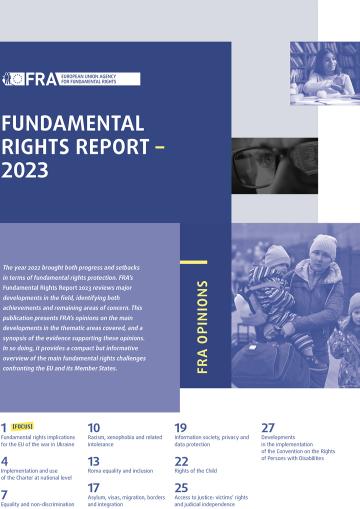
Pamattiesību aizsardzības jomā 2022. gadā bija vērojami gan sasniegumi, gan neveiksmes. FRA 2023. gada ziņojumā par pamattiesībām aplūkoti galvenie jaunumi pamattiesību jomā, nosakot gan sasniegumus, gan jomas, kas aizvien rada bažas. Šajā publikācijā sniegti FRA atzinumi par galvenajiem jaunumiem attiecīgajās tematiskajās jomās un šos atzinumus pamatojošs pierādījumu apkopojums.
Following yet another recent tragic shipwreck and loss of life in the Mediterranean, this short report sets out examples of actions the EU could take to meet its obligations to protect the right to life and prevent more deaths at sea. As part of the work that the EU Agency for Fundamental Rights (FRA) does on upholding fundamental rights in asylum and return procedures, this report calls for better protection for shipwreck survivors, and prompt and independent investigations. It sets out measures that EU Member States should take to improve search and rescue efforts and provide legal pathways to safety to prevent deaths at sea.
Russia’s unprovoked war of aggression against Ukraine has resulted in massive internal and external population displacement. The European Union (EU) rapidly activated its Temporary Protection Directive for the first time since it was adopted in 2001. This entitled nearly 4 million people to legal residence and access to work, housing and legal assistance, education and healthcare.
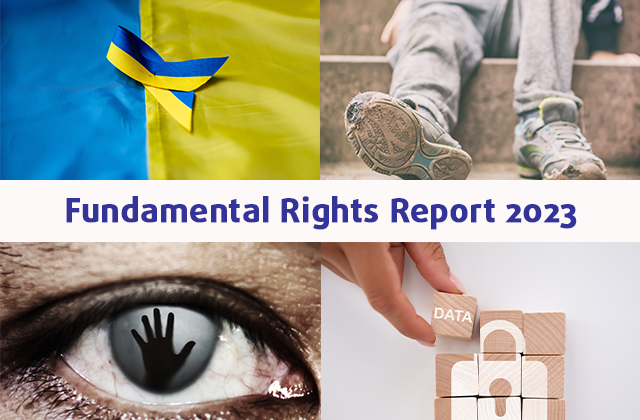
FRA’s Fundamental Rights Report 2023 reviews major developments in the field in 2022, identifying both achievements and areas of concern. It also presents FRA’s opinions on these developments, including a synopsis of the evidence supporting these opinions.
Russia’s military aggression against Ukraine triggered scenes not seen in Europe for decades. It has since caused death, immense destruction, and unspeakable suffering. It also set in motion a mass movement of people not seen since World War II. To protect them, the EU activated the Temporary Protection Directive for the first time. In doing so, all EU Member States must offer protection to those displaced from Ukraine.
This report presents findings from FRA’s 2021 survey on Roma in Croatia, Czechia, Greece, Hungary, Italy, Portugal, Romania and Spain, as well as in North Macedonia and Serbia. The survey includes interviews with more than 8,400 Roma, collecting information on more than 20,000 individuals living in their households. By focusing on Roma, the survey provides unique data and information that are not available from European general population surveys, which do not disaggregate on grounds of ethnic origin. The findings present a bleak but familiar picture of exclusion, deprivation, discrimination and racism.
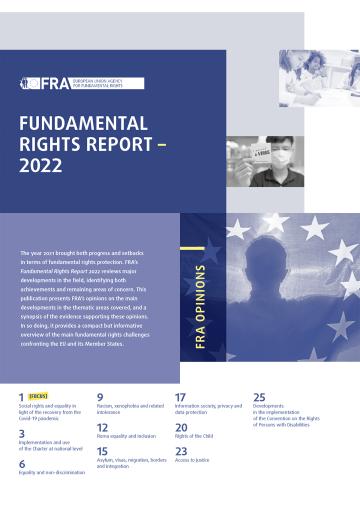
FRA’s Fundamental Rights Report 2022 reviews major developments in the field in 2021, identifying both achievements and areas of concern. It also presents FRA’s opinions on these developments, including a synopsis of the evidence supporting these opinions.
This focus looks at the impact of the pandemic on social rights. It examines the measures in national recovery and resilience plans that address the social vulnerabilities among a variety of population groups in the EU, including women, children and young people in situations of vulnerability, people with disabilities, older people, Roma and people in precarious working conditions.
Pamattiesību aizsardzības jomā 2021. gadā bija vērojami gan sasniegumi, gan neveiksmes. FRA 2022. gada ziņojumā par pamattiesībām ir aplūkoti galvenie jaunumi pamattiesību jomā, nosakot gan sasniegumus, gan jomas, kas aizvien rada bažas. Šajā publikācijā sniegti FRA atzinumi par galvenajiem jaunumiem attiecīgajās tematiskajās jomās un šos atzinumus pamatojošs pierādījumu apkopojums.
Šī rokasgrāmata var palīdzēt pilsētām, kuras vēlas uzlabot darbu cilvēktiesību cieņas jomā. Tās mērķis ir mudināt vietējās pašpārvaldes pieņemt augstākus cilvēktiesību standartus. Tās ideja ir iedrošināt un veicināt savstarpēju mācīšanos par cilvēktiesībām un pamattiesībām. Šīs rokasgrāmatas izstrādē sadarbojās Eiropas Savienības Pamattiesību aģentūra (FRA), pilsētu cilvēktiesību grupa un dažādi praktiskie darbinieki ES. Rokasgrāmatas pamatā ir pilsētu, reģionu, ekspertu, starptautisku organizāciju un tīklu daudzsološā prakse un pieredze no FRA ziņojuma “ES cilvēktiesību pilsētas: pamatnostādnes tiesību nostiprināšanai vietējā līmenī”.
This report proposes a framework for becoming, and functioning as, a ‘human rights city’ in the EU. It includes ‘foundations’, ‘structures’ and ‘tools’ for mayors, local administrations and grassroots organisations to reinforce fundamental rights locally. It is based on existing good practice and expert input by representatives of human rights cities in the EU, academic experts, international organisations and city networks.
Pamattiesību aizsardzības jomā 2020. gadā bija
vērojami gan sasniegumi, gan neveiksmes. FRA
2021. gada ziņojumā par pamattiesībām aplūkoti
galvenie jaunumi pamattiesību jomā, nosakot gan
sasniegumus, gan jomas, kas aizvien rada bažas.
FRA’s Fundamental Rights Report 2021 reviews major developments in the field in 2020, identifying both achievements and areas of concern. It also presents FRA’s opinions on these developments, including a synopsis of the evidence supporting these opinions. This year’s focus chapter explores the impact of the COVID-19 pandemic on fundamental rights. The remaining chapters cover: the EU Charter of Fundamental Rights; equality and non-discrimination; racism, xenophobia and related intolerance; Roma equality and inclusion; asylum, borders and migration; information society, privacy and data protection; rights of the child; access to justice; and the implementation of the Convention on the Rights of Persons with Disabilities.
This focus looks at COVID-19’s impact on fundamental rights. It underscores that a human rights-based approach to tackling the pandemic requires balanced measures that are based on law, necessary, temporary and proportional. It also requires addressing the pandemic’s socio-economic impact, protecting the vulnerable and fighting racism.
This focus takes a closer look at the application of the Charter of Fundamental Rights of the European Union, which has been legally binding for 10 years. At EU level, it has gained visibility and sparked a new fundamental rights culture. At national level, awareness and use of the Charter are limited. Courts increasingly use the Charter, showing the impact of this modern instrument. But its use by governments and parliaments remains low. For instance, there is little indication of anyone regularly scrutinising national legislation that transposes EU law for compatibility with the Charter.
Pamattiesību aizsardzības jomā 2019. gadā bija
vērojami gan sasniegumi, gan neveiksmes. FRA
“2020. gada ziņojumā par pamattiesībām” ir aplūkoti
galvenie jaunumi pamattiesību jomā, nosakot gan
sasniegumus, gan jomas, kas aizvien rada bažas. Šajā
publikācijā sniegti FRA atzinumi par galvenajiem
jaunumiem attiecīgajās tematiskajās jomās un šos
atzinumus pamatojošs pierādījumu apkopojums.
Tādējādi ir nodrošināts kompakts, bet informatīvs
pārskats par galvenajām pamattiesību problēmām, ar
ko saskaras ES un tās dalībvalstis.
FRA’s Fundamental Rights Report 2020 reviews major developments in the field in 2019, identifying both achievements and areas of concern. It also presents FRA’s opinions on these developments, including a synopsis of the evidence supporting these opinions. This year’s focus chapter explores how to unlock the full potential of the EU Charter of Fundamental Rights.