Asylum

Accès à l’asile

Highlights

  • Opinion / Position Paper
    23
    juillet
    2025
    This position paper examines how the EU can counter the instrumentalisation of migrants while also upholding fundamental rights. Instrumentalisation refers to countries outside the EU using migration to exert political pressure. This position paper defines the phenomenon, provides examples, and outlines legal obligations under EU law. It provides legal analysis and warns that some responses risk undermining fundamental rights at the EU’s external borders, including the right to asylum. To counter instrumentalisation and uphold fundamental rights, the position paper proposes practical measures for Member States to take, such as sanctions, border controls, and cooperation with private operators.
  • Periodic updates / Series
    12
    octobre
    2023
    This booklet aims to support guardians assigned to children in the asylum procedure. It includes an overview of the asylum procedure with a specific focus on children, the guarantees in the asylum procedure and your role as a guardian in the different phases of the asylum process. There is also a section on what to do if something unexpected may happen, or if the age of the applicant is disputed. It is part of a series of four practical tools for guardians of unaccompanied children with international protection needs. The objective is to support guardians in their daily tasks and responsibilities during the asylum procedure, including the procedure under the Regulation (EU) No 604/2013 (Dublin III regulation) and temporary protection. The tools have been developed by the European Union Agency for Asylum (EUAA) and the European Union Agency for Fundamental Rights (FRA).
  • Periodic updates / Series
    30
    mai
    2023
    Over the span of nearly eight years, there have been developments in showing respect for the human rights of those who arrive at the EU’s borders. Russia’s war of aggression against Ukraine has shown how a large and sudden influx of people can be managed effectively and respectfully. Notwithstanding the improvements, the growing number of people crossing or attempting to enter the EU pose a wide range of fundamental rights challenges.

    In this bulletin, FRA takes stock of concerns and improvements regarding the fundamental rights of migrants, asylum seekers and refugees. It highlights the EU Member States’ legal and practical responses. It identifies key trends, promising practices, long-standing and emerging patterns, and persistent concerns.
  • Periodic updates / Series
    21
    octobre
    2022
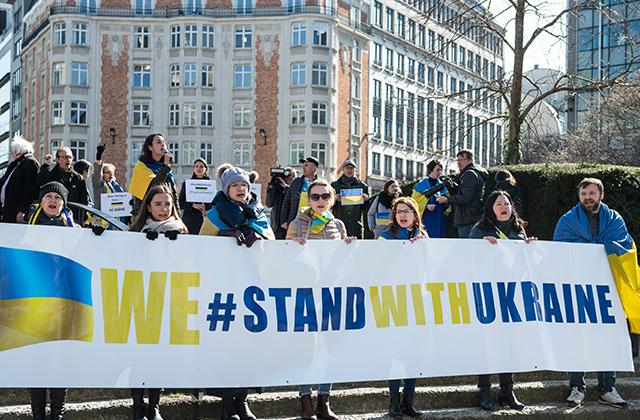
    The Russian invasion of Ukraine triggered solidarity from EU governments, local authorities and society as they welcomed more than 7 million people fleeing the aggression. The European Union’s rapid response, activating the EU Temporary Protection Directive, offered welcome relief and much-needed support to those in need. It allowed displaced persons the opportunity to quickly settle and to work, travel and access services across the EU. But other pressing human rights issues have come to the fore and remain high on the EU’s agenda, such as human trafficking, sexual and gender-based violence, hate crime and hate-fuelled disinformation.
    Produits
    27
    mars
    2019
    This report looks into the fundamental rights situation of asylum applicants and beneficiaries of international protection in the EU throughout 2018. It pulls together the main issues identified in FRA’s regular updates on fundamental rights related to asylum, migration and borders in selected EU Member States, which the agency has been publishing since September 2015.
    11
    mars
    2019
    In November 2016, FRA formulated 21 individual opinions to address the fundamental rights shortcomings identified in the implementation of the hotspot approach in Greece and Italy. Despite genuine efforts to improve the situation since November 2016, many of the suggestions contained in the 21 opinions FRA formulated at the time remain valid.
    24
    mars
    2017
    This report reviews how asylum claims based on sexual
    orientation and gender identity are assessed and analyses the existence of
    specific reception measures for LGBTI persons.
    8
    décembre
    2016
    This opinion analyses the effects on children of the proposed recast Dublin Regulation. It covers child-specific rules as well as provisions relating to all asylum applicants that significantly affect children.
    5
    décembre
    2016
    EU Member States are increasingly involved in border management activities on the high seas, within – or i cooperation with – third countries, and at the EU’s borders. Such activities entail risks of violating the principle of non-refoulement, the cornerstone of the international legal regime for the protection of refugees, which prohibits returning individuals to a risk of persecution. This report aims to encourage fundamental-rights compliant approaches to border management, including by highlighting potential grey areas.
    5
    décembre
    2016
    Les États membres de l’UE participent de plus en plus à des activités de gestion des frontières en haute mer, sur le territoire de pays tiers, ou en coopération avec ces derniers, ainsi qu’aux frontières de l’UE. Ces activités peuvent comporter des risques de violation du principe de non-refoulement, la pierre angulaire du régime international juridique assurant la protection des réfugiés, qui interdit le retour d’individus vers une situation de risque de persécution. Ces orientations présentent des suggestions spécifiques sur les moyens de réduire les risques de refoulement dans ces situations. Elles constituent un outil pratique élaboré à l’aide de contributions d’experts réunis à Vienne en mars 2016.
    29
    novembre
    2016
    Without being exhaustive, this opinion discusses selected topics which touch certain Charter rights, identifying the challenges and describing measures that could be taken to mitigate the risk of actions, which are not compliant with the Charter. It does not focus exclusively on risks arising in direct relation to the involvement of EU actors on the ground, but also takes into account that the hotspot approach entails a certain share of responsibility of the EU for the situation in the hotspots overall.
    30
    mai
    2016
    Ce « Focus » examine de façon approfondie les questions de l’asile et de la
    migration dans l’Union européenne (UE) en 2015. Il se penche sur l’efficacité des mesures prises ou proposées par l’UE et
    ses États membres pour gérer cette situation, en se concentrant en particulier sur le respect des droits fondamentaux.
    6
    avril
    2016
    FRA’s opinions highlight general fundamental rights implications to be considered when applying the safe countries of origin concept. They should be read together with the relevant safeguards the Asylum Procedures Directive establishes. These safeguards provide for minimum guarantees that must also fully apply to applicants originating from countries on the proposed EU common list of safe countries of origin.
    22
    octobre
    2015
    Processing biometric data for immigration, asylum and border management purposes has become common. This focus paper looks at measures authorities can take to enforce the obligation of newly arrived asylum seekers and migrants in an irregular situation to provide fingerprints for inclusion in Eurodac.
    9
    octobre
    2015
    For asylum and return (i.e. expulsion) procedures to be implemented effectively, people need to be at the disposal of the authorities so that any measure requiring their presence can be taken without delay. To achieve this, EU Member States may decide to hold people in closed facilities. Less intrusive measures, which are usually referred to as alternatives to detention, reduce the risk that deprivation of liberty is resorted to excessively.
    27
    juin
    2014
    Le présent manuel expose, de manière accessible, la législation et la jurisprudence de la Cour de Justice de l’Union européenne et de la Cour européenne des droits de l’homme européennes en matière d’asile, de frontières et d’immigration.
    7
    décembre
    2010
    Ce résumé met en évidence les résultats clés de l’enquête de la FRA sur les enfants séparés demandeurs d’asile dans les États membres de l’UE. Il analyse les expériences et l’opinion de 336 enfants séparés demandeurs d’asile et de 302 adultes responsables de leur cas dans 12 États membres de l’UE.
    7
    décembre
    2010
    L’arrivée de milliers d’enfants sépares sur le territoire de l’Union européenne constitue un défi de taille pour les institutions de l’Union européenne et les autorités des États membres car, en vertu de la Charte des droits fondamentaux de l’Union européenne et de la Convention des Nations Unies relative aux droits de l’enfant, ces instances ont pour devoir de protéger les enfants. Ce rapport examine les expériences et les opinions de 336 enfants séparés demandeurs d’asile et de 302 adultes chargés d’aider ces enfants ou de
    travailler auprès d’eux, dans 12 États membres de l’Union européenne.
    13
    septembre
    2010
    Une procédure d’asile est équitable lorsque les demandeurs et demandeuses sont informés de leurs droits et obligations, et lorsqu’ils en comprennent les différentes étapes. Le droit d’être informé aux moments décisifs de la procédure constitue un élément important de l’objectivité procédurale. Sur la base des éléments issus d’entretiens avec près de 900 demandeurs et demandeuses d’asile, ce rapport examine les informations dont disposent les demandeurs d’asile sur la procédure d’asile. En particulier, il examine la source principale d’information des demandeurs d’asile, le type d’informations reçues, ainsi que le moment de la réception et la manière dont elles sont communiquées.
    13
    septembre
    2010
    Sur la base des éléments recueillis lors d’entretiens auprès d’environ 900 demandeurs d’asile, ce rapport vise à donner un aperçu de la mesure dans laquelle les demandeurs d’asile dans l’Union européenne ont accès à des recours effectifs comme le garantit l’article 47 de la Charte des droits fondamentaux de l’Union européenne.