Equality

Enfants, jeunes et personnes âgées

    Produits

    Publications and Data

    Displaying results 21 - 30 of 88
    Handbook / Guide / Manual
    13
    juin
    2019
    Le présent guide Enfants privés de protection parentale et devant être protégés dans un État
    membre de l’UE autre que le leur vise à renforcer la réponse de l’ensemble des acteurs concernés en
    matière de protection des enfants. La protection de ces filles et garçons est capitale et constitue une
    obligation pour les États membres de l’UE, qui découle du cadre juridique international et européen.
    Ce guide, qui met en oeuvre une action clé de la communication de 2017 visant à renforcer l’action
    de l’UE en matière de lutte contre la traite des êtres humains, met particulièrement l’accent sur les
    enfants victimes de la traite et sur les enfants vulnérables et tient compte des schémas recensés,
    notamment en ce qui concerne les spécificités liées au genre de cette infraction.
    Fundamental Rights Report
    6
    juin
    2019
    How much progress can we expect in a decade? Various rights-related instruments had been in place for 10 years in 2018, prompting both sobering and encouraging reflection on this question.
    Fundamental Rights Report
    6
    juin
    2019
    L’année 2018 a été marquée à la fois par des avancées et des régressions
    en matière de protection des droits fondamentaux. Le Rapport sur les droits
    fondamentaux 2019 de la FRA examine les principales évolutions dans ce
    domaine, en recensant les progrès accomplis et les sujets de préoccupation
    persistants. La présente publication expose les avis de la FRA sur les principales
    évolutions dans les domaines thématiques couverts ainsi qu’un résumé des
    éléments factuels qui étayent ces avis.
    Report / Paper / Summary
    17
    octobre
    2018
    Almost 25 million children under 18 are at risk of poverty or social exclusion in the EU. Poverty deprives children of educational
    opportunities, childcare, access to health care, adequate food and housing, family support and even protection from violence.
    This report outlines data and survey findings that highlight the magnitude of child poverty in the EU, but also presents tools
    available to counter this phenomenon and keep track of progress made.

    Report / Paper / Summary
    12
    septembre
    2018
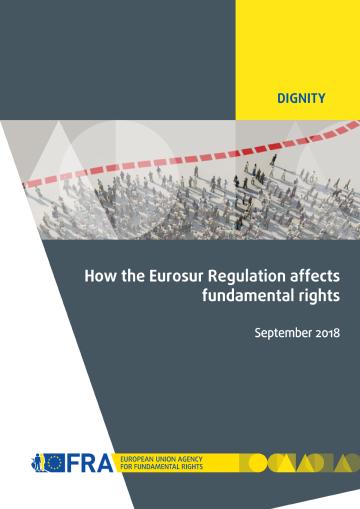
    In November 2017, the European Commission requested FRA’s support in evaluating the impact on fundamental rights of the European Border Surveillance System (Eurosur) Regulation. Further to this request, FRA reviewed the work of the European Border and Coast Guard Agency (Frontex) and analysed cooperation agreements concluded by EU Member States with third countries which are relevant for the exchange of information for the purposes of Eurosur. This report presents the main findings of such review.
    Report / Paper / Summary
    19
    juillet
    2018
    Across the European Union, Member States are faced with the challenge of integrating Europe’s most deprived
    and disenfranchised minority groups. As a follow up to the EU-MIDIS II findings on Roma, this report presents
    FRA’s findings relating to the issues of education and employment. Encouraging Roma participation in education
    and employment equips communities with higher incomes, better life opportunities and greater social inclusion.
    Fundamental Rights Report
    6
    juin
    2018
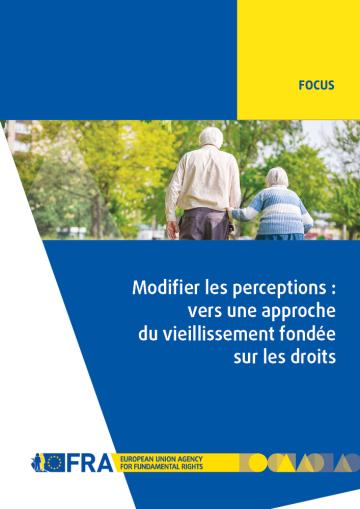
    Les sociétés européennes ne rajeunissent pas. Ceci est un fait auquel l’Europe entière doit faire face, sachant que d’ici 2080, soit deux générations, la proportion de personnes âgéesde 65 ans ou plus représentera près de 30 % de la population de l’Union européenne.
    Fundamental Rights Report
    6
    juin
    2018
    The year 2017 brought both progress and setbacks in terms of rights protection. The European Pillar of Social Rights marked an important move towards a more ‘social Europe’. But, as experiences with the EU Charter of Fundamental Rights underscore, agreement on a text is merely a first step. Even in its eighth year as the EU's binding bill of rights, the Charter's potential was not fully exploited, highlighting the need to more actively promote its use.
    Report / Paper / Summary
    25
    avril
    2018
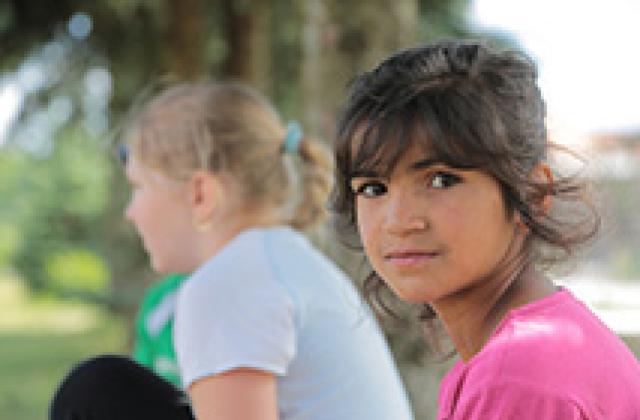
    The methods used to determine the age of
    an applicant may include “invasive” medical tests which interfere with the rights of the child, including their right to dignity,
    integrity and privacy. It is often a challenge to find the right balance between protecting children from harm and promoting
    their participation in these procedures. This report provides important insights and identifies the implications of collecting
    children’s biometric data and conducting age assessments.